Your Drinking Water Could Be the First Sign of Rising Seas
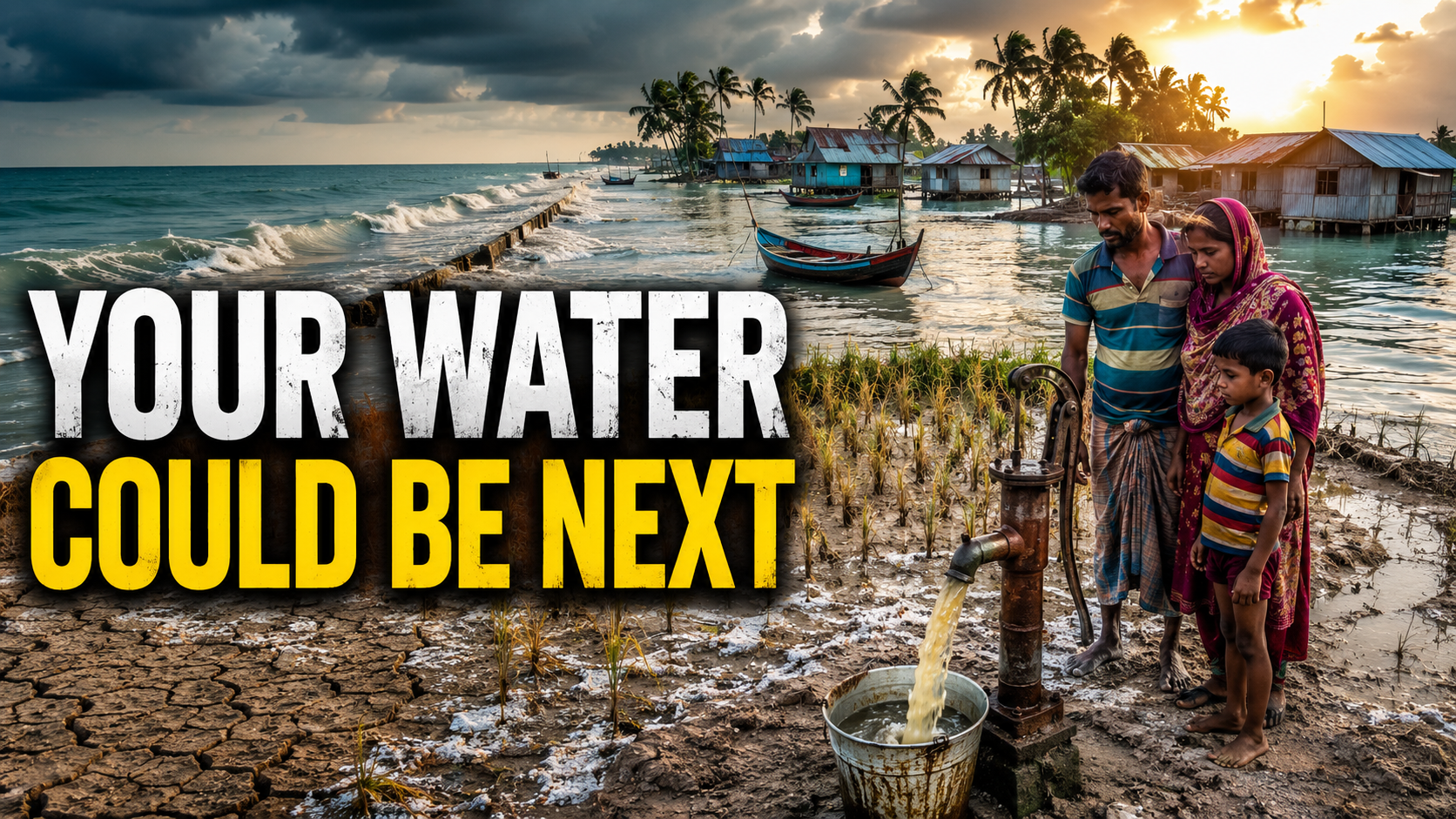
Most people picture sea level rise as flooded streets, disappearing beaches, or homes being washed away during storms. Those images are real, but they often hide another problem that begins much earlier. In many coastal communities, the first sign of rising seas isn’t a flooded house. It’s the water coming out of the tap.
In this episode of How to Protect the Ocean, we explore how sea level rise is quietly contaminating freshwater in coastal Bangladesh. It is a story that shows how climate change can reshape people’s lives long before the shoreline noticeably changes.
A Crisis You Can’t Always See
Bangladesh is one of the world’s most vulnerable countries to sea level rise. Much of the country sits only a few meters above sea level, and millions of people depend on freshwater sources that are becoming increasingly threatened. As the ocean pushes farther inland, saltwater infiltrates rivers, groundwater, and agricultural land.
Unlike dramatic flooding, saltwater intrusion often happens slowly. Communities may not notice the changes immediately, but over time wells become too salty to drink, crops become harder to grow, and families must travel farther to find clean water. The problem develops quietly until it reaches a point where daily life becomes significantly more difficult.
Why Saltwater Is Such a Big Problem
Freshwater is essential for nearly every aspect of life. It provides drinking water, supports agriculture, and helps maintain healthy ecosystems. When saltwater contaminates these supplies, the effects spread throughout entire communities.
Farmers often see crop yields decline because many staple crops cannot tolerate increasing salinity. Drinking salty water can contribute to health problems, particularly for vulnerable populations. Families may spend more time and money securing safe water instead of investing in education, businesses, or their livelihoods.
Climate Change Is Only Part of the Story
Sea level rise is a major driver of saltwater intrusion, but it isn’t acting alone. River management, groundwater extraction, changing rainfall patterns, and coastal development all influence how far seawater can move inland. Together, these pressures create a complex challenge that requires equally thoughtful solutions.
Understanding this complexity is important because it reminds us that protecting coastal communities requires more than building higher seawalls. Effective adaptation includes restoring wetlands, improving freshwater management, strengthening infrastructure, and ensuring communities have the resources they need to respond.
Why Bangladesh Matters to the Rest of the World
It is easy to think of Bangladesh as a unique case, but many coastal regions face similar risks. Low-lying communities around the world are beginning to experience saltwater intrusion as sea levels continue to rise. What is happening today in Bangladesh offers valuable lessons for tomorrow’s challenges elsewhere.
By paying attention to these early warning signs, governments, scientists, and local communities can make better decisions before problems become crises. Investing in adaptation today is often far less costly than responding after freshwater supplies have already been compromised.
What This Means for Ocean Conservation
Ocean conservation is often associated with protecting coral reefs, whales, or fisheries. While those efforts remain essential, protecting people who depend on healthy coastal ecosystems is equally important. Climate adaptation and ocean conservation are increasingly connected.
Healthy mangrove forests, restored wetlands, and resilient coastal ecosystems can reduce storm impacts, slow erosion, and help buffer communities from rising seas. These natural solutions work alongside engineering projects to provide long-term resilience.
Final Thoughts
Sea level rise is changing more than coastlines. It is changing the availability of one of our most essential resources: freshwater. By understanding the hidden impacts of climate change today, we can make better decisions that protect both people and the oceans they depend on.
Thank you for listening to How to Protect the Ocean. If you enjoyed this episode, please follow the podcast, leave a review, and share it with someone who wants to better understand how the ocean shapes all of our lives.

CEO
The Biggest Mouthful: How Blue Whales Eat and Why Krill Matters