Why Healthy Whales Are Ending Up on Beaches
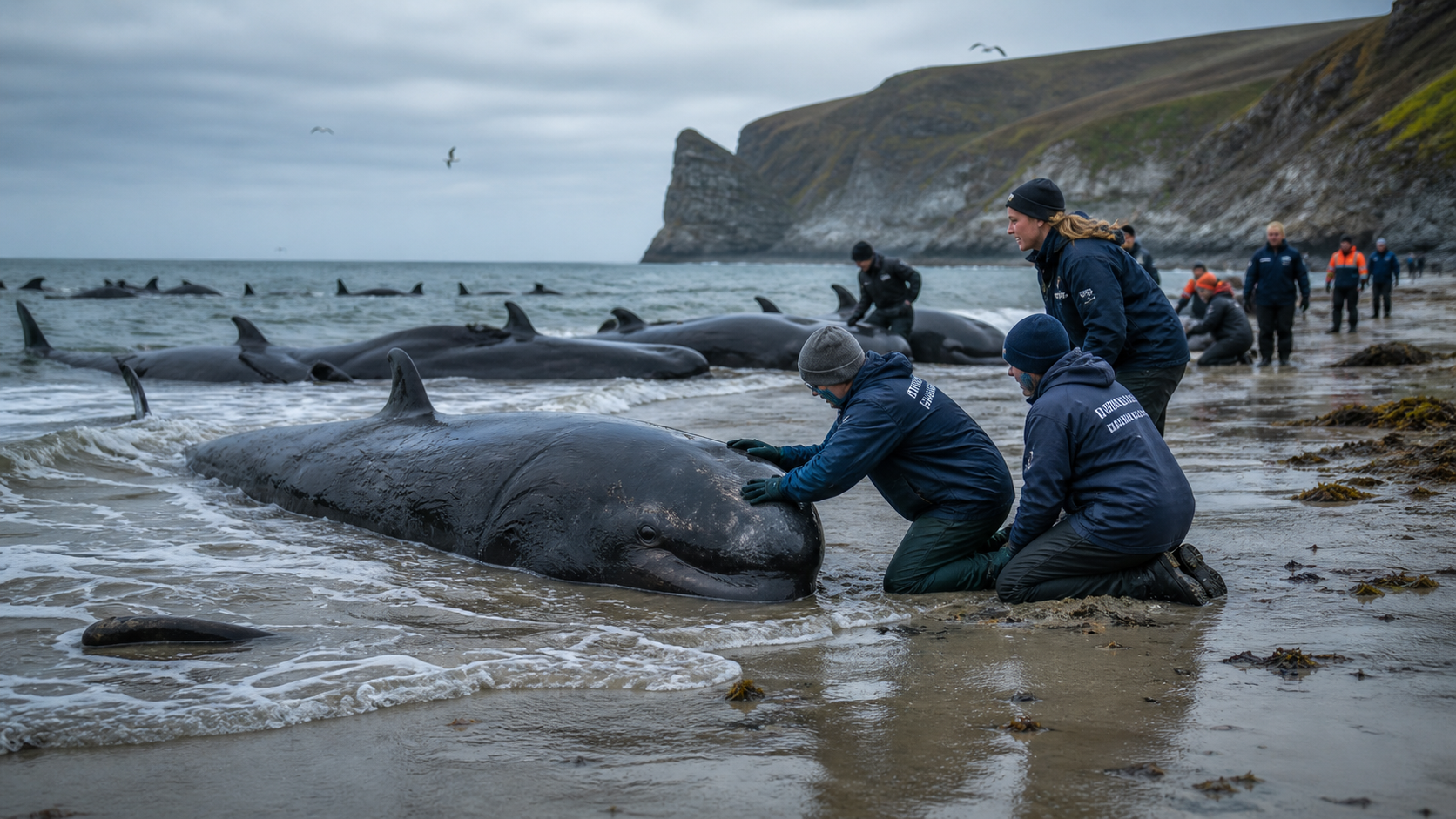
Whale strandings are always difficult to see. They are emotional, confusing, and often heartbreaking.
But this story is even more unsettling because many of the whales involved were not obviously sick.
They were healthy.
They were feeding.
They were following the ocean.
And then they ended up in the wrong place at the wrong time.
The Pilot Whale Stranding That Raises a Bigger Question
A recent pilot whale stranding in Scotland involved more than 50 whales. That number alone is devastating, but the detail that changes the story is the health of the animals.
Many of the whales appeared to be in good condition before the stranding.
That means this was not simply a case of disease, injury, or weakness.
Instead, researchers looked at where the whales had been feeding. The animals appeared to be using areas closer to the continental shelf and shallow coastal zones.
Those areas can be productive, but they can also be dangerous.
Whales Follow Food
Whales move because their prey moves.
That is one of the simplest rules in the ocean.
When fish, squid, or other prey shift into new areas, predators often follow. The problem is that climate change, shifting currents, changing wind patterns, and altered upwelling zones can all change where food shows up.
That can bring whales into places they do not normally use.
For pilot whales, shallow water can create serious risk. Their echolocation works differently in complex coastal areas, and shallow water can make navigation harder.
A single mistake can become deadly.
Why Pilot Whales Are Especially Vulnerable
Pilot whales are highly social animals.
That social bond is one of the things that makes them remarkable, but it can also increase the danger during a stranding.
If one whale gets into trouble, others may follow.
That means one disoriented animal can lead an entire pod into danger.
This is why mass strandings are so difficult. They are not always caused by one simple factor. They can be the result of prey movement, coastal geography, social behavior, navigation challenges, and changing ocean conditions all overlapping at the same time.
This Is About More Than One Stranding
The bigger issue is that strandings may be signals.
They may be telling us that marine ecosystems are changing faster than we can track.
As prey shifts, predators shift.
As waters warm, species move.
As currents change, feeding areas change.
And when animals follow those changes into risky places, the consequences can be deadly.
What Needs to Happen Next
We need stronger ocean monitoring.
We need more investment in basic ocean science.
We need better tracking of prey shifts, marine mammal movements, coastal risk areas, and changing ocean conditions.
We also need to work with coastal communities, including Indigenous and local knowledge holders, because people who live along coastlines often notice changes before anyone else does.
The whales did not fail.
They followed the ocean as it changed.
That is what makes this story so important.

CEO
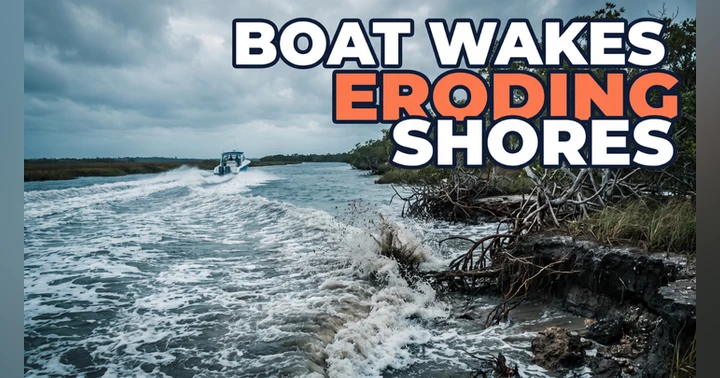
Boat Wake Erosion Explained: The Coastal Threat With Nothing to Do With Climate Change