Why We Know More About Space Than Our Own Ocean
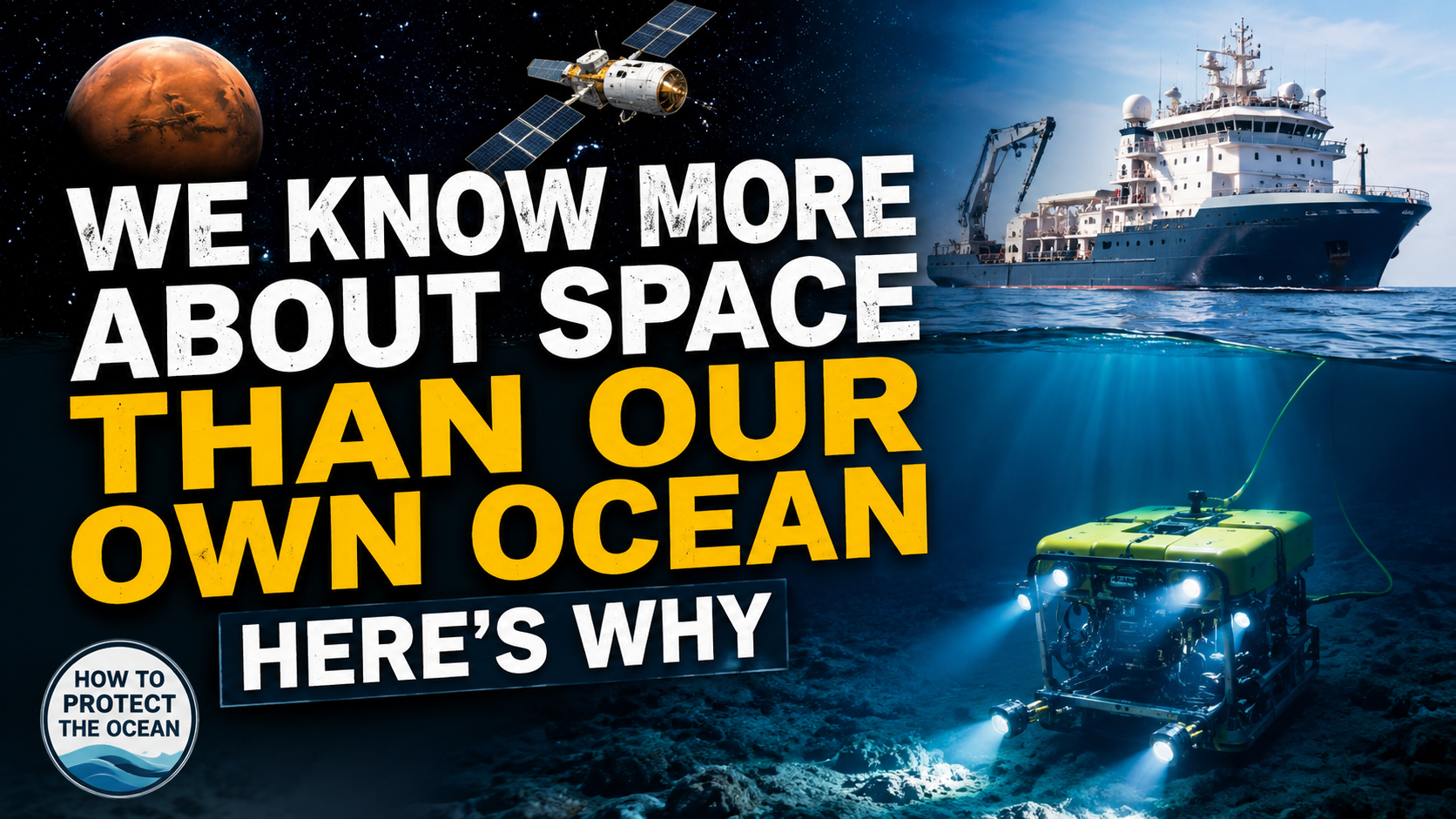
Most people assume we’ve explored our own planet more thoroughly than space. After all, the ocean is right here on Earth. But the reality is much more surprising. Scientists have mapped and studied distant planets and the Moon in greater detail than much of the deep ocean beneath our feet.
That raises an important question. How can we protect an ecosystem that we barely understand? In this episode of How to Protect the Ocean, we begin a new series on deep ocean exploration and discover why learning more about the ocean has never been more important.
The Ocean Is Bigger Than We Realize
The ocean covers more than 70 percent of Earth’s surface, but the vast majority of it lies far below the reach of sunlight. The deeper you go, the more challenging exploration becomes. Extreme pressure, freezing temperatures, and complete darkness make every mission into the deep sea a remarkable engineering achievement.
Even with today’s technology, sending robots and scientific equipment thousands of meters below the surface is expensive and technically difficult. Researchers often spend years planning a single expedition. As a result, much of the seafloor remains largely unexplored.
Why Space Is Easier to Study
It sounds strange, but in many ways, space is easier to observe than the deep ocean. Powerful telescopes can continuously monitor planets, moons, and distant galaxies without having to withstand crushing underwater pressure. Satellites can also map large areas of Earth from orbit, but they cannot see through deep seawater.
Water absorbs light, radio waves, and many other signals that scientists use to study distant objects. That means researchers must physically travel into the deep ocean using specialized submarines or remotely operated vehicles. Every dive requires significant planning, specialized equipment, and considerable funding.
Why This Matters for Ocean Conservation
The deep ocean plays a major role in regulating Earth’s climate, storing carbon, and supporting biodiversity. Countless species have yet to be discovered, and many ecosystems remain completely unknown. Without understanding what exists in these environments, it becomes much harder to make informed decisions about conservation and sustainable ocean management.
Exploration is not simply about satisfying curiosity. Every new discovery helps scientists understand how ocean ecosystems function and how human activities may affect them. Better knowledge leads to better decisions for protecting marine life and the services the ocean provides.
A New Era of Ocean Discovery
Technology is beginning to change what is possible. Advanced remotely operated vehicles, autonomous underwater vehicles, improved mapping systems, and environmental DNA are allowing scientists to study places that were once completely inaccessible. These tools are helping researchers build a much clearer picture of life in the deep ocean.
Canada is playing an important role in this effort. Organizations like Oceans Network Canada and Fisheries and Oceans Canada are using innovative technologies to better understand the country’s vast marine environments. Their work is helping answer questions that scientists have been asking for decades.
Looking Ahead
This episode serves as the introduction to a series exploring deep ocean science and the people working to uncover its secrets. In upcoming episodes, you’ll hear from experts who are pushing the boundaries of ocean exploration and helping us better understand one of the last great frontiers on Earth.
If we truly want to protect the ocean, we first need to understand it. That journey starts with exploration, because every new discovery brings us one step closer to making better decisions for the future of our blue planet.

CEO
You Left a Public Comment. Now What?