Can We Study the Ocean Without Harming It?


 Apple Podcasts
 Spotify
 YouTube
 Amazon Music
 PocketCasts
 Overcast
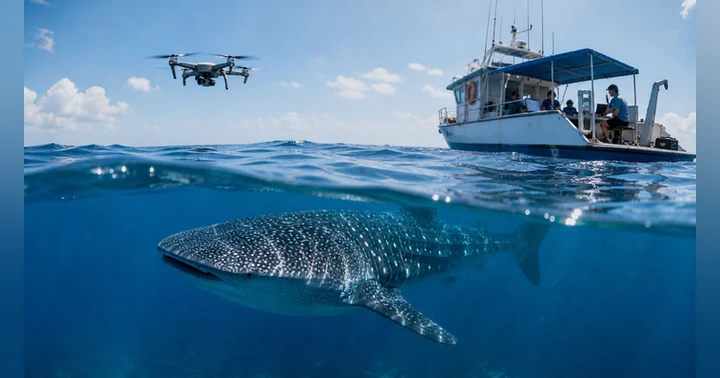
 Ocean research helps us understand marine life, but what happens when the tools we use to study animals disturb the very creatures we are trying to protect? This episode looks at a powerful question in marine science: can we study the ocean without harming it?
Whale sharks and other marine animals are often studied using tools like tags, drones, boats, and tracking technology. These methods can reveal migration routes, behavior, and conservation needs, but they also raise important ethical questions about disturbance, stress, and the responsibility scientists have when working around wildlife.
Marine conservation is not just about what we study. It is also about how we study it. In this episode, Andrew breaks down why lower-impact research tools matter, how drones could help scientists observe some species with less interference, and why public pressure can play a role in making ocean science better.
Listen to the full episode.
Support Independent Podcasts: https://www.speakupforblue.com/patreon
Help fund a new seagrass podcast: https://www.speakupforblue.com/seagrass
Connect with Speak Up For Blue
Website: https://bit.ly/3fOF3Wf
Instagram: https://bit.ly/3rIaJSG
TikTok: https://www.tiktok.com/@speakupforblue
Twitter: https://bit.ly/3rHZxpc
YouTube: www.speakupforblue.com/youtube
00:00:00,049 --> 00:00:00,859
Here's a question for you.
2
00:00:01,049 --> 00:00:03,690
Can we study the ocean without harming it?
3
00:00:04,079 --> 00:00:08,390
And what if you can actually study
marine life without disturbing it at all?
4
00:00:08,890 --> 00:00:12,779
This is the How to Protect the Ocean
podcast, your weekday ocean news update.
5
00:00:13,010 --> 00:00:18,553
If you are looking for a resource in
the form of a podcast that is all about
6
00:00:18,553 --> 00:00:21,573
the ocean and keeping you up to date
on what's happening with the ocean, but
7
00:00:21,573 --> 00:00:25,593
also how you can make better decisions
for the ocean, this is the place to be.
8
00:00:25,826 --> 00:00:29,626
Hit that follow button right
now on your favorite podcast app
9
00:00:29,626 --> 00:00:34,373
because we are posting episodes
five days a week, Monday to Friday.
10
00:00:34,403 --> 00:00:38,120
Now, normally, if this is your
first time here, we do an episode,
11
00:00:38,120 --> 00:00:41,420
a solo episode Monday to Thursday,
and an interview on the Friday.
12
00:00:41,676 --> 00:00:43,276
And then we have the topic's the same.
13
00:00:43,276 --> 00:00:46,163
There's like a theme for that week, and
I prepare you for the interview, so
14
00:00:46,163 --> 00:00:47,753
I break it down in the solo episodes.
15
00:00:47,793 --> 00:00:49,643
This week we're doing
something a little different.
16
00:00:49,643 --> 00:00:53,120
We've been talking about different
stories, kinda randomized stories
17
00:00:53,120 --> 00:00:54,420
that I thought was interesting.
18
00:00:54,493 --> 00:00:57,179
There's no interview tomorrow, but
you can tune in and we're gonna be
19
00:00:57,179 --> 00:01:01,330
talking about a randomized news item
that I think is really important.
20
00:01:01,330 --> 00:01:05,176
So stay tuned for that and hit
that follow button right away
21
00:01:05,176 --> 00:01:07,156
so you can get more ocean news.
22
00:01:07,663 --> 00:01:08,513
Let's go back to this question.
23
00:01:08,513 --> 00:01:11,813
Can we observe marine life
without interfering with it?
24
00:01:12,126 --> 00:01:13,386
Science is extremely important.
25
00:01:13,386 --> 00:01:14,546
We need to discover trends.
26
00:01:14,546 --> 00:01:15,526
We need to see if they're good.
27
00:01:15,526 --> 00:01:16,606
We need to see if they're bad.
28
00:01:16,870 --> 00:01:21,559
We need to plan out studies with
local communities and make sure
29
00:01:21,559 --> 00:01:24,139
that things are being addressed
the way they need to be addressed.
30
00:01:24,409 --> 00:01:28,980
But in that methodology, which we often
ignore as non-scientists, like even
31
00:01:28,980 --> 00:01:32,720
for me, when I look at a paper, if I'm
looking at a science journal where they
32
00:01:32,720 --> 00:01:36,030
have the methods, the whole scientific
process, I'll look at the intro.
33
00:01:36,159 --> 00:01:38,440
I might look at the results, but
I'll look at the interpretation,
34
00:01:38,440 --> 00:01:40,549
like the discussion, and then
I'll look at the conclusion.
35
00:01:40,839 --> 00:01:44,233
I rarely look at the methods unless
it's a new method or somebody mentions
36
00:01:44,233 --> 00:01:47,033
it and it's something new that I'm
interested in, 'cause I do like methods,
37
00:01:47,033 --> 00:01:48,023
especially when I'm in the field.
38
00:01:48,023 --> 00:01:50,180
You have to know the methods,
and they're very important.
39
00:01:50,486 --> 00:01:53,786
But, like, we really need to focus
on methods that are the least
40
00:01:53,886 --> 00:01:57,256
disturbance on the animals that we're
studying or the ecosystems that we're
41
00:01:57,256 --> 00:01:58,876
studying, the habitats and so forth.
42
00:01:59,140 --> 00:02:03,453
Because without having that inkling,
like, if you're using technology,
43
00:02:03,453 --> 00:02:07,283
new technology, and you are harming
the animals by using that technology,
44
00:02:07,283 --> 00:02:09,883
or you're interfering with their
regular life, their natural life,
45
00:02:10,166 --> 00:02:14,716
you are truly not getting the true
representation of what you're expecting.
46
00:02:14,836 --> 00:02:18,516
When you go in with that science
question or that null hypothesis
47
00:02:18,516 --> 00:02:21,136
where you're, like, testing, like,
can this statement be falsified?
48
00:02:21,339 --> 00:02:24,753
And you realize that the instrument
that you're using to measure and
49
00:02:24,753 --> 00:02:28,466
determine whether that statement is
true or false is harming the animal,
50
00:02:28,496 --> 00:02:31,316
or it's disturbing the animal in a
way that could affect your results.
51
00:02:31,603 --> 00:02:33,843
I mean, disturbing the animal
just in general is not good.
52
00:02:34,119 --> 00:02:36,249
But if you're trying to do
that without disturbing, that's
53
00:02:36,249 --> 00:02:37,369
the better way to doing it.
54
00:02:37,573 --> 00:02:42,283
And so we need to do more about making
sure that we're not interfering it.
55
00:02:42,506 --> 00:02:46,306
And I was on Phys.org the other day,
and I saw this article that looked at
56
00:02:46,306 --> 00:02:48,346
how drones were affecting whale sharks.
57
00:02:48,346 --> 00:02:51,566
Now, you would think this is kind of
weird because whale sharks are underwater.
58
00:02:51,783 --> 00:02:54,883
Drones are above the water, unless
they have actually underwater drones,
59
00:02:54,883 --> 00:02:56,073
we're gonna check out in a moment.
60
00:02:56,316 --> 00:03:00,040
But if you wanna track that
data, drones can cause noise.
61
00:03:00,040 --> 00:03:02,510
They can interfere, they can
hit, they can do whatever.
62
00:03:02,763 --> 00:03:06,253
And drones have been used to track
marine mammals under special permits.
63
00:03:06,513 --> 00:03:10,133
But there was a lot of worries in
the past about when drones first
64
00:03:10,133 --> 00:03:12,223
started coming out about who can
use a drone and what you can do.
65
00:03:12,223 --> 00:03:15,549
Now you have to get your pilot's license
and a drone pilot's license to make
66
00:03:15,549 --> 00:03:17,119
sure that you're flying it properly.
67
00:03:17,339 --> 00:03:21,049
But in this study, researchers used
motion sensors and tracking data.
68
00:03:21,336 --> 00:03:23,166
So not just observation.
69
00:03:23,536 --> 00:03:25,196
They're looking for some other things.
70
00:03:25,400 --> 00:03:28,186
And I think that's what's really
interesting is looking at how
71
00:03:28,186 --> 00:03:32,383
these drones would affect the
animals, ' cause they flew the drones
72
00:03:32,423 --> 00:03:36,990
above the animals and found that
no detectable change in behavior.
73
00:03:37,280 --> 00:03:41,860
Well, that's really important, because
it suggests that drones may be a low
74
00:03:41,860 --> 00:03:44,350
impact way of studying certain species.
75
00:03:44,583 --> 00:03:47,123
With whales that come up to the
surface or dolphins that come up to the
76
00:03:47,123 --> 00:03:51,003
surface, you may see them come up to the
surface, and then a drone comes down.
77
00:03:51,003 --> 00:03:51,723
You don't wanna touch it.
78
00:03:51,723 --> 00:03:55,433
You don't want the noise to bother
it because you know that pods of
79
00:03:55,433 --> 00:03:57,773
marine mammals will communicate
with each other because of noise.
80
00:03:57,773 --> 00:04:02,993
We've seen a lot of noise impact studies
on the social behavior of whales and the
81
00:04:02,993 --> 00:04:06,653
communication of whales in the past,
especially when it comes to a lot of boat
82
00:04:06,653 --> 00:04:11,283
shipping tracks or shipping observations
or also seismic survey observations.
83
00:04:11,483 --> 00:04:13,313
And so we know the impacts on those.
84
00:04:13,543 --> 00:04:17,563
But, knowing how drones affect
certain species is really important.
85
00:04:17,960 --> 00:04:19,796
There's a challenge in science, right?
86
00:04:19,796 --> 00:04:22,046
To study animals, we
don't wanna disturb them.
87
00:04:22,368 --> 00:04:23,578
We wanna make sure that they're fine.
88
00:04:23,578 --> 00:04:27,435
So you have boats, you got tags,
which obviously disturb them cause
89
00:04:27,435 --> 00:04:28,505
you have to actually tag them.
90
00:04:28,755 --> 00:04:30,465
You got divers in the water.
91
00:04:30,725 --> 00:04:31,775
There are trade-offs.
92
00:04:31,915 --> 00:04:34,025
So certain times you have to interfere.
93
00:04:34,025 --> 00:04:35,765
You have to interfere
with their regular path.
94
00:04:35,965 --> 00:04:38,125
You have to tag them to find
out where they go like, tagging.
95
00:04:38,415 --> 00:04:42,865
Studies have come so far and have
allowed us to understand so much more
96
00:04:42,865 --> 00:04:44,915
about animals and how far they go.
97
00:04:44,915 --> 00:04:48,441
The first sea turtle ever tracked, Dr.
Wallace J. Nichols, was with a team.
98
00:04:48,578 --> 00:04:51,888
When they tagged the sea turtle, I think
it was a leatherback sea turtle or a
99
00:04:51,888 --> 00:04:55,805
loggerhead, I don't remember, but it went
from Baja California all the way to Japan.
100
00:04:56,191 --> 00:04:59,661
So we're starting to see these
long migration routes that
101
00:04:59,661 --> 00:05:00,811
these animals are taking.
102
00:05:00,965 --> 00:05:04,751
The other month, I did an episode of the
Beyond Jaws with MarAlliance's, Rachel
103
00:05:04,751 --> 00:05:06,715
Graham, who's the executive director.
104
00:05:06,745 --> 00:05:10,095
She's talked to Dave Ebert and I,
about a study where they saw, they
105
00:05:10,095 --> 00:05:14,048
observed, they tagged a tiger shark
and observed the longest transatlantic
106
00:05:14,048 --> 00:05:18,758
tiger shark migration from the Cape Verde
islands all the way to Brazil and back.
107
00:05:19,098 --> 00:05:22,358
That's pretty long, and we never would
have realized it if we hadn't tagged them.
108
00:05:22,551 --> 00:05:26,891
So tagging does provide a lot
of great information on how
109
00:05:26,891 --> 00:05:28,491
animals travel in the ocean.
110
00:05:28,728 --> 00:05:32,388
But also, there's some concern
about how tags work and, like, if
111
00:05:32,388 --> 00:05:33,888
they harm the animal long term.
112
00:05:34,118 --> 00:05:36,418
There are studies to show that they
don't, but there's special ethics
113
00:05:36,418 --> 00:05:39,155
that you have to go through when you
go through these research methods.
114
00:05:39,378 --> 00:05:40,928
And so, tagging is part of that.
115
00:05:40,928 --> 00:05:42,691
Drones are another one
that have been studied.
116
00:05:42,918 --> 00:05:47,181
Drones might reduce the interference
that tagging provides or divers provide.
117
00:05:47,285 --> 00:05:49,425
But this doesn't apply to everything.
118
00:05:49,681 --> 00:05:52,731
Other species, like whales
they can react to drones.
119
00:05:53,081 --> 00:05:55,491
So it's not just a free
pass of using drones.
120
00:05:55,521 --> 00:05:58,511
It's a step forward for certain species,
maybe species that don't come to the
121
00:05:58,511 --> 00:06:02,035
surface out, as often and we can
actually see them through the water.
122
00:06:02,248 --> 00:06:06,055
So manta rays, any animal that you can
follow easily with a certain pattern.
123
00:06:06,055 --> 00:06:09,231
So whale sharks matter because they
have unique patterns on their back,
124
00:06:09,231 --> 00:06:10,701
so you can identify individuals.
125
00:06:10,991 --> 00:06:14,271
You can follow these with drones,
although they'd be difficult to follow.
126
00:06:14,271 --> 00:06:16,431
You'd have to use a
boat a certain distance.
127
00:06:16,751 --> 00:06:18,761
So there's still some problems
in there from the methodology.
128
00:06:18,791 --> 00:06:21,551
These are what scientists consider
when they use these different types
129
00:06:21,551 --> 00:06:25,938
of instruments, is how far can you
be without having to interfere with
130
00:06:25,938 --> 00:06:27,388
their regular migration pattern.
131
00:06:27,628 --> 00:06:28,708
So it is a step forward.
132
00:06:28,978 --> 00:06:33,058
It's good to have these types of
above water drones, underwater drones.
133
00:06:33,338 --> 00:06:36,038
They provide a lot of information,
but you have to be careful, and you
134
00:06:36,038 --> 00:06:38,028
have to look at, how you use them.
135
00:06:38,381 --> 00:06:40,511
So the next step for these
drones is refinement.
136
00:06:40,901 --> 00:06:44,241
We have to understand which species would
be sensitive, because you don't wanna go
137
00:06:44,241 --> 00:06:47,695
to the point where, oh man, these species
have reacted to this drone, because then
138
00:06:47,695 --> 00:06:49,195
you're not really doing them a favor.
139
00:06:49,365 --> 00:06:52,555
But you have to understand what
species would be more sensitive
140
00:06:52,555 --> 00:06:54,955
to using drones in that area.
141
00:06:55,275 --> 00:06:58,845
You have to set up guidelines, and you
have to use these tools responsibly.
142
00:06:59,025 --> 00:07:02,645
There are a lot of best practices
documents out there for specific
143
00:07:02,645 --> 00:07:05,895
species in using certain technology,
which I think is really important.
144
00:07:05,895 --> 00:07:09,315
There's a lot of ethical documents,
depending on the country, that you have
145
00:07:09,315 --> 00:07:13,015
to fill out, and you have to get permits
to work in and around some of these
146
00:07:13,015 --> 00:07:14,665
animals, especially marine mammals.
147
00:07:14,935 --> 00:07:17,435
Maybe not so much sharks, unless
you're tagging them, you have
148
00:07:17,435 --> 00:07:18,585
to get special permission.
149
00:07:18,865 --> 00:07:19,555
So that's important.
150
00:07:19,555 --> 00:07:21,515
And you have to use
these tools responsibly.
151
00:07:21,861 --> 00:07:23,341
It's not just setting up guides.
152
00:07:23,341 --> 00:07:27,031
You have to use them responsibly,
because better technology only
153
00:07:27,031 --> 00:07:28,531
matters if we use it well.
154
00:07:28,611 --> 00:07:32,031
And as scientists, we have this
obligation to make sure that we are
155
00:07:32,031 --> 00:07:36,301
not harming to the point where we are
providing a detriment to their health,
156
00:07:36,301 --> 00:07:38,661
where you're harming the animal, and
you're not getting the right data.
157
00:07:39,101 --> 00:07:41,951
And look, there are a lot of
people who are against things
158
00:07:41,951 --> 00:07:45,251
like tagging and certain ways that
scientists conduct their methods.
159
00:07:45,528 --> 00:07:48,428
For some things, I say, "Hey, look,
let the science speak for itself.
160
00:07:48,458 --> 00:07:51,261
You have to trust scientists in
certain ways." But other times,
161
00:07:51,261 --> 00:07:52,761
I'll be like, "Hey, you know what?
162
00:07:53,041 --> 00:07:56,265
If you don't think this is right,
then follow the science, talk to
163
00:07:56,265 --> 00:08:00,051
the right people, and pressure
scientists to change if that's deemed
164
00:08:00,051 --> 00:08:01,981
necessary." I think it's important.
165
00:08:02,011 --> 00:08:04,961
I think it's important that scientists
just don't go on their own in their
166
00:08:04,961 --> 00:08:08,021
own circles and just be like, "Yeah,
these guys are kooks, or these activists
167
00:08:08,021 --> 00:08:10,745
are trying to get us to change." I
think there's a certain way that these
168
00:08:10,745 --> 00:08:14,115
activists and advocates can actually
work with scientists to ensure that
169
00:08:14,115 --> 00:08:15,105
they are doing the proper thing.
170
00:08:15,288 --> 00:08:20,365
People may not like the way certain things
like tags are added onto the animal, or
171
00:08:20,365 --> 00:08:22,375
how the animal may or may not be affected.
172
00:08:22,625 --> 00:08:25,551
I don't think it's wrong to add pressure
to the scientific community to make
173
00:08:25,551 --> 00:08:26,631
sure that we're doing it properly.
174
00:08:26,731 --> 00:08:29,961
But when the evidence comes in to
say, "Hey, we're actually not harming
175
00:08:29,961 --> 00:08:33,381
these," or it's showing, like, that
it's actually better to do this and
176
00:08:33,381 --> 00:08:34,821
to understand how we can protect them.
177
00:08:34,821 --> 00:08:37,481
'Cause a lot of tagging studies,
especially tagging, 'cause I talked a
178
00:08:37,481 --> 00:08:41,011
lot about that in this episode because
a lot of people are against it, it has
179
00:08:41,011 --> 00:08:45,369
provided ways to protect sharks and
other species because of the information
180
00:08:45,369 --> 00:08:46,449
that we learned from the tagging.
181
00:08:46,743 --> 00:08:50,013
So when you look at the overall picture,
it actually ends up being better.
182
00:08:50,373 --> 00:08:52,853
You may not agree with that, and I
would love to hear from you because
183
00:08:52,853 --> 00:08:55,663
that's something that I always
like to hear from people who are
184
00:08:55,663 --> 00:08:59,483
interested in protecting animals all
the way to the science methodology.
185
00:08:59,613 --> 00:09:03,646
The future of the ocean isn't just about
what we study, it's about how we study
186
00:09:03,646 --> 00:09:07,556
it, and to make sure that we are doing
it properly, and to make sure that the
187
00:09:07,556 --> 00:09:11,816
animals have a chance to survive each
and every time we interact with them.
188
00:09:12,086 --> 00:09:13,356
So I think that's really important.
189
00:09:13,416 --> 00:09:15,946
And of course, there are some studies
that don't, where the animals have
190
00:09:15,946 --> 00:09:17,646
to be sacrificed in certain areas.
191
00:09:17,873 --> 00:09:19,966
But by all means, I'd
love to hear from you.
192
00:09:20,149 --> 00:09:22,309
You can get ahold of
me through my socials.
193
00:09:22,590 --> 00:09:24,133
You can look in the show notes for that.
194
00:09:24,313 --> 00:09:27,913
You can sign up for my newsletter,
speakupforblue.com/newsletter.
195
00:09:28,069 --> 00:09:30,220
When you respond to that newsletter,
it goes right to me, so you
196
00:09:30,220 --> 00:09:31,589
have a direct access to me.
197
00:09:31,739 --> 00:09:33,736
And of course, if you really
wanna give me feedback, you can do
198
00:09:33,736 --> 00:09:36,866
so, speakupforblue.com/feedback.
199
00:09:36,866 --> 00:09:39,946
That's speakupforblue.com/feedback.
200
00:09:40,256 --> 00:09:43,446
Leave a voicemail, type a message,
whatever you'd like me to hear,
201
00:09:43,476 --> 00:09:44,766
I would love to hear from you.
202
00:09:45,066 --> 00:09:47,486
And I wanna thank you for joining
me on this episode of the How
203
00:09:47,486 --> 00:09:48,916
to Protect the Ocean podcast.
204
00:09:49,256 --> 00:09:50,256
I am your host, Andrew Lewin.
205
00:09:50,256 --> 00:09:50,786
Have a great day.
206
00:09:50,786 --> 00:09:52,826
We'll talk to you tomorrow,
and happy conservation.