What Happens When We Fish the Ocean’s Food Supply?


 Apple Podcasts
 Spotify
 YouTube
 Amazon Music
 PocketCasts
 Overcast
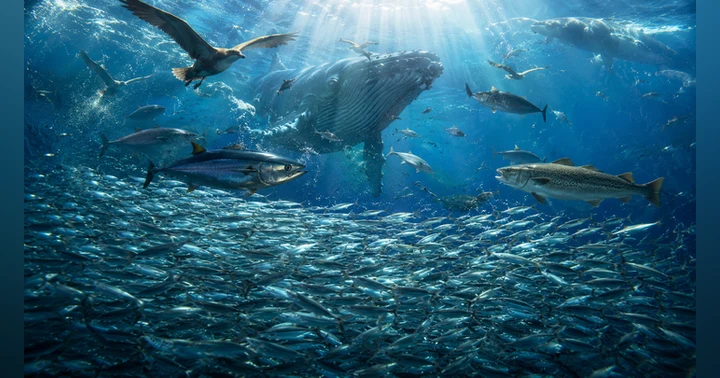
 Forage fish may be small, but they help hold the ocean food web together. Species like sardines, anchovies, herring, capelin, and sand lance feed whales, seabirds, salmon, cod, tuna, and many other predators.
In this episode of How to Protect the Ocean, Andrew Lewin explains why fishing these small fish for fishmeal, fish oil, aquaculture feed, livestock feed, pet food, and supplements can create major ripple effects across marine ecosystems.
The big question is not only whether forage fish populations can survive fishing pressure. It is whether the ocean can survive losing too much of the food that keeps predators alive.
Support Independent Podcasts: https://www.speakupforblue.com/patreon
Need help with your ocean non-profit, company, or project? Get the help you need with Pisces Oceans Inc.: https://www.piscesoceans.ca
Connect with Speak Up For Blue
Website: https://bit.ly/3fOF3Wf
Instagram: https://bit.ly/3rIaJSG
TikTok: https://www.tiktok.com/@speakupforblue
Twitter: https://bit.ly/3rHZxpc
YouTube: www.speakupforblue.com/youtube
00:00:00,050 --> 00:00:02,899
One of the biggest problem in ocean
fishing isn't just overfishing
2
00:00:02,899 --> 00:00:07,083
predators, but removing the food
those predators need to survive.
3
00:00:07,679 --> 00:00:11,109
This is the How to Protect the Ocean
podcast, your weekday ocean news update.
4
00:00:11,109 --> 00:00:14,669
If you care about staying informed
on the ocean every weekday, hit
5
00:00:14,669 --> 00:00:18,020
that follow button right now so
you do not miss tomorrow's episode.
6
00:00:18,020 --> 00:00:21,050
And this week, we're gonna be talking
about forage fish, and today in
7
00:00:21,050 --> 00:00:24,019
particular, we're gonna be talking
about a question that's becoming more
8
00:00:24,019 --> 00:00:25,859
important in marine conservation.
9
00:00:26,126 --> 00:00:30,763
What happens when humans start heavily
fishing the base of the ocean food web?
10
00:00:30,763 --> 00:00:31,913
I'm not talking about plankton.
11
00:00:31,943 --> 00:00:34,587
I'm talking about the things that
feed on plankton, and that's
12
00:00:34,657 --> 00:00:39,136
forage fish because that's exactly
what's happening with forage fish.
13
00:00:39,336 --> 00:00:42,626
These are species like sardines,
anchovies, herring, and capelin.
14
00:00:42,874 --> 00:00:44,244
Small fish, right?
15
00:00:44,484 --> 00:00:48,704
Huge importance and incredibly
massive industrial value.
16
00:00:49,177 --> 00:00:51,987
A surprising amount of forage
fish caught globally does not go
17
00:00:51,987 --> 00:00:53,587
directly to human dinner plates.
18
00:00:53,853 --> 00:00:57,465
Instead, many are processed
into fish meal and fish oils.
19
00:00:57,645 --> 00:01:00,685
You know, the fish oils that everybody
tells you to get omega fatty acids?
20
00:01:00,945 --> 00:01:05,431
It's a great way to get that, but how
much of these fish are being taken out
21
00:01:05,431 --> 00:01:09,221
compared to what's being left to run
the actual ecosystem and keep things
22
00:01:09,221 --> 00:01:13,839
stable and allow for fisheries of those
predators to be sustainable as well.
23
00:01:14,149 --> 00:01:18,339
The products that are created are then
used for aquaculture, livestock feed,
24
00:01:18,339 --> 00:01:20,448
pet food, and dietary supplements.
25
00:01:20,700 --> 00:01:25,540
That means that tiny fish that naturally
feed whales, tuna, salmon, sea birds,
26
00:01:25,540 --> 00:01:30,580
and cod are increasingly being
redirected into industrial supply chains.
27
00:01:30,955 --> 00:01:33,926
This type of fishing is often called
reduction fishing because the
28
00:01:33,926 --> 00:01:36,003
fish are reduced into ingredients.
29
00:01:36,333 --> 00:01:39,953
Now, fisheries managers do set
quotas and catch limits, but critics
30
00:01:39,953 --> 00:01:42,973
argue that traditional fisheries
management sometimes focuses too
31
00:01:42,973 --> 00:01:45,123
heavily on the target species itself.
32
00:01:45,453 --> 00:01:49,289
In other words, fisheries managers
are asking, "Can this fish population
33
00:01:49,289 --> 00:01:53,823
survive fishing pressure?" Instead
of asking, " Can the ecosystem
34
00:01:53,823 --> 00:01:56,666
survive losing this much food?
35
00:01:57,106 --> 00:02:00,016
And that distinction
actually matters quite a bit.
36
00:02:00,443 --> 00:02:03,013
Marine ecosystems are
deeply interconnected.
37
00:02:03,463 --> 00:02:06,893
You can't remove a major food
source without consequences.
38
00:02:07,256 --> 00:02:09,176
One major example is seabirds.
39
00:02:09,176 --> 00:02:10,766
We talked a little bit
about them yesterday.
40
00:02:10,956 --> 00:02:14,136
But researchers have documented
breeding failures in some seabirds
41
00:02:14,136 --> 00:02:16,949
populations during periods
of low forage fish abundance.
42
00:02:17,269 --> 00:02:19,979
The parents of these seabirds
literally could not find enough
43
00:02:19,979 --> 00:02:21,829
food to bring back to their chicks.
44
00:02:22,216 --> 00:02:24,346
Another example involves Atlantic cod.
45
00:02:24,386 --> 00:02:27,646
Historically, cod populations
depended heavily on forage fish.
46
00:02:28,053 --> 00:02:32,163
When those food webs become disrupted,
recovery becomes much harder.
47
00:02:32,523 --> 00:02:35,533
And this is one reason some scientists
argue we should stop viewing
48
00:02:35,533 --> 00:02:37,543
fisheries as isolated industries.
49
00:02:37,896 --> 00:02:40,416
The ocean is not a collection
of separate compartments.
50
00:02:40,416 --> 00:02:44,263
You can't just have salmon over
here, cod over here, tuna over here.
51
00:02:44,433 --> 00:02:46,263
It's a connected energy system.
52
00:02:46,646 --> 00:02:49,286
And forage fish sit near
the center of that system.
53
00:02:49,719 --> 00:02:51,379
There's also an efficiency question here.
54
00:02:51,769 --> 00:02:52,689
Think about it this way.
55
00:02:52,989 --> 00:02:55,529
We catch wild fish, they
turn them into feed.
56
00:02:55,766 --> 00:03:00,389
We feed them to farm fish or livestock,
then humans eat the final product.
57
00:03:00,839 --> 00:03:04,639
That can become a little bit of an
inefficient use of ocean protein,
58
00:03:04,796 --> 00:03:07,903
especially when ecosystems are
already under stress from warming
59
00:03:07,903 --> 00:03:09,933
oceans, habitat loss, and pollution.
60
00:03:10,283 --> 00:03:13,253
And climate change, of course,
adds another layer of risk, like
61
00:03:13,253 --> 00:03:16,836
probably the biggest layer of risk,
making everything else even worse.
62
00:03:16,956 --> 00:03:20,766
Marine heatwaves can reduce plankton
production, and that affects forage
63
00:03:20,766 --> 00:03:23,476
fish because that's their primary
food, which affects predators
64
00:03:23,476 --> 00:03:24,646
higher up in the food chain.
65
00:03:24,853 --> 00:03:27,333
So pressure compounds quite quickly.
66
00:03:27,691 --> 00:03:30,361
Now, one thing that I find really
interesting, we're gonna cover it
67
00:03:30,361 --> 00:03:33,781
in the later episodes, is the fact
that we don't communicate this a lot.
68
00:03:33,821 --> 00:03:36,761
Forage fish are not on
the topics of everybody in
69
00:03:36,761 --> 00:03:38,621
fisheries or anybody in oceans.
70
00:03:38,851 --> 00:03:40,851
We often think of it, if you're a
scientist, you think of them, yeah,
71
00:03:40,851 --> 00:03:44,041
they're an important part of the food web,
and they need to be managed appropriately.
72
00:03:44,041 --> 00:03:46,131
But a lot of times they don't get
managed appropriately, and there's
73
00:03:46,131 --> 00:03:49,391
not a lot of pressure on governments
from the people who vote them in
74
00:03:49,391 --> 00:03:51,834
there, vote these representatives
in there to do that because
75
00:03:51,834 --> 00:03:53,044
there's not a lot of communication.
76
00:03:53,044 --> 00:03:56,364
And communication is really important
in science and conservation in
77
00:03:56,364 --> 00:03:59,908
general, and we don't do enough science
communication and because it's hard.
78
00:03:59,908 --> 00:04:01,558
And we're not incentivized to do it.
79
00:04:01,734 --> 00:04:03,204
We're not paid extra to do it.
80
00:04:03,364 --> 00:04:05,814
A lot of scientists have other
things that they have to do.
81
00:04:05,814 --> 00:04:08,864
They have to publish in journals
that are hidden behind paywalls,
82
00:04:08,894 --> 00:04:10,174
but it can't get out to the public.
83
00:04:10,388 --> 00:04:12,688
And it's difficult for them to do
it 'cause they're so busy managing
84
00:04:12,688 --> 00:04:13,864
students and everything like that.
85
00:04:14,101 --> 00:04:17,391
And so what we do is we have
people to do that for you, science
86
00:04:17,391 --> 00:04:20,478
communicators, who have done a
great job in doing it in the past.
87
00:04:20,478 --> 00:04:23,008
And one of those people is a person
that I work-- is, is a company that
88
00:04:23,008 --> 00:04:26,628
I work for, Pisces Ocean, who's
a sponsor of this episode, who we
89
00:04:26,628 --> 00:04:30,758
value the fact that we need to talk
more about fish like forage fish.
90
00:04:30,968 --> 00:04:34,498
And then we value the fact that this
is an important part of the ecosystem,
91
00:04:34,564 --> 00:04:38,104
and we wanna make sure that people
get that message out there quickly,
92
00:04:38,104 --> 00:04:41,874
not just to their own constituents,
but also broaden that message.
93
00:04:41,874 --> 00:04:45,124
And we can do that at Pisces by
either help you running campaigns,
94
00:04:45,258 --> 00:04:47,058
strategize for those campaigns.
95
00:04:47,318 --> 00:04:50,581
And it's okay, like I know a lot of
nonprofits don't have a ton of money
96
00:04:50,581 --> 00:04:52,461
to hire a consulting firm to do that.
97
00:04:52,651 --> 00:04:56,078
We do have a program called Pisces
Points where you can try and
98
00:04:56,078 --> 00:04:58,708
get, like, if you want us to run
a campaign, we can run a campaign.
99
00:04:58,708 --> 00:05:00,888
If you would later on want us
to run social media or make
100
00:05:00,888 --> 00:05:03,298
some posts or something like
that, we have that all for you.
101
00:05:03,521 --> 00:05:06,808
We just require a strategy session
before that and a wayfinder,
102
00:05:06,848 --> 00:05:08,118
what we call a wayfinder.
103
00:05:08,118 --> 00:05:10,658
So speaking of wayfinder, why don't
you go to the website right now,
104
00:05:10,748 --> 00:05:15,504
piscesoceans.ca for that wayfinder
and be able to see what you need help
105
00:05:15,504 --> 00:05:17,584
in, and we can help you in that area.
106
00:05:17,584 --> 00:05:19,891
So go to piscesoceans.ca.
107
00:05:19,891 --> 00:05:23,728
I'll put the link in the show notes,
and you'll be able to get access to it.
108
00:05:24,021 --> 00:05:27,334
Let's get back to the episode going
back to what happens next in
109
00:05:27,334 --> 00:05:28,934
terms of how do we manage this.
110
00:05:29,221 --> 00:05:33,661
This is where ecosystem-based fisheries
management plays a really important role.
111
00:05:34,028 --> 00:05:37,548
Instead of managing fish species
independently, scientists and policymakers
112
00:05:37,548 --> 00:05:41,811
are increasingly trying to manage
ecosystems as connected systems.
113
00:05:42,201 --> 00:05:46,191
That means leaving enough forage fish
in the water for those predators, not
114
00:05:46,191 --> 00:05:48,454
just to sustain individual fisheries.
115
00:05:48,858 --> 00:05:51,858
Some fisheries are beginning to
adopt a precautionary approach, so
116
00:05:51,858 --> 00:05:55,348
catch limits may be lowered when
predator populations struggle.
117
00:05:55,763 --> 00:05:59,713
Managers may close fisheries seasonally
during sensitive feeding periods.
118
00:06:00,139 --> 00:06:04,399
And researchers are improving ecosystem
models to better predict ripple effects.
119
00:06:04,679 --> 00:06:08,759
But this is still a difficult balance
to act because forage fish fisheries
120
00:06:08,859 --> 00:06:11,239
support jobs and industries too.
121
00:06:11,476 --> 00:06:14,803
That means policymakers often face
competing pressures between economic
122
00:06:14,803 --> 00:06:16,776
interests and ecosystem health.
123
00:06:17,246 --> 00:06:19,036
That's not something that
you wanna have to balance.
124
00:06:19,036 --> 00:06:22,169
And honestly, like, this debate is
probably going to intensify over
125
00:06:22,169 --> 00:06:25,626
the next decade because as climate
stress increases, resilient
126
00:06:25,626 --> 00:06:29,876
ecosystems become more valuable,
and healthy oceans need redundancy.
127
00:06:30,049 --> 00:06:31,789
They need that abundance.
128
00:06:31,919 --> 00:06:33,429
They need functioning food webs.
129
00:06:33,429 --> 00:06:37,356
They need diversity to just stabilize
the system, and that starts with
130
00:06:37,356 --> 00:06:39,246
protecting those foundational species.
131
00:06:39,476 --> 00:06:42,976
Even when you talk about diversity in
forage fish species, you still wanna
132
00:06:42,976 --> 00:06:47,726
have a diversity of forage fish species
in that particular habitat or ecosystem.
133
00:06:47,929 --> 00:06:51,169
' Cause if you don't, then if that
species declines, your predatory
134
00:06:51,276 --> 00:06:52,899
species are gonna decline right away.
135
00:06:53,079 --> 00:06:56,189
But if you have a diversity of
forage fish species, now you can
136
00:06:56,189 --> 00:06:59,609
actually see, you know, if one falls
off or declines a little bit, the
137
00:06:59,609 --> 00:07:03,639
predators can switch to the others
while the one population increases.
138
00:07:03,639 --> 00:07:07,679
So if herring drops off, anchovies
can go higher or what have you, right?
139
00:07:07,679 --> 00:07:08,919
If they're in the same space.
140
00:07:09,249 --> 00:07:12,829
Now, we may be catching the exact
fish the ocean needs most, right?
141
00:07:12,829 --> 00:07:13,689
We can forage fish.
142
00:07:13,956 --> 00:07:16,976
And protecting predators means very
little if we fail to protect the food
143
00:07:16,976 --> 00:07:18,356
that keeps those predators alive.
144
00:07:18,526 --> 00:07:20,666
I want you to understand how
much of a fundamental shift
145
00:07:20,666 --> 00:07:22,056
this is in terms of management.
146
00:07:22,346 --> 00:07:25,806
Because even back when I was working for
Department of Fisheries and Oceans, they
147
00:07:25,806 --> 00:07:27,526
changed the Fisheries Act in Canada.
148
00:07:27,799 --> 00:07:29,829
And when they changed it,
they changed like, let's just
149
00:07:29,829 --> 00:07:31,349
manage the fishing species.
150
00:07:31,349 --> 00:07:34,649
So if there's been an industrialized
fishing species or commercialized
151
00:07:34,649 --> 00:07:38,343
fishing species or even an indigenous
fishing species that has been
152
00:07:38,343 --> 00:07:40,603
established for the last 30 years,
we are going to manage that.
153
00:07:40,603 --> 00:07:41,873
We're not going to
manage their food source.
154
00:07:41,989 --> 00:07:43,589
We're just going to manage those species.
155
00:07:43,873 --> 00:07:45,993
Well, you can't just manage
those fishery species being like,
156
00:07:45,993 --> 00:07:47,083
can we catch enough of them?
157
00:07:47,316 --> 00:07:47,756
That's great.
158
00:07:47,756 --> 00:07:48,956
Are there enough that we can catch?
159
00:07:49,136 --> 00:07:50,886
We don't care about the
rest of the ecosystem.
160
00:07:51,129 --> 00:07:52,999
That's what that policy essentially said.
161
00:07:53,286 --> 00:07:56,063
And then when that government left
and the other government came in to
162
00:07:56,063 --> 00:07:57,283
say, hey, look, you know what?
163
00:07:57,283 --> 00:08:01,383
We're going to rebuild the Fisheries
Act to make it even stronger
164
00:08:01,463 --> 00:08:06,399
and to remove that silly policy
change and bring back the fish
165
00:08:06,399 --> 00:08:08,749
habitat part of managing fisheries.
166
00:08:08,896 --> 00:08:12,943
That became a lot stronger because
now we are looking at food sources,
167
00:08:12,943 --> 00:08:15,676
we're looking at habitat sources,
we're looking at a lot of different
168
00:08:15,676 --> 00:08:17,446
things that affect these fish.
169
00:08:17,486 --> 00:08:20,286
Other outside pressures, marine
pollution, climate change,
170
00:08:20,373 --> 00:08:23,703
overfishing, all that kind of stuff
makes a difference in the way that
171
00:08:23,703 --> 00:08:25,673
we manage these fishery species.
172
00:08:25,853 --> 00:08:30,439
So protecting predators, as I said before,
it means very little if we fail to protect
173
00:08:30,439 --> 00:08:32,949
the food that keeps these predators alive.
174
00:08:33,146 --> 00:08:34,496
And that's what really matters.
175
00:08:34,496 --> 00:08:37,216
And that's what I want you to
take home from this episode.
176
00:08:37,246 --> 00:08:40,703
And of course, if you know someone who
is interested in this type of stuff or
177
00:08:40,703 --> 00:08:43,343
you know a researcher who's interested in
forage fish and they would like to come
178
00:08:43,343 --> 00:08:46,973
on and talk more about forage fish here on
the podcast, please share this episode.
179
00:08:47,089 --> 00:08:49,156
And of course, don't forget to
follow this podcast, the How to
180
00:08:49,156 --> 00:08:52,486
Protect the Ocean podcast, so you
can get your next weekday update.
181
00:08:52,616 --> 00:08:56,396
And of course, Friday, in a couple of
days, we are going to be talking to Jack
182
00:08:56,396 --> 00:09:00,773
Daly from Oceana Canada all about their
new report in Canada about forage fish.
183
00:09:00,966 --> 00:09:02,196
It's a really great report.
184
00:09:02,366 --> 00:09:03,356
I want you to take a look at it.
185
00:09:03,356 --> 00:09:04,646
We're going to dive deep into it.
186
00:09:04,646 --> 00:09:07,096
And this is kind of prepping you
for understanding how important
187
00:09:07,096 --> 00:09:08,766
forage fish are for that interview.
188
00:09:08,766 --> 00:09:11,616
So thank you so much for joining
me on today's episode of the How
189
00:09:11,616 --> 00:09:12,866
to Protect the Ocean podcast.
190
00:09:12,866 --> 00:09:13,896
I'm your host, Andrew Lewin.
191
00:09:13,896 --> 00:09:17,136
We'll talk to you tomorrow and have
a great day and happy conservation.