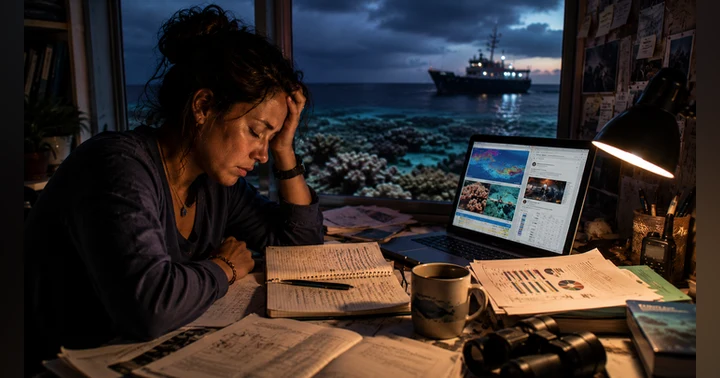
The People Saving the Ocean Are Burning Out


 Apple Podcasts
 Spotify
 YouTube
 Amazon Music
 PocketCasts
 Overcast
 Ocean conservation is often framed as hopeful, inspiring, and mission-driven. But behind the scenes, many scientists, advocates, educators, and communicators are dealing with burnout, financial instability, emotional exhaustion, and the pressure to stay optimistic while ocean problems keep getting worse.
In this episode of How to Protect the Ocean, we look at the emotional cost of trying to save the ocean. From temporary contracts and unstable funding to social media pressure and the personal grief of watching ecosystems decline, conservation work can take a serious toll on the people doing it.
This episode asks an important question: if protecting the ocean is long-term work, why are so many of the people doing that work still forced into unsustainable careers?
Support Independent Podcasts: https://www.speakupforblue.com/patreon
Need help with your ocean non-profit, company, or project? Get the help you need with Pisces Oceans Inc.: https://www.piscesoceans.ca
Connect with Speak Up For Blue
Website: https://bit.ly/3fOF3Wf
Instagram: https://bit.ly/3rIaJSG
TikTok: https://www.tiktok.com/@speakupforblue
Twitter: https://bit.ly/3rHZxpc
YouTube: www.speakupforblue.com/youtube
00:00:00,049 --> 00:00:03,709
A growing number of people working in
ocean conservation, they're exhausted.
2
00:00:03,979 --> 00:00:06,309
They're burnt out and
quietly leaving the field.
3
00:00:06,810 --> 00:00:09,800
This is the How to Protect the Ocean
podcast, your weekday ocean news update.
4
00:00:09,829 --> 00:00:13,489
If you care about staying informed
about the ocean news every weekday,
5
00:00:13,539 --> 00:00:16,539
hit that follow button right now
so you don't miss tomorrow's story.
6
00:00:17,136 --> 00:00:21,346
Look, most people enter ocean conservation
because they care deeply for the ocean.
7
00:00:21,806 --> 00:00:23,066
They love marine life.
8
00:00:23,286 --> 00:00:25,496
They want to protect ecosystems.
9
00:00:25,803 --> 00:00:27,053
They wanna make a difference.
10
00:00:27,216 --> 00:00:30,446
But behind the scenes, many conservation
professionals are dealing with
11
00:00:30,446 --> 00:00:32,276
something much harder to talk about.
12
00:00:32,716 --> 00:00:35,476
That's burnout, emotional exhaustion,
13
00:00:35,786 --> 00:00:38,586
financial instability, to be
honest, and the feeling that
14
00:00:38,586 --> 00:00:40,626
problems keep getting bigger.
15
00:00:41,306 --> 00:00:45,593
So today's question is this:
What is the emotional cost
16
00:00:45,593 --> 00:00:47,563
of trying to save the ocean?
17
00:00:48,096 --> 00:00:51,076
Ocean conservation is often crisis-driven.
18
00:00:51,359 --> 00:00:55,546
Scientists study declining coral
reefs, fisheries collapse, marine
19
00:00:55,546 --> 00:01:00,596
heatwaves, plastic pollution, species
decline, and many professionals spend
20
00:01:00,596 --> 00:01:02,936
years immersed in those realities.
21
00:01:03,236 --> 00:01:07,953
That takes a psychological toll,
especially when progress feels
22
00:01:07,993 --> 00:01:13,273
extremely slow, or when funding just
disappears, or when political decisions
23
00:01:13,273 --> 00:01:17,463
ignore scientific recommendations,
hint, hint, Trump administration.
24
00:01:17,869 --> 00:01:21,390
And of course, there's also the financial
reality of just not getting funding.
25
00:01:21,756 --> 00:01:26,016
Many early career conservation jobs
are temporary or contract-based.
26
00:01:26,326 --> 00:01:30,436
People move constantly between projects
and move far for these projects.
27
00:01:30,736 --> 00:01:34,206
Some leave the field entirely
because they can't build stable
28
00:01:34,206 --> 00:01:36,286
careers or even stable lifestyles.
29
00:01:36,486 --> 00:01:40,656
And despite the emotional intensity of
the work, mental health conversations in
30
00:01:40,656 --> 00:01:43,136
conservation are still relatively limited.
31
00:01:43,579 --> 00:01:45,409
There's another challenge
that we're seeing here.
32
00:01:45,826 --> 00:01:50,006
Conservation organizations often feel
pressure to stay hopeful publicly.
33
00:01:50,386 --> 00:01:52,136
Everybody wants to be optimistic.
34
00:01:52,376 --> 00:01:54,066
And to be honest, that makes sense.
35
00:01:54,473 --> 00:01:57,263
People respond better to
optimism than to doom.
36
00:01:57,293 --> 00:02:01,023
But internally, many professionals
are carrying frustration, grief, and
37
00:02:01,023 --> 00:02:05,976
exhaustion, especially when ecosystems
continue declining despite years of
38
00:02:05,976 --> 00:02:08,176
work, years of science communication.
39
00:02:08,386 --> 00:02:09,996
And of course, social
media adds another layer.
40
00:02:09,996 --> 00:02:15,206
Scientists and advocates are increasingly
expected to communicate constantly online
41
00:02:15,260 --> 00:02:17,220
with no financial incentive, mind you.
42
00:02:17,496 --> 00:02:17,576
Right?
43
00:02:17,576 --> 00:02:19,946
We talked about it the other
day, and that made sense.
44
00:02:19,946 --> 00:02:22,666
You should have a growing profile,
and you should be talking about it.
45
00:02:22,666 --> 00:02:25,650
We always love to talk about it, but it's
not necessarily part of our job, although
46
00:02:25,650 --> 00:02:28,360
it's starting to be more and more part
of our job, which is nice and helpful.
47
00:02:28,823 --> 00:02:31,533
But it can create pressure
to always appear productive,
48
00:02:31,573 --> 00:02:32,693
informed, and optimistic.
49
00:02:32,693 --> 00:02:34,813
Like, there are so many times as
I was doing this podcast where I
50
00:02:34,813 --> 00:02:37,403
didn't want to share clips online
because I wasn't near an ocean.
51
00:02:37,403 --> 00:02:40,193
I wasn't showing what it was like to
be on a boat or doing field work like a
52
00:02:40,193 --> 00:02:41,593
lot of other people who are successful.
53
00:02:41,750 --> 00:02:44,830
I don't have access to go diving
into a coral reef and look at
54
00:02:44,830 --> 00:02:46,006
this kind of beautiful thing.
55
00:02:46,220 --> 00:02:46,300
Right?
56
00:02:46,300 --> 00:02:49,553
I don't have access to see sea turtles
or dolphins as I'm driving a boat around.
57
00:02:49,906 --> 00:02:54,143
I sit in an office, and I talk about ocean
conservation and science on this podcast.
58
00:02:54,446 --> 00:02:56,073
And it's great for me, but it's tough.
59
00:02:56,073 --> 00:02:58,663
It's a lot of pressure to share online
because I'm like, "Is this actually
60
00:02:58,663 --> 00:03:03,330
gonna land? Is it gonna stick?" So even
when people are overwhelmed, and because
61
00:03:03,330 --> 00:03:07,460
many conservation professionals care
deeply about the ocean personally, work
62
00:03:07,460 --> 00:03:10,230
stress often becomes emotional stress.
63
00:03:10,650 --> 00:03:13,160
And the ocean is just not a job to them.
64
00:03:13,290 --> 00:03:14,700
It's part of their identity.
65
00:03:15,013 --> 00:03:18,556
I've explained this before, but as a
marine biologist or ocean conservationist,
66
00:03:18,556 --> 00:03:22,236
when you do work in the ocean, it's
really tough to turn that off.
67
00:03:22,236 --> 00:03:25,876
You're always thinking about what
you can do for the ocean, what type
68
00:03:25,876 --> 00:03:27,136
of projects you can come up with.
69
00:03:27,186 --> 00:03:28,673
You gotta write those ideas down.
70
00:03:28,833 --> 00:03:32,770
You gotta do some scientific analysis
if you're a data cruncher, and you're
71
00:03:32,770 --> 00:03:36,010
trying to figure out how to get across,
like, this R code, and you haven't figured
72
00:03:36,010 --> 00:03:38,390
it out, and then all of a sudden, at two
in the morning, you wake up, and you're
73
00:03:38,390 --> 00:03:40,260
like, "Eureka, I've figured it out."
74
00:03:40,260 --> 00:03:42,930
And you go on your computer, like,
from two to four in the morning
75
00:03:42,930 --> 00:03:45,400
because you haven't actually figured
it out, and it just stresses you
76
00:03:45,400 --> 00:03:46,690
out, so you're not getting the sleep.
77
00:03:46,953 --> 00:03:49,463
It's like being a marine biologist,
being in ocean conservation
78
00:03:49,463 --> 00:03:50,813
is part of our identity.
79
00:03:51,190 --> 00:03:54,109
And so, like, having
that is really difficult.
80
00:03:54,443 --> 00:03:57,586
It's really difficult to
deal with on a daily basis.
81
00:03:57,960 --> 00:03:59,280
You have to come up with boundaries.
82
00:03:59,420 --> 00:04:00,539
There's no doubt about that.
83
00:04:00,829 --> 00:04:02,010
Boundaries is a huge thing.
84
00:04:02,286 --> 00:04:05,726
But I think conservation organizations are
slowly starting to recognize this issue.
85
00:04:06,046 --> 00:04:09,176
There's growing conversation around
burnout, healthier workplaces,
86
00:04:09,176 --> 00:04:12,180
sustainable careers, and better
support systems within that.
87
00:04:12,210 --> 00:04:15,503
Even at conservation conferences,
we're starting to see more support
88
00:04:15,503 --> 00:04:18,060
for people so they feel more
included, so they wanna come.
89
00:04:18,480 --> 00:04:21,540
If they're new parents and
they wanna bring their kids,
90
00:04:21,540 --> 00:04:23,180
there's daycare at these places.
91
00:04:23,436 --> 00:04:26,976
'Cause if it's really, really far, there's
some scholarships that you can take or
92
00:04:26,976 --> 00:04:30,483
some grants that you can get or bursaries
that you can get to fly across there.
93
00:04:30,686 --> 00:04:34,056
Or they're moving conferences from place
to place or all around the world so
94
00:04:34,056 --> 00:04:37,466
that it's easily accessible to places
where that normally can't go to like
95
00:04:37,466 --> 00:04:40,546
North America because they live in
Asia, and it's expensive to go there.
96
00:04:40,816 --> 00:04:43,666
So we're starting to see
things change in that way.
97
00:04:43,910 --> 00:04:47,150
But some organizations are also
discussing like mental health resources,
98
00:04:47,266 --> 00:04:51,926
realistic workloads, long-term funding
stability, and communication boundaries.
99
00:04:52,226 --> 00:04:52,876
That's really good.
100
00:04:52,876 --> 00:04:56,826
And to be honest, it actually matters
because conservation requires people.
101
00:04:57,246 --> 00:05:02,010
If experienced scientists, communicators,
educators, and advocates keep
102
00:05:02,010 --> 00:05:05,996
burning out, the entire movement
loses knowledge and momentum.
103
00:05:06,396 --> 00:05:08,796
And protecting the ocean,
it's long-term work.
104
00:05:08,796 --> 00:05:09,813
It's a career thing.
105
00:05:10,393 --> 00:05:13,473
That means people who are doing the
work need sustainable careers too.
106
00:05:13,790 --> 00:05:16,100
Enough of this paying
by contract by contract.
107
00:05:16,150 --> 00:05:18,560
It's up to the conservation
organizations to do more to
108
00:05:18,560 --> 00:05:20,280
get better sustainable funding.
109
00:05:20,370 --> 00:05:23,330
And to be honest, if you wanna get better
sustainable funding, you can check
110
00:05:23,330 --> 00:05:26,420
out the sponsor of the show and the
place that I work for, Pisces Oceans.
111
00:05:26,726 --> 00:05:30,656
We work to help with your communication
for your organization to get out to
112
00:05:30,656 --> 00:05:34,780
the right people, speak to the right
audiences, and get known for what you do
113
00:05:34,876 --> 00:05:39,416
and get funded for what you do and have
that long-term stability, that financial
114
00:05:39,416 --> 00:05:43,373
stability so that you can get your
workers, your staff long-term stability,
115
00:05:43,373 --> 00:05:47,453
financial stability, and be happier with
those boundaries and with that stability.
116
00:05:47,696 --> 00:05:49,996
So check that out, piscesoceans.ca.
117
00:05:50,213 --> 00:05:51,143
Love to work with you.
118
00:05:51,366 --> 00:05:54,946
Hit me up on LinkedIn or any of my
socials in the show notes, and I'd
119
00:05:54,946 --> 00:05:57,126
love to have a conversation with that.
120
00:05:57,586 --> 00:06:01,353
So the future of ocean conservation
really depends not just on protecting
121
00:06:01,363 --> 00:06:04,636
ecosystems, but on support for the
people who are trying to protect them.
122
00:06:04,966 --> 00:06:06,656
I think that's a really important thing.
123
00:06:07,106 --> 00:06:09,856
It's really important to protect
the people who are working on these
124
00:06:09,856 --> 00:06:12,283
systems 'cause they work hard, and
they have a lot of passion for
125
00:06:12,283 --> 00:06:13,723
this, but they deserve better.
126
00:06:13,723 --> 00:06:17,413
We all deserve better for things that
are happening in and around our ocean,
127
00:06:17,413 --> 00:06:18,583
and we're trying to protect them.
128
00:06:19,003 --> 00:06:22,163
So if you enjoyed this episode and you
wanna check out the interview that I'm
129
00:06:22,163 --> 00:06:26,193
doing tomorrow with James Misner, who's
a nonprofit consultant, he gave great
130
00:06:26,193 --> 00:06:31,456
tips with ocean consulting or ocean
conservation, nonprofit like organization
131
00:06:31,456 --> 00:06:33,006
and business management and fundraising.
132
00:06:33,243 --> 00:06:34,443
That's the episode you wanna hit.
133
00:06:34,443 --> 00:06:37,220
So hit that follow button right now
so you don't miss tomorrow's episode.
134
00:06:37,506 --> 00:06:38,636
That's it for today's episode.
135
00:06:38,636 --> 00:06:41,166
I wanna thank you so much for
joining me on today's episode of the
136
00:06:41,166 --> 00:06:42,426
How to Protect the Ocean podcast.
137
00:06:42,656 --> 00:06:43,356
Have a great day.
138
00:06:43,396 --> 00:06:45,446
We'll talk to you next time,
and happy conservation.