Why Good Ocean Science Still Doesn’t Lead to Action


 Apple Podcasts
 Spotify
 YouTube
 Amazon Music
 PocketCasts
 Overcast
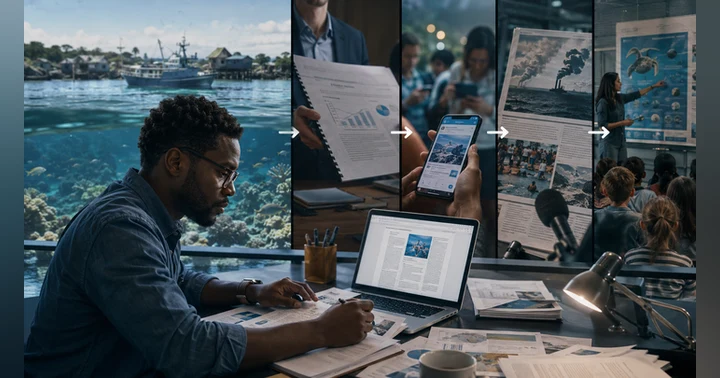
 Ocean science can tell us what is happening to marine ecosystems, fisheries, climate impacts, and protected areas, but that information does not always reach the people who need it most.
In this episode of How to Protect the Ocean, Andrew Lewin looks at the communication gap between researchers, policymakers, media, industry, and the public. The problem is not always a lack of science. Often, it is that the science moves slowly, social media moves instantly, and decision-makers do not always receive clear, accessible information in time to act.
This episode explores why scientific papers can be difficult for the public to access, how misinformation spreads faster than careful research, and why ocean conservation needs stronger science communication, storytelling, and public engagement to turn knowledge into action.
Support Independent Podcasts: https://www.speakupforblue.com/patreon
Need help with your ocean non-profit, company, or project? Get the help you need with Pisces Oceans Inc.: https://www.piscesoceans.ca
Connect with Speak Up For Blue
Website: https://bit.ly/3fOF3Wf
Instagram: https://bit.ly/3rIaJSG
TikTok: https://www.tiktok.com/@speakupforblue
Twitter: https://bit.ly/3rHZxpc
YouTube: www.speakupforblue.com/youtube
00:00:00,050 --> 00:00:03,610
We may already know how to protect
large parts of the ocean, but that
2
00:00:03,610 --> 00:00:07,610
knowledge often fails to reach
the people making the decisions.
3
00:00:08,230 --> 00:00:11,409
This is the How to Protect the Ocean
podcast, your weekday ocean news update.
4
00:00:11,440 --> 00:00:15,090
If you care about staying informed
about the ocean every weekday, hit
5
00:00:15,090 --> 00:00:18,219
that follow button right now so
you don't miss tomorrow's story.
6
00:00:18,919 --> 00:00:21,230
There's a common
assumption in conservation.
7
00:00:21,560 --> 00:00:24,656
If scientists discover something
important, governments and the
8
00:00:24,656 --> 00:00:26,876
public will eventually respond, right?
9
00:00:26,876 --> 00:00:29,036
That's how it always works, isn't it?
10
00:00:29,240 --> 00:00:31,429
But no, that's not always what happens.
11
00:00:31,429 --> 00:00:33,326
In fact, that rarely happens.
12
00:00:33,583 --> 00:00:36,750
There's growing evidence that
one of the biggest platforms in
13
00:00:36,750 --> 00:00:38,910
conservation is not a lack of science.
14
00:00:39,220 --> 00:00:44,883
It's a communication gap, a gap between
researchers, policymakers, industries,
15
00:00:45,093 --> 00:00:47,103
media systems, and the public.
16
00:00:47,343 --> 00:00:50,003
And that gap can slow down real action.
17
00:00:50,473 --> 00:00:55,009
So today's question is this: Why does so
much important ocean science struggle
18
00:00:55,189 --> 00:00:58,099
to reach the people who need to hear it?
19
00:00:58,496 --> 00:01:00,946
Now, this is one of the things
that I love to talk about.
20
00:01:00,946 --> 00:01:03,899
It's all about communication,
so we are going to get into it.
21
00:01:04,409 --> 00:01:07,009
Researchers often call this
the science practice gap.
22
00:01:07,329 --> 00:01:10,556
Scientists may publish strong
evidence about ecosystem decline,
23
00:01:10,556 --> 00:01:13,673
fisheries management, climate
impacts, or even marine protection.
24
00:01:13,979 --> 00:01:17,539
But translating that science
into policy is much harder
25
00:01:17,833 --> 00:01:19,973
because the problem is timing.
26
00:01:20,263 --> 00:01:22,583
Science research moves very slowly.
27
00:01:22,803 --> 00:01:27,493
Politics moves unpredictably,
and social media moves instantly.
28
00:01:27,813 --> 00:01:29,993
That creates a huge disconnect.
29
00:01:30,273 --> 00:01:34,093
By the time important findings reach
public discussion, the online conservation
30
00:01:34,093 --> 00:01:35,933
may already be focused on something else.
31
00:01:35,933 --> 00:01:37,869
Like, even just think as an analogy.
32
00:01:38,006 --> 00:01:40,976
If some scandal happens on social
media, say with an influencer.
33
00:01:41,259 --> 00:01:44,740
Say, you know, somebody from Love
Island cheated on the partner that they
34
00:01:44,740 --> 00:01:47,360
won the Love Island with, and I don't
know anything about Love Island, so
35
00:01:47,360 --> 00:01:48,420
I don't know if this happened worse.
36
00:01:48,629 --> 00:01:50,369
Just heard my daughters
talking about earlier today.
37
00:01:50,536 --> 00:01:53,886
If that happens, if there's a scandal
in real life, like after the show has
38
00:01:53,886 --> 00:01:57,306
been shot and aired, that becomes a
scandal for like maybe twenty-four hours.
39
00:01:57,486 --> 00:01:58,996
If they're lucky, forty-eight hours.
40
00:01:59,183 --> 00:02:01,443
And then it just disappears,
like nothing ever happened.
41
00:02:01,843 --> 00:02:04,670
That's the same thing that happens on
social media with even ocean research.
42
00:02:04,670 --> 00:02:08,270
You see it pop up for maybe a day,
maybe two, and then it just disappears.
43
00:02:08,510 --> 00:02:11,720
But the research that's actually driving
that took about three to four years.
44
00:02:11,720 --> 00:02:14,300
So that study happened, like
the field work happened as
45
00:02:14,450 --> 00:02:15,890
early as like five years ago.
46
00:02:15,900 --> 00:02:19,603
It it takes so long to write,
and then you have like two days,
47
00:02:19,633 --> 00:02:21,673
maybe maximum, of attention on it.
48
00:02:22,006 --> 00:02:24,906
And that could go to a lot of
just different media outlets.
49
00:02:24,906 --> 00:02:27,916
It's going on social media, and people
may or may not talk about it, and
50
00:02:27,916 --> 00:02:32,203
sometimes they talk negatively about it,
even though they did a lot to have this
51
00:02:32,203 --> 00:02:35,770
wonderful campaign go out and then all
of a sudden people just misinterpret
52
00:02:35,770 --> 00:02:36,970
it and just don't believe in it.
53
00:02:37,020 --> 00:02:39,496
Like, there's a lot of stuff
going on, on social media.
54
00:02:39,546 --> 00:02:40,186
There's also that.
55
00:02:40,186 --> 00:02:41,806
So the timing really sucks.
56
00:02:41,806 --> 00:02:43,653
And of course, another
problem is accessibility.
57
00:02:43,803 --> 00:02:47,286
Scientific papers are often
written for specialists, and they're
58
00:02:47,286 --> 00:02:48,996
only available for specialists.
59
00:02:48,996 --> 00:02:50,316
They use technical language.
60
00:02:50,553 --> 00:02:51,933
They're hidden behind paywalls.
61
00:02:51,933 --> 00:02:56,703
Like, it costs $40 probably
around that US to access if you
62
00:02:56,703 --> 00:02:58,713
don't have a subscription, which
are like tens of thousands of
63
00:02:58,713 --> 00:03:00,230
dollars, to a science magazine.
64
00:03:00,270 --> 00:03:03,443
It costs $40 per article
just to get access to it.
65
00:03:03,443 --> 00:03:04,723
Now, there are ways around it.
66
00:03:04,723 --> 00:03:07,673
You can reach out to the researcher
personally and be able to do that,
67
00:03:07,673 --> 00:03:11,356
but not every researcher's gonna be
able to handle hundreds of people
68
00:03:11,356 --> 00:03:12,656
trying to get access to the data.
69
00:03:12,656 --> 00:03:14,186
And then there's the technical language.
70
00:03:14,263 --> 00:03:15,083
That it has to do it.
71
00:03:15,243 --> 00:03:18,383
And they may not clearly explain what
everyday people should care about.
72
00:03:18,383 --> 00:03:22,223
Like when I went to school, I did
a plant biology class right before I
73
00:03:22,223 --> 00:03:25,136
did my master's, because I remember
I had to redo a semester just to show
74
00:03:25,136 --> 00:03:27,766
that I could get good marks, 'cause
my undergrad marks weren't the best.
75
00:03:27,950 --> 00:03:29,756
But regardless, I had to do this.
76
00:03:29,756 --> 00:03:30,876
I did this class, and it was great.
77
00:03:30,876 --> 00:03:32,056
There was only two people in the class.
78
00:03:32,086 --> 00:03:33,066
It was a fourth-year class.
79
00:03:33,066 --> 00:03:35,336
It was plant biology, which
it wasn't my strong suit.
80
00:03:35,516 --> 00:03:37,850
But the great part about
that class is every class we
81
00:03:37,850 --> 00:03:38,890
would have to read a paper.
82
00:03:39,280 --> 00:03:42,490
And then during that class, the
professor would go through and ask us
83
00:03:42,490 --> 00:03:45,900
questions about the paper and then
talk about how everything was set
84
00:03:45,900 --> 00:03:49,830
up, the methodology, what we thought
about it, the interpretation, the
85
00:03:49,830 --> 00:03:52,130
introduction, all these different
types of things, and you're just
86
00:03:52,130 --> 00:03:54,116
like, "Wow, this is really cool.
87
00:03:54,166 --> 00:03:58,190
I can actually do a lot with this." And
I learned so much, and I was trained
88
00:03:58,190 --> 00:04:03,880
so well in learning how to interpret
and how to read this type of paper.
89
00:04:04,350 --> 00:04:07,920
So for someone who hasn't done the
training or spent the money to go to
90
00:04:07,920 --> 00:04:11,863
university to train how to read these
papers or even write these papers, it can
91
00:04:11,863 --> 00:04:13,313
be a difficult thing to understand, right?
92
00:04:13,723 --> 00:04:15,693
We're not used to this
type of terminology.
93
00:04:15,723 --> 00:04:19,173
Don't forget the acronyms that we use
in science, which is like sometimes I
94
00:04:19,173 --> 00:04:20,453
don't even understand what's going on.
95
00:04:20,700 --> 00:04:23,320
And then of course, there's the
fact that misinformation spreads
96
00:04:23,320 --> 00:04:26,900
so quickly because it's simple,
emotional, and easy to share.
97
00:04:27,273 --> 00:04:29,523
And then that really
puts a damper on things.
98
00:04:29,693 --> 00:04:31,973
That puts conservation scientists
in a difficult position.
99
00:04:32,333 --> 00:04:34,660
Because as scientists,
we need an accuracy.
100
00:04:34,940 --> 00:04:37,610
We also need clarity, but
we don't always get that.
101
00:04:37,610 --> 00:04:41,330
We can't always display it because
science is not easy, and sometimes
102
00:04:41,330 --> 00:04:42,570
it's not gonna be good news.
103
00:04:42,570 --> 00:04:45,420
Oftentimes, it's not gonna be good
news, and nobody wants to hear bad news.
104
00:04:45,420 --> 00:04:46,570
They wanna hear good news.
105
00:04:46,716 --> 00:04:49,526
And so when you start to go out
or you start to clarify something,
106
00:04:49,526 --> 00:04:52,483
like, I remember when Seaspiracy
came out as a documentary on Netflix,
107
00:04:52,643 --> 00:04:54,163
horrible, horrible documentary.
108
00:04:54,400 --> 00:04:57,660
But when scientists came out to speak
out on it, we were the bad people.
109
00:04:58,070 --> 00:05:00,480
We were the bad scientists who
were ruining everybody's day.
110
00:05:00,520 --> 00:05:03,350
It said, "Don't eat fish ever again."
So all the people who didn't like to eat
111
00:05:03,350 --> 00:05:06,416
fish or were all about environmentalism,
they're like, "Don't eat fish, don't
112
00:05:06,416 --> 00:05:10,943
eat fish, Seaspiracy." But Seaspiracy
is just chock-full of misinformation.
113
00:05:11,493 --> 00:05:12,523
It is horrible.
114
00:05:12,813 --> 00:05:14,733
Like, I remember that was when
Clubhouse, the app, was out.
115
00:05:14,906 --> 00:05:18,096
I had rooms where I would be discussing
this, and I was doing the discussion,
116
00:05:18,096 --> 00:05:20,896
telling people all the misinformation that
was in it, and nobody believed me because
117
00:05:20,896 --> 00:05:22,676
it was so easy to believe the other part.
118
00:05:22,920 --> 00:05:24,420
It was so easy to believe the movie.
119
00:05:24,770 --> 00:05:27,100
So it's a very difficult
position that we're put in when
120
00:05:27,100 --> 00:05:29,800
we're trying to do this type of
communication because it's complex.
121
00:05:30,096 --> 00:05:33,936
But the thing is, is today's ocean issues
compete with everything else online.
122
00:05:34,356 --> 00:05:35,976
It competes with politics.
123
00:05:36,036 --> 00:05:39,583
It competes with entertainment,
celebrity news, and of course, there's
124
00:05:39,673 --> 00:05:42,833
algorithms that change all the time
because people don't wanna necessarily
125
00:05:42,923 --> 00:05:47,386
see scientists all the time, and the
attention spans are extremely short.
126
00:05:47,660 --> 00:05:50,610
And that means communication
style matters enormously.
127
00:05:51,110 --> 00:05:54,740
A strong story about whale
recovery may spread widely.
128
00:05:55,113 --> 00:05:59,293
A detailed fisheries management update
probably won't, even if the fishery
129
00:05:59,293 --> 00:06:01,863
story has a larger long-term consequence.
130
00:06:02,183 --> 00:06:06,123
This is one reason why podcasts,
documentaries, and digital creators are
131
00:06:06,123 --> 00:06:08,113
becoming more important in conservation.
132
00:06:08,413 --> 00:06:13,223
They help translate complexity
into stories people can understand.
133
00:06:13,570 --> 00:06:16,480
And that translation matters
because public understanding
134
00:06:16,520 --> 00:06:18,240
affects policy pressure.
135
00:06:18,643 --> 00:06:19,523
It affects funding.
136
00:06:19,920 --> 00:06:21,300
It affects voting.
137
00:06:21,673 --> 00:06:23,243
It affects consumer behavior.
138
00:06:23,573 --> 00:06:26,956
And honestly, some of the
biggest ocean debates today are
139
00:06:26,956 --> 00:06:28,496
really communication battles.
140
00:06:28,740 --> 00:06:32,996
Think about deep sea mining, plastic
pollution, offshore drilling, marine
141
00:06:32,996 --> 00:06:35,316
protected areas, seafood traceability.
142
00:06:35,523 --> 00:06:39,343
The science matters, but the
public narrative matters, too.
143
00:06:39,680 --> 00:06:44,110
And I think that's what's really important
when we're talking about communication.
144
00:06:44,500 --> 00:06:46,910
It's important to not just
start social media for the
145
00:06:46,910 --> 00:06:48,140
sake of starting social media.
146
00:06:48,376 --> 00:06:50,523
You don't just start a TikTok
account and you start posting
147
00:06:50,523 --> 00:06:52,233
and hopefully it goes the best.
148
00:06:52,470 --> 00:06:53,570
That's not always what's gonna happen.
149
00:06:53,916 --> 00:06:56,806
When you have to start communicating,
which we're a position where
150
00:06:56,806 --> 00:06:59,746
communication is key, as we just
documented this entire week.
151
00:07:00,060 --> 00:07:01,530
You have to come out with a plan.
152
00:07:01,530 --> 00:07:02,620
You have to have a strategy.
153
00:07:02,620 --> 00:07:04,480
And sometimes it's difficult
to come out with that strategy.
154
00:07:04,686 --> 00:07:08,086
And that's why the sponsor of this
episode and this podcast, Pisces
155
00:07:08,086 --> 00:07:10,066
Oceans, which I work for, by the way,
156
00:07:10,163 --> 00:07:12,833
we're a consulting firm that works
with nonprofit organizations,
157
00:07:12,833 --> 00:07:15,733
for-profit organization, academic
projects that are collaborative.
158
00:07:16,036 --> 00:07:20,936
We work with these organizations and
companies and projects to help amplify
159
00:07:20,936 --> 00:07:24,210
their message, to help come up with a
strategy that will build them towards
160
00:07:24,210 --> 00:07:28,350
a better future, a stronger funding
and long-term funding, but also getting
161
00:07:28,350 --> 00:07:32,603
their message to the right target
audience so that it makes a difference,
162
00:07:32,613 --> 00:07:36,430
not just to the science community, not
just to the policymakers, but to the
163
00:07:36,430 --> 00:07:38,490
people that will help drive the policy.
164
00:07:38,490 --> 00:07:42,486
So if you are interested and you have
an organization or a company, whether
165
00:07:42,486 --> 00:07:46,813
you're trying to do something good for
the ocean, check us out, piscesoceans.ca.
166
00:07:46,903 --> 00:07:48,213
That's piscesoceans.ca.
167
00:07:48,403 --> 00:07:50,443
I'm gonna put the link in the show notes.
168
00:07:50,616 --> 00:07:52,906
I want you to have a conversation with us.
169
00:07:53,186 --> 00:07:57,566
We are always willing to help you and
your organization do the good work of
170
00:07:57,566 --> 00:07:59,936
protecting the ocean, so piscesoceans.ca.
171
00:08:00,100 --> 00:08:02,300
If you wanna get a hold of me and
talk to me directly, you can just
172
00:08:02,300 --> 00:08:05,100
hit me up on LinkedIn or any of the
socials that I have in the show notes.
173
00:08:05,100 --> 00:08:05,680
Check that out.
174
00:08:05,680 --> 00:08:07,826
I'd love to have that conversation.
175
00:08:08,200 --> 00:08:09,550
Okay, so let's look at it.
176
00:08:09,690 --> 00:08:13,590
What's gonna happen next when we're
talking about this type of communication?
177
00:08:13,880 --> 00:08:17,280
I think conservation organizations are
starting to recognize the challenge
178
00:08:17,280 --> 00:08:20,520
more clearly because I've seen job
postings for communication specialists,
179
00:08:20,520 --> 00:08:22,280
job posting for communication manager.
180
00:08:22,556 --> 00:08:26,336
You now see more investment in
science communication, storytelling,
181
00:08:26,496 --> 00:08:29,406
public engagement, and digital
outreach more than ever.
182
00:08:29,906 --> 00:08:33,556
And some research projects are building
communication strategies directly into
183
00:08:33,556 --> 00:08:37,586
their planning 'cause when you plan
for funding, there's usually a piece,
184
00:08:37,586 --> 00:08:41,906
a percentage of that grant that is all
dedicated to science communication.
185
00:08:41,986 --> 00:08:44,483
That's where Pisces can come
in and come and help you do that.
186
00:08:44,793 --> 00:08:48,133
Others are partnering with journalists,
educators, and creators, or they're
187
00:08:48,133 --> 00:08:49,706
looking at consultants like myself.
188
00:08:49,943 --> 00:08:53,933
And honestly, I think it's necessary
because the ocean affects everybody.
189
00:08:54,323 --> 00:09:00,403
Food systems, climate regulations, jobs,
coastal economies, extreme weather, like
190
00:09:00,403 --> 00:09:05,300
we just saw a super typhoon go through
Saipan and just obliterate a lot of the
191
00:09:05,300 --> 00:09:09,050
buildings and cause flooding everywhere,
and that is seven years or six years
192
00:09:09,120 --> 00:09:12,260
after their last super typhoon that took
out schools where they never actually
193
00:09:12,260 --> 00:09:14,480
rebuilt it even before this super typhoon.
194
00:09:14,766 --> 00:09:16,946
So extreme weather is
a huge aspect in this.
195
00:09:16,946 --> 00:09:19,916
With all these other things I've
talked about, ocean affects everybody.
196
00:09:20,250 --> 00:09:23,810
But if people don't understand those
connections, the public urgency
197
00:09:23,810 --> 00:09:27,373
becomes much harder to build and
conservation actually slows down.
198
00:09:27,673 --> 00:09:30,183
The goal is not to oversimplify science.
199
00:09:30,410 --> 00:09:34,040
The goal is to make it
understandable enough that people
200
00:09:34,040 --> 00:09:37,570
can engage with it because people
protect what they understand.
201
00:09:37,921 --> 00:09:40,901
And the challenge is no longer
just discovering ocean problems
202
00:09:40,901 --> 00:09:42,281
and the trends that come with it.
203
00:09:42,548 --> 00:09:46,128
It's making sure the right
people actually hear the science
204
00:09:46,128 --> 00:09:48,528
to stop a number of these ocean
issues from actually happening.
205
00:09:48,938 --> 00:09:52,118
So if you find this interesting and you
have any questions, you can hit me up
206
00:09:52,118 --> 00:09:53,198
in the links in the show notes below.
207
00:09:53,418 --> 00:09:57,028
But if you haven't followed this
podcast, please follow How to Protect
208
00:09:57,028 --> 00:10:01,108
the Ocean podcast for your next weekday
ocean update, which will be tomorrow.
209
00:10:01,108 --> 00:10:02,728
We're gonna be talking
more about nonprofits.
210
00:10:02,898 --> 00:10:06,001
And then on Friday, we're gonna
be interviewing James Meissner.
211
00:10:06,041 --> 00:10:09,671
He's a nonprofit consultant, talks about
how ocean nonprofits can succeed in
212
00:10:09,671 --> 00:10:11,751
today's world and what kind of strategies.
213
00:10:11,751 --> 00:10:13,421
He has a lot of great tips in there.
214
00:10:13,645 --> 00:10:17,341
We had a couple of problems with
connection on my end with the interview,
215
00:10:17,341 --> 00:10:20,461
but hopefully I can edit that part
out and it'll come out smoothly.
216
00:10:20,791 --> 00:10:22,871
You don't wanna miss that
episode on Friday, so hit
217
00:10:22,871 --> 00:10:23,871
that follow button right now.
218
00:10:23,871 --> 00:10:27,051
And until tomorrow, this has been
another exciting episode of the
219
00:10:27,051 --> 00:10:28,331
How to Protect the Ocean podcast.
220
00:10:28,331 --> 00:10:29,351
I'm your host, Andrew Lewin.
221
00:10:29,551 --> 00:10:30,131
Have a great day.
222
00:10:30,131 --> 00:10:32,291
We'll talk to you next time,
and happy conservation.