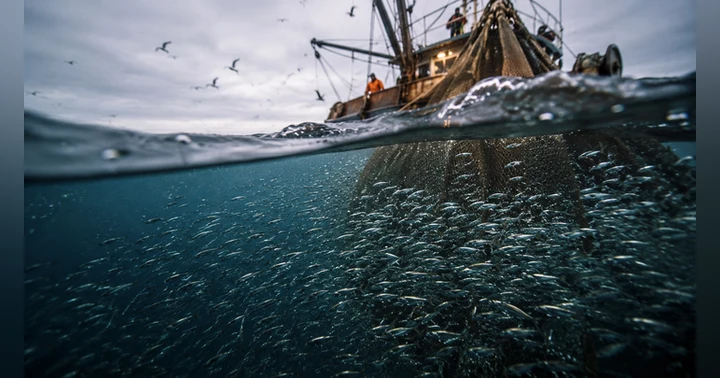
The Tiny Fish Whales Cannot Live Without


 Apple Podcasts
 Spotify
 YouTube
 Amazon Music
 PocketCasts
 Overcast
 Forage fish are some of the most important animals in the ocean, but most people barely know they exist. Sardines, anchovies, herring, capelin, and other small schooling fish support whales, seabirds, salmon, tuna, and commercial fisheries.
In this episode of How to Protect the Ocean, Andrew Lewin explains why forage fish are often overlooked, why their abundance matters more than people realize, and how protecting the ocean means protecting food webs, not just the famous species we love.
Support Independent Podcasts: https://www.speakupforblue.com/patreon
Need help with your ocean non-profit, company, or project? Get the help you need with Pisces Oceans Inc.: https://www.piscesoceans.ca
Connect with Speak Up For Blue
Website: https://bit.ly/3fOF3Wf
Instagram: https://bit.ly/3rIaJSG
TikTok: https://www.tiktok.com/@speakupforblue
Twitter: https://bit.ly/3rHZxpc
YouTube: www.speakupforblue.com/youtube
00:00:00,050 --> 00:00:03,350
The future of whales, seabirds,
salmon, and even commercial
2
00:00:03,350 --> 00:00:07,336
fisheries may depend on fish most
people never even think about.
3
00:00:08,033 --> 00:00:11,243
This is the How to Protect the Ocean
podcast, your weekly ocean news update.
4
00:00:11,243 --> 00:00:15,283
If you care about staying informed
on the ocean every weekday, hit
5
00:00:15,283 --> 00:00:18,573
that follow button right now so
you don't miss tomorrow's story.
6
00:00:18,953 --> 00:00:22,513
Today, we are talking about a strange
problem in ocean conservation.
7
00:00:22,916 --> 00:00:26,740
Why do we pay so little attention
to some of the most important
8
00:00:26,740 --> 00:00:28,890
fish in marine ecosystems?
9
00:00:29,230 --> 00:00:30,920
Because forage fish are essential.
10
00:00:30,920 --> 00:00:32,113
We've talked about it all week.
11
00:00:32,360 --> 00:00:35,950
Scientists know it, fisheries
managers know it, conservation
12
00:00:35,950 --> 00:00:39,496
groups know it, but most people
have never even heard of the term.
13
00:00:39,910 --> 00:00:42,030
And honestly, that may
be part of the problem.
14
00:00:42,483 --> 00:00:46,243
Ocean conservation often focuses
on large charismatic animals.
15
00:00:46,576 --> 00:00:48,906
We have whales, we have sharks,
16
00:00:49,223 --> 00:00:52,423
sea turtles, dolphins,
and that makes sense.
17
00:00:52,863 --> 00:00:55,543
People emotionally
connect to those species.
18
00:00:55,843 --> 00:00:59,223
They inspire documentaries,
campaigns, and donations.
19
00:00:59,593 --> 00:01:02,583
But ecosystems are not
built around popularity.
20
00:01:02,893 --> 00:01:07,130
They are built around relationships,
and forage fish sit near the center
21
00:01:07,130 --> 00:01:08,900
of many of those relationships.
22
00:01:09,273 --> 00:01:13,383
These small fish support predators
across entire ecosystems.
23
00:01:13,610 --> 00:01:17,420
But because they are small, probably
common-looking, and often commercially
24
00:01:17,420 --> 00:01:20,743
processed out of sight, they become
almost invisible to the public.
25
00:01:21,163 --> 00:01:25,396
That invisibility creates a conservation
challenge because public pressure
26
00:01:25,546 --> 00:01:27,846
often influences political priorities.
27
00:01:28,133 --> 00:01:31,913
And it is much harder to build urgency
around species people don't even
28
00:01:31,913 --> 00:01:35,679
recognize, especially when those
species are caught in massive industrial
29
00:01:35,679 --> 00:01:37,809
volumes far from public attention.
30
00:01:38,140 --> 00:01:41,299
In many ways, forage fish
suffer from a branding problem.
31
00:01:41,583 --> 00:01:44,423
But ecologically, they
are incredibly important.
32
00:01:44,793 --> 00:01:48,863
This matters because conservation
success often depends on protecting
33
00:01:48,863 --> 00:01:51,330
systems, not just individual species.
34
00:01:51,630 --> 00:01:55,840
You can protect whales all you want,
but if whales cannot find enough
35
00:01:55,840 --> 00:01:57,760
food, recovery becomes harder.
36
00:01:58,140 --> 00:02:01,180
You can create marine protected
areas, but if food webs become
37
00:02:01,180 --> 00:02:03,737
unstable, ecosystems still struggle.
38
00:02:04,217 --> 00:02:07,567
Forage fish force us to think
differently about conservation.
39
00:02:07,967 --> 00:02:13,167
They remind us that ecosystems depend
on abundance, not just survival.
40
00:02:13,530 --> 00:02:17,870
This is one reason scientists increasingly
support ecosystem-based management.
41
00:02:18,137 --> 00:02:20,697
The goal is not simply
preventing collapse.
42
00:02:20,937 --> 00:02:25,177
The goal is maintaining healthy,
functioning ecosystems, and that
43
00:02:25,177 --> 00:02:29,600
requires enough prey species in
the water to support predators.
44
00:02:29,944 --> 00:02:33,587
There is a public awareness issue here,
and a lot of people do not realize
45
00:02:33,587 --> 00:02:35,900
how interconnected ocean systems are.
46
00:02:36,287 --> 00:02:40,800
They may not understand that salmon,
seabirds, whales, and tuna often
47
00:02:40,800 --> 00:02:45,364
compete for the same prey resources,
and that industrial fishing can
48
00:02:45,554 --> 00:02:48,044
affect ecosystems in indirect ways.
49
00:02:48,344 --> 00:02:52,194
Once people understand those
connections, that conversation changes.
50
00:02:52,520 --> 00:02:54,900
Suddenly, forage fish
are no longer bait fish.
51
00:02:55,267 --> 00:02:59,847
They become ecosystem infrastructure,
and that framing actually matters.
52
00:03:00,207 --> 00:03:02,187
We're talking about communication here.
53
00:03:02,420 --> 00:03:04,860
And a lot of the times when we
talk about communication, we
54
00:03:04,860 --> 00:03:06,260
know that it's really important.
55
00:03:06,484 --> 00:03:09,754
And one of the things that I covered
last week was we know communication is
56
00:03:09,754 --> 00:03:12,464
important, but I had conversations over
the week where it's like communication
57
00:03:12,464 --> 00:03:18,004
isn't funded enough or at a level where
we can actually get communicators or
58
00:03:18,004 --> 00:03:21,524
marine influencers, science influencers,
and science communicators to say,
59
00:03:21,680 --> 00:03:23,340
" Hey, let's talk about forage fish.
60
00:03:23,340 --> 00:03:27,700
Let's talk about the real important
part of the ocean that will provide
61
00:03:27,700 --> 00:03:31,360
its stability, especially in warming
times like we have with climate change,
62
00:03:31,477 --> 00:03:35,677
or in times where fishing pressure
is at probably an all-time high, and
63
00:03:35,677 --> 00:03:40,133
we're starting to realize how important
those forage fish are." So, if you are
64
00:03:40,197 --> 00:03:43,757
interested in finding out more of how
you can communicate better and amplify
65
00:03:43,757 --> 00:03:46,447
your message better, whether it be about
forage fish or anything that's important
66
00:03:46,447 --> 00:03:51,273
to you and your organization, or your
company, or you're part of a larger
67
00:03:51,273 --> 00:03:56,943
academic project, or just in your academic
lab, hit me up at piscesoceans.ca.
68
00:03:56,973 --> 00:04:00,257
We have a tool there that I'll link
in the show notes where you can go
69
00:04:00,257 --> 00:04:03,487
on the website and you can figure
out where you need help the most.
70
00:04:03,603 --> 00:04:07,417
We're a consulting firm of scientists,
ocean communicators, and project
71
00:04:07,417 --> 00:04:11,260
managers that can help you with your
project and amplify your message.
72
00:04:11,310 --> 00:04:12,530
We understand the science.
73
00:04:12,720 --> 00:04:15,600
We understand how important science
communication is for you and
74
00:04:15,600 --> 00:04:18,997
your organization, your company,
and your project, and we want
75
00:04:18,997 --> 00:04:20,827
to make sure that it succeeds.
76
00:04:21,063 --> 00:04:23,783
So if you want to know more, go
to the show notes, click on that
77
00:04:23,783 --> 00:04:26,787
link, or go to piscesoceans.ca.
78
00:04:27,217 --> 00:04:30,267
The good news about all of this
is that awareness around forage
79
00:04:30,267 --> 00:04:32,167
fish conservation is growing.
80
00:04:32,417 --> 00:04:35,557
Researchers are improving
ecosystem science, which is great.
81
00:04:35,870 --> 00:04:38,730
Conservation groups are increasingly
pushing for precautionary
82
00:04:38,730 --> 00:04:40,130
management, which is also great.
83
00:04:40,407 --> 00:04:43,870
And more policymakers are starting
to recognize that ecosystem health
84
00:04:43,910 --> 00:04:46,530
requires protecting food web stability.
85
00:04:46,880 --> 00:04:49,200
But there are still some major challenges.
86
00:04:49,547 --> 00:04:52,737
Industrial demand for fish
meal and fish oil remains high.
87
00:04:53,057 --> 00:04:55,853
Climate change is
increasing ecosystem stress.
88
00:04:56,067 --> 00:04:58,857
And fisheries management
decisions are often involve
89
00:04:58,917 --> 00:05:01,107
political and economic trade-offs.
90
00:05:01,453 --> 00:05:03,363
So this issue is not going away.
91
00:05:03,393 --> 00:05:07,967
In fact, it may become one of the more
defining ocean conservation debates of
92
00:05:07,967 --> 00:05:12,063
the next decade because ultimately, this
conversation is bigger than forage fish.
93
00:05:12,433 --> 00:05:15,237
It is really about how humans
think about conservation and
94
00:05:15,237 --> 00:05:16,697
how humans think about the ocean.
95
00:05:17,007 --> 00:05:20,057
Do we only protect species that
people emotionally connect with?
96
00:05:20,417 --> 00:05:24,697
Or do we protect the systems that
make entire ecosystems possible?
97
00:05:25,187 --> 00:05:27,147
That is the much bigger question.
98
00:05:27,667 --> 00:05:31,637
And honestly, the one the ocean
urgently needs us to answer.
99
00:05:31,943 --> 00:05:34,503
One of the most memorable conversations
I had is when people were saying,
100
00:05:34,503 --> 00:05:37,870
"Hey, look, sometimes it's great to be
like, 'Hey, we're gonna protect sharks,
101
00:05:37,870 --> 00:05:40,483
we're gonna protect whales, we're
gonna protect sea turtles, we're gonna
102
00:05:40,483 --> 00:05:43,513
protect polar bears,' because those are
iconic species, the ones we emotionally
103
00:05:43,513 --> 00:05:45,097
connect with," like I mentioned earlier.
104
00:05:45,497 --> 00:05:48,097
But they're not necessarily the
ones that we need to focus on.
105
00:05:48,097 --> 00:05:50,577
Yes, we need to focus on it and a
lot of times they are in trouble.
106
00:05:50,833 --> 00:05:53,033
Sea turtles, most of them
are critically endangered.
107
00:05:53,243 --> 00:05:55,093
We have polar bears who
are critically endangered.
108
00:05:55,307 --> 00:05:57,347
North Atlantic right whale
is critically endangered.
109
00:05:57,347 --> 00:05:59,117
We have a lot of animals
that are in trouble.
110
00:05:59,373 --> 00:06:02,153
But a lot of the times it's not just
because of the individual species, and
111
00:06:02,283 --> 00:06:05,757
managing the individual species is not
gonna make things better right away.
112
00:06:05,990 --> 00:06:09,890
But managing the ecosystem as a whole
is going to make things better because
113
00:06:09,890 --> 00:06:13,837
you're gonna make sure that the foundation
is there for that whale, that sea
114
00:06:13,837 --> 00:06:15,437
turtle, that shark, that polar bear.
115
00:06:15,690 --> 00:06:19,230
Making sure that we are managing
everything together is important, but
116
00:06:19,230 --> 00:06:22,113
it's also the hardest thing, ' cause it's
also the hardest thing to communicate.
117
00:06:22,310 --> 00:06:27,383
Because it's like, if you want to lose
weight, you can eat nothing, no problem.
118
00:06:27,383 --> 00:06:28,463
That's a quick fix.
119
00:06:28,657 --> 00:06:31,550
But what you really have to do is you
have to look at your lifestyle, and
120
00:06:31,550 --> 00:06:34,850
you have to say, "If I want to hold this
weight off, or if I want to lose weight
121
00:06:34,850 --> 00:06:39,507
healthily, I have got to look at how I
eat, how I sleep, how my mental health
122
00:06:39,537 --> 00:06:41,837
is, how, like, my whole lifestyle is.
123
00:06:41,837 --> 00:06:42,607
Is it active?
124
00:06:42,607 --> 00:06:45,667
Is it sedentary?" We have all
these different ways of looking at
125
00:06:45,667 --> 00:06:49,230
health, and we do that when people
actually get healthy, they end
126
00:06:49,230 --> 00:06:52,273
up losing weight because they look
at their whole system and look at
127
00:06:52,273 --> 00:06:54,320
how to better protect that system.
128
00:06:54,460 --> 00:06:55,660
The same thing is with the ocean.
129
00:06:55,660 --> 00:06:57,530
We're not just protecting
individual species.
130
00:06:57,740 --> 00:07:01,347
If you protect the whole system, those
species are inevitably protected.
131
00:07:01,730 --> 00:07:05,580
So good conservation is often not about
protecting the most famous species.
132
00:07:05,630 --> 00:07:08,830
It's about protecting the system
underneath the species we love.
133
00:07:09,214 --> 00:07:10,414
So that's the episode for today.
134
00:07:10,414 --> 00:07:13,524
I would love to hear your comments
on these episodes, and I'd love for
135
00:07:13,524 --> 00:07:15,104
you to hear the episode tomorrow.
136
00:07:15,104 --> 00:07:19,870
You can go to speakupforblue.com/feedback
to let me know what you
137
00:07:19,870 --> 00:07:21,050
think about these episodes.
138
00:07:21,290 --> 00:07:23,604
Don't forget to go to our
sponsor, piscesoceans.ca.
139
00:07:24,014 --> 00:07:28,574
That's www.piscesoceans.ca.
140
00:07:28,824 --> 00:07:32,404
Link is in the show notes among
other links of how to get a hold of
141
00:07:32,404 --> 00:07:33,927
me to have conversations with me.
142
00:07:33,927 --> 00:07:36,157
More and more of you are reaching
out to me, and I love that.
143
00:07:36,157 --> 00:07:39,437
If you just love the podcast and
you wanna tell me, I love that.
144
00:07:39,497 --> 00:07:42,777
I always wonder who's listening to the
podcast, how they're listening to the
145
00:07:42,777 --> 00:07:44,957
podcast, what app they're listening on.
146
00:07:45,007 --> 00:07:48,037
Are they going to YouTube for Ocean
Decoded and all that kind of stuff?
147
00:07:48,264 --> 00:07:49,293
I want to know more.
148
00:07:49,293 --> 00:07:50,403
And what you want to know.
149
00:07:50,403 --> 00:07:52,783
Like, what topic do you
want me to cover next?
150
00:07:52,783 --> 00:07:54,803
I would love to hear
your thoughts on that.
151
00:07:54,993 --> 00:07:57,443
And don't forget, if you wanna
hear more and you haven't followed
152
00:07:57,443 --> 00:07:59,203
this podcast, shame on you.
153
00:07:59,203 --> 00:07:59,973
No, I understand.
154
00:07:59,973 --> 00:08:00,453
Don't worry about it.
155
00:08:00,603 --> 00:08:03,220
But if you wanna follow the podcast,
please do so now, and share
156
00:08:03,220 --> 00:08:06,340
this episode with somebody you
think is gonna enjoy this episode
157
00:08:06,340 --> 00:08:07,840
and learn more about the ocean.
158
00:08:07,970 --> 00:08:10,320
Thank you so much for joining
me on today's episode of the How
159
00:08:10,320 --> 00:08:11,460
to Protect the Ocean podcast.
160
00:08:11,700 --> 00:08:12,730
I'm your host, Andrew Lewin.
161
00:08:12,980 --> 00:08:13,700
Have a great day.
162
00:08:13,700 --> 00:08:17,177
We'll talk to you tomorrow when I
talk to Jack Daly from Oceana Canada,
163
00:08:17,287 --> 00:08:20,917
where we talk about forage fish report
that they just released for Canada.
164
00:08:21,037 --> 00:08:23,437
And it's not a good one, but
you're gonna wanna hear it.
165
00:08:23,647 --> 00:08:24,467
So thank you so much.
166
00:08:24,467 --> 00:08:25,107
Have a great day.
167
00:08:25,107 --> 00:08:26,997
We'll talk to you next time,
and happy conservation.