The Tiny Fish Holding the Ocean Together Are at Risk


 Apple Podcasts
 Spotify
 YouTube
 Amazon Music
 PocketCasts
 Overcast
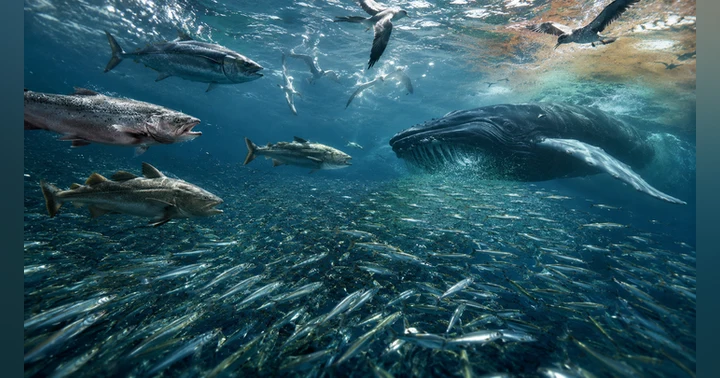
 Small fish like sardines, anchovies, herring, and capelin may not get much attention, but they quietly power entire ocean ecosystems. In this episode of How to Protect the Ocean, we explore why forage fish are some of the most important species in the sea and how climate change could disrupt the food web in ways scientists are only beginning to understand.
As oceans warm and ecosystems shift, the abundance and location of these small fish are changing. That matters because whales, salmon, tuna, seabirds, cod, and countless marine predators depend on them for survival. If forage fish decline, the impacts could ripple through fisheries, coastal communities, and ocean biodiversity worldwide.
This episode explains why these overlooked species matter more than most people realize, what scientists are seeing in the data, and why protecting the smallest fish in the ocean may be one of the biggest conservation priorities of the future.
Support Independent Podcasts: https://www.speakupforblue.com/patreon
Need help with your ocean non-profit, company, or project? Get the help you need with Pisces Oceans Inc.: https://www.piscesoceans.ca
Connect with Speak Up For Blue
Website: https://bit.ly/3fOF3Wf
Instagram: https://bit.ly/3rIaJSG
TikTok: https://www.tiktok.com/@speakupforblue
Twitter: https://bit.ly/3rHZxpc
YouTube: www.speakupforblue.com/youtube
00:00:00,050 --> 00:00:04,410
As the ocean warms, some of the species
holding marine ecosystems together may be
2
00:00:04,410 --> 00:00:06,560
tiny fish most people never think about.
3
00:00:07,163 --> 00:00:10,243
This is the How to Protect the Ocean
Podcast, your weekday ocean news update.
4
00:00:10,403 --> 00:00:13,633
If you care about staying informed
on the ocean every weekday, hit
5
00:00:13,633 --> 00:00:16,493
that follow button right now so
you don't miss tomorrow's story.
6
00:00:16,963 --> 00:00:21,043
Today, we're talking about climate change,
ecosystem resilience, and why forage
7
00:00:21,043 --> 00:00:26,223
fish may become one of the most important
conservation stories of the next decade.
8
00:00:26,446 --> 00:00:30,543
Because climate change is not just
affecting polar bears and coral reefs.
9
00:00:30,743 --> 00:00:33,313
It's changing entire food webs.
10
00:00:33,630 --> 00:00:36,210
And forage fish are right
at the middle of that shift.
11
00:00:36,620 --> 00:00:40,590
So why are these tiny fish becoming
even more important in a warming ocean?
12
00:00:41,160 --> 00:00:43,010
That's really the
question to ask, isn't it?
13
00:00:43,353 --> 00:00:46,133
And what happens when
climate stress collides with
14
00:00:46,183 --> 00:00:48,003
already pressured ecosystems?
15
00:00:48,456 --> 00:00:49,286
Let's talk about it.
16
00:00:49,857 --> 00:00:53,961
Forage fish are highly sensitive to
environmental conditions, and that
17
00:00:53,961 --> 00:00:59,124
includes ocean temperature, plankton
availability, oxygen levels, ocean
18
00:00:59,124 --> 00:01:01,044
currents, a lot of different things.
19
00:01:01,385 --> 00:01:04,935
Even small environmental shifts can
affect where these fish live, how
20
00:01:04,935 --> 00:01:08,395
successfully they reproduce, and
whether predators can find them.
21
00:01:08,808 --> 00:01:10,648
Marine heatwaves are a major example.
22
00:01:10,891 --> 00:01:15,091
During extreme warming events, plankton
production can change dramatically.
23
00:01:15,481 --> 00:01:19,198
Because forage fish feed heavily
on plankton, these populations
24
00:01:19,198 --> 00:01:20,648
can also shift or decline.
25
00:01:21,005 --> 00:01:23,035
That creates a chain reaction.
26
00:01:23,515 --> 00:01:28,025
And if forage fish move farther offshore,
predators may struggle to keep up.
27
00:01:28,418 --> 00:01:31,791
If populations crash temporarily,
predators may suddenly lose
28
00:01:31,791 --> 00:01:34,376
access to a major food source.
29
00:01:34,743 --> 00:01:38,610
And scientists are already seeing
signs of this actually happening.
30
00:01:38,986 --> 00:01:41,966
In some regions, seabird colonies
have experienced breeding failures
31
00:01:41,966 --> 00:01:43,566
linked to forage fish shortages.
32
00:01:43,860 --> 00:01:46,946
Adult birds simply cannot find
enough food for their chicks.
33
00:01:46,946 --> 00:01:51,840
Same with whale feeding grounds are also
shifting as prey distributions change.
34
00:01:52,216 --> 00:01:54,473
Some other things that are happening,
you know, you look to see salmon
35
00:01:54,473 --> 00:01:57,603
populations in certain areas are
dealing with increasingly unstable food
36
00:01:57,603 --> 00:01:59,463
conditions during their life stages.
37
00:01:59,593 --> 00:02:04,313
So we're seeing that shift in foods in
terms of the whole parameters of shifting
38
00:02:04,313 --> 00:02:06,073
baselines and everything that's happening.
39
00:02:06,300 --> 00:02:09,060
But then there's also another
thing that we rarely talk
40
00:02:09,060 --> 00:02:10,280
about, and that's upwellings.
41
00:02:10,486 --> 00:02:13,586
Upwellings can shift in where they are
going to be, 'cause an upwelling is
42
00:02:13,586 --> 00:02:16,980
essentially this current that comes
from the deep oceans, brings nutrients
43
00:02:16,980 --> 00:02:21,700
to the top, phytoplankton, zooplankton,
and that will attract forage fish.
44
00:02:21,766 --> 00:02:24,370
Those forage fish will come in, and
then, of course, their predators
45
00:02:24,370 --> 00:02:28,730
are gonna come in, whales, sea
turtles, tuna, salmon, cod.
46
00:02:28,860 --> 00:02:30,550
Depending on where they are
around the world, you get a
47
00:02:30,550 --> 00:02:31,500
lot of fish that are coming in.
48
00:02:31,500 --> 00:02:34,860
Seabirds, sharks, all these different
prey and predator interactions
49
00:02:34,860 --> 00:02:36,120
will happen during that time.
50
00:02:36,226 --> 00:02:37,766
And that's on different multiple stages.
51
00:02:37,970 --> 00:02:42,050
Now, if those upwelling shift, and
they shift outside of migration
52
00:02:42,050 --> 00:02:44,570
routes, or they shift outside of
regular areas that they're normally
53
00:02:44,570 --> 00:02:48,166
gonna be, you're gonna see a shift in
where those forage fish are gonna go.
54
00:02:48,350 --> 00:02:50,200
And you're gonna see a shift in
where those predators are gonna
55
00:02:50,200 --> 00:02:54,250
go, but there's gonna be some loss
of life because of that chaos that
56
00:02:54,250 --> 00:02:56,600
happens as shifting baselines happen.
57
00:02:56,736 --> 00:02:58,926
And that's something that
you don't want to see.
58
00:02:59,273 --> 00:03:02,103
So what makes forage fish so important
is that they connect the lower ocean
59
00:03:02,103 --> 00:03:03,843
productivity to larger predators.
60
00:03:03,843 --> 00:03:07,440
They stabilize the ecosystems, just
like I talk about how diversity
61
00:03:07,440 --> 00:03:11,006
stabilizes ecosystems, which means
when ecosystems become stressed,
62
00:03:11,226 --> 00:03:13,676
forage fish become even more critical.
63
00:03:14,156 --> 00:03:16,836
This matters because climate
resilience is not just about
64
00:03:16,836 --> 00:03:18,456
protecting species individually.
65
00:03:18,670 --> 00:03:21,230
It is about protecting ecosystem function.
66
00:03:21,640 --> 00:03:24,520
Healthy ecosystems need strong food webs.
67
00:03:24,836 --> 00:03:28,526
They need enough species to
absorb environmental stress.
68
00:03:28,963 --> 00:03:30,793
Think about it like financial savings.
69
00:03:30,843 --> 00:03:31,223
I know.
70
00:03:31,433 --> 00:03:32,753
Why are we getting into finance?
71
00:03:32,753 --> 00:03:34,003
But just trust me on this.
72
00:03:34,403 --> 00:03:38,343
If an ecosystem has abundant forage fish
populations, predators have a buffer
73
00:03:38,343 --> 00:03:40,443
during difficult environmental periods.
74
00:03:40,833 --> 00:03:43,343
But if forage fish populations
are already heavily reduced from
75
00:03:43,343 --> 00:03:46,816
industrial fishing or habitat stress,
ecosystems become more fragile.
76
00:03:47,153 --> 00:03:49,123
There's less margin for error.
77
00:03:49,473 --> 00:03:52,603
So that means climate impacts
can hit harder and faster.
78
00:03:52,945 --> 00:03:56,085
And this is especially important
because climate change is creating
79
00:03:56,085 --> 00:03:58,598
more unpredictability in the ocean.
80
00:03:59,020 --> 00:04:02,080
Species are shifting northward
because they can go in warmer waters.
81
00:04:02,237 --> 00:04:04,027
Seasonal timing is changing.
82
00:04:04,214 --> 00:04:08,010
Migration patterns are becoming less
reliable, which we're seeing with
83
00:04:08,010 --> 00:04:10,640
the North Atlantic right whale when
they start to go up to the Gulf of
84
00:04:10,640 --> 00:04:14,190
St. Lawrence and where they saw
more death because of human impacts.
85
00:04:14,390 --> 00:04:17,940
And predators are increasingly
competing for food resources that may
86
00:04:17,940 --> 00:04:19,760
no longer be consistently available.
87
00:04:20,160 --> 00:04:23,280
Now, one concept scientists
talk about is timing mismatches.
88
00:04:23,700 --> 00:04:27,190
As an example, predators arrive at
traditional feeding grounds expecting
89
00:04:27,190 --> 00:04:28,720
large schools of forage fish,
90
00:04:28,770 --> 00:04:30,870
but warming conditions may
have shifted the timing or the
91
00:04:30,870 --> 00:04:32,570
location of those forage fish.
92
00:04:32,780 --> 00:04:36,490
That means predators show up at
the wrong place at the wrong time.
93
00:04:36,880 --> 00:04:41,397
And in nature, timing matters, and it
can be a heavy consequence if you show
94
00:04:41,397 --> 00:04:42,917
up at the wrong place at the wrong time.
95
00:04:43,270 --> 00:04:46,424
And before we continue on what
happens next, I wanna just talk to
96
00:04:46,424 --> 00:04:49,680
you a little bit about how this is
all involved in communication.
97
00:04:49,680 --> 00:04:53,240
Now, as I'm communicating this to you
right now about forage fish, about the
98
00:04:53,240 --> 00:04:56,980
fish that nobody talks about or nobody
really understands, and how important
99
00:04:56,980 --> 00:05:01,194
it is to stabilize an ecosystem,
communication is really important, not
100
00:05:01,194 --> 00:05:04,754
just for your organization, not just
for you as a science communicator.
101
00:05:04,990 --> 00:05:08,780
It's important for everybody to
understand what is happening in the ocean.
102
00:05:08,780 --> 00:05:12,550
And we can't just communicate through
peer-reviewed papers because they
103
00:05:12,550 --> 00:05:16,434
are behind those walls, those
science journal walls that cost
104
00:05:16,434 --> 00:05:18,150
forty dollars a paper just to get.
105
00:05:18,150 --> 00:05:20,990
And not everybody knows a
professor or the academic author
106
00:05:20,990 --> 00:05:22,580
who actually puts this together.
107
00:05:22,620 --> 00:05:25,940
And so what we really need here
is we need people to help us
108
00:05:25,940 --> 00:05:26,950
out with science communication.
109
00:05:26,950 --> 00:05:28,610
And I work for Pisces Oceans.
110
00:05:28,810 --> 00:05:33,700
I'm the ocean communications manager, and
we help organizations, academic projects
111
00:05:33,770 --> 00:05:38,040
and for-profit companies to get their
message out and amplify that message.
112
00:05:38,097 --> 00:05:41,520
We look at the strategy of who they're
messaging, their target audience, what
113
00:05:41,520 --> 00:05:43,430
they're trying to say, why it matters.
114
00:05:43,590 --> 00:05:47,510
We have scientists, we have ocean
communicators, we have project managers.
115
00:05:47,640 --> 00:05:52,187
The whole slew of people in one
consulting firm, and we wanna help you.
116
00:05:52,187 --> 00:05:55,564
So if you want more information and
you wanna find out how you can get
117
00:05:55,564 --> 00:05:58,610
help from us, go to piscesoceans.ca.
118
00:05:58,767 --> 00:06:00,447
That's piscesoceans.ca.
119
00:06:00,447 --> 00:06:03,384
I'll put the link in the show notes
and fill out the little tool that
120
00:06:03,384 --> 00:06:07,057
I link to so that you can find
out where you need help the most.
121
00:06:07,484 --> 00:06:08,574
All right, let's get back to our show.
122
00:06:08,574 --> 00:06:10,494
Let's talk about what happens next.
123
00:06:10,924 --> 00:06:13,674
This is where more scientists and
conservation groups are arguing that
124
00:06:13,674 --> 00:06:17,794
protecting forage fish should be
part of a climate change adaptation
125
00:06:17,794 --> 00:06:19,767
policy, not just fisheries policy.
126
00:06:20,057 --> 00:06:23,387
There's a major shift in this
thinking because for years,
127
00:06:23,517 --> 00:06:27,117
climate adaptation discussions
focused heavily on infrastructure,
128
00:06:27,117 --> 00:06:29,277
emissions, and coastal protection.
129
00:06:29,737 --> 00:06:32,337
Those issues absolutely matter.
130
00:06:32,667 --> 00:06:35,887
But ecosystems also need
biological resistance.
131
00:06:36,214 --> 00:06:38,674
And that often starts at
the bottom of the food web.
132
00:06:38,954 --> 00:06:41,524
Some fisheries managers are
already incorporating climate
133
00:06:41,524 --> 00:06:43,014
data into stock assessments.
134
00:06:43,307 --> 00:06:47,197
Others are exploring more precautionary
catch limits during warming periods.
135
00:06:47,557 --> 00:06:50,727
Researchers are also using
ecosystem models to better
136
00:06:50,727 --> 00:06:54,474
understand how climate stress
affects predator-prey relationships.
137
00:06:54,837 --> 00:06:57,617
But there's still uncertainty
in everything that goes on.
138
00:06:58,054 --> 00:07:02,674
Climate systems are changing quickly,
and forage fish populations can fluctuate
139
00:07:02,674 --> 00:07:05,264
naturally even without human pressure.
140
00:07:05,664 --> 00:07:07,894
That makes management extremely difficult.
141
00:07:08,244 --> 00:07:11,274
Still, one thing is
becoming increasingly clear.
142
00:07:11,624 --> 00:07:15,950
If ecosystems are going to survive
accelerating climate stress, they
143
00:07:15,950 --> 00:07:19,560
need strong foundations, and forage
fish are part of that foundation.
144
00:07:20,064 --> 00:07:23,607
Climate change is testing the
resilience of ocean ecosystems, and
145
00:07:23,607 --> 00:07:26,847
the species helping hold those
systems together may be the smallest
146
00:07:26,847 --> 00:07:28,837
fish in the sea, the forage fish.
147
00:07:28,877 --> 00:07:31,647
So it's important to get to know
more about these forage fish.
148
00:07:31,647 --> 00:07:34,667
And if you've been listening for the
last three episodes, this is our fourth
149
00:07:34,667 --> 00:07:38,747
episode that we do on forage fish, you're
gonna wanna hear the next episode where
150
00:07:38,747 --> 00:07:42,397
we talk to Jack Daly from Oceana Canada,
where they just released a report on
151
00:07:42,397 --> 00:07:45,007
the state of forage fish in Canada.
152
00:07:45,150 --> 00:07:48,654
I'll be honest, it's not that great,
and you're gonna wanna hear why, but
153
00:07:48,654 --> 00:07:50,734
the report is really laid out well.
154
00:07:50,860 --> 00:07:53,410
It's got a number of different stories
from a number of different rights
155
00:07:53,410 --> 00:07:56,060
and stakeholders, and I think it's
really important to listen to that
156
00:07:56,060 --> 00:07:57,560
conversation that I had with Jack Daly.
157
00:07:57,560 --> 00:08:02,000
So if you want to know more about
what's the conversation is gonna be,
158
00:08:02,000 --> 00:08:05,454
I want you to follow this podcast, How
to Protect the Ocean podcast, so you
159
00:08:05,454 --> 00:08:10,360
get tomorrow's episode and your weekly
ocean news update from Monday to Friday,
160
00:08:10,360 --> 00:08:13,830
where we do an interview on Friday,
and we set you up to success for that
161
00:08:13,830 --> 00:08:17,460
interview on Friday by going Monday to
Thursday solo episodes like I'm doing
162
00:08:17,460 --> 00:08:20,284
right now to explain and prepare you
for what we're gonna be talking about
163
00:08:20,284 --> 00:08:23,614
so you have a better understanding
of what's gonna happen on Friday.
164
00:08:23,854 --> 00:08:26,674
I wanna thank you so much for
joining me on today's episode of the
165
00:08:26,674 --> 00:08:27,994
How to Protect the Ocean podcast.
166
00:08:28,224 --> 00:08:29,244
I'm your host, Andrew Lewin.
167
00:08:29,244 --> 00:08:29,854
Have a great day.
168
00:08:29,854 --> 00:08:32,194
We'll talk to you tomorrow,
and happy conservation.