Can We Really Protect the High Seas?
Creating a marine protected area thousands of kilometres offshore sounds impressive. It sounds like the kind of bold ocean action the world needs.
But there is one question that matters more than almost anything else:
Who is actually going to enforce it?
That is the big issue at the heart of high seas conservation. The High Seas Treaty opens the door to creating marine protected areas in international waters, which is historic. These are ocean areas beyond national jurisdiction, far from coastlines, far from coast guards, and far from the kind of routine monitoring that happens closer to shore.
A marine protected area, or MPA, is supposed to restrict certain human activities to protect ecosystems and biodiversity. Some MPAs limit fishing. Others restrict mining, shipping impacts, or activities that damage critical habitat.
But the further offshore you go, the harder protection becomes.
The Difference Between a Paper Park and Real Protection
One of the biggest risks with marine protected areas is that they can look impressive politically without changing much in the water.
That is what people often call a paper park.
A paper park exists on a map. It may be announced at a conference. It may be celebrated in a press release. But if no one is monitoring it, enforcing it, or measuring whether biodiversity is improving, then protection becomes symbolic.
Real protection is different.
Real protection requires rules that are followed. It requires monitoring. It requires staffing, funding, political commitment, scientific research, and consequences when those rules are broken.
That is already hard near coastlines. It becomes much harder in the middle of the ocean.
Why Enforcement Is the Hard Part
The high seas are massive. Some protected areas could cover ocean regions that take days to reach by boat.
That means countries cannot simply send patrol vessels everywhere all the time. There are too many vessels, too much ocean, and not enough enforcement capacity.
This is why technology matters.
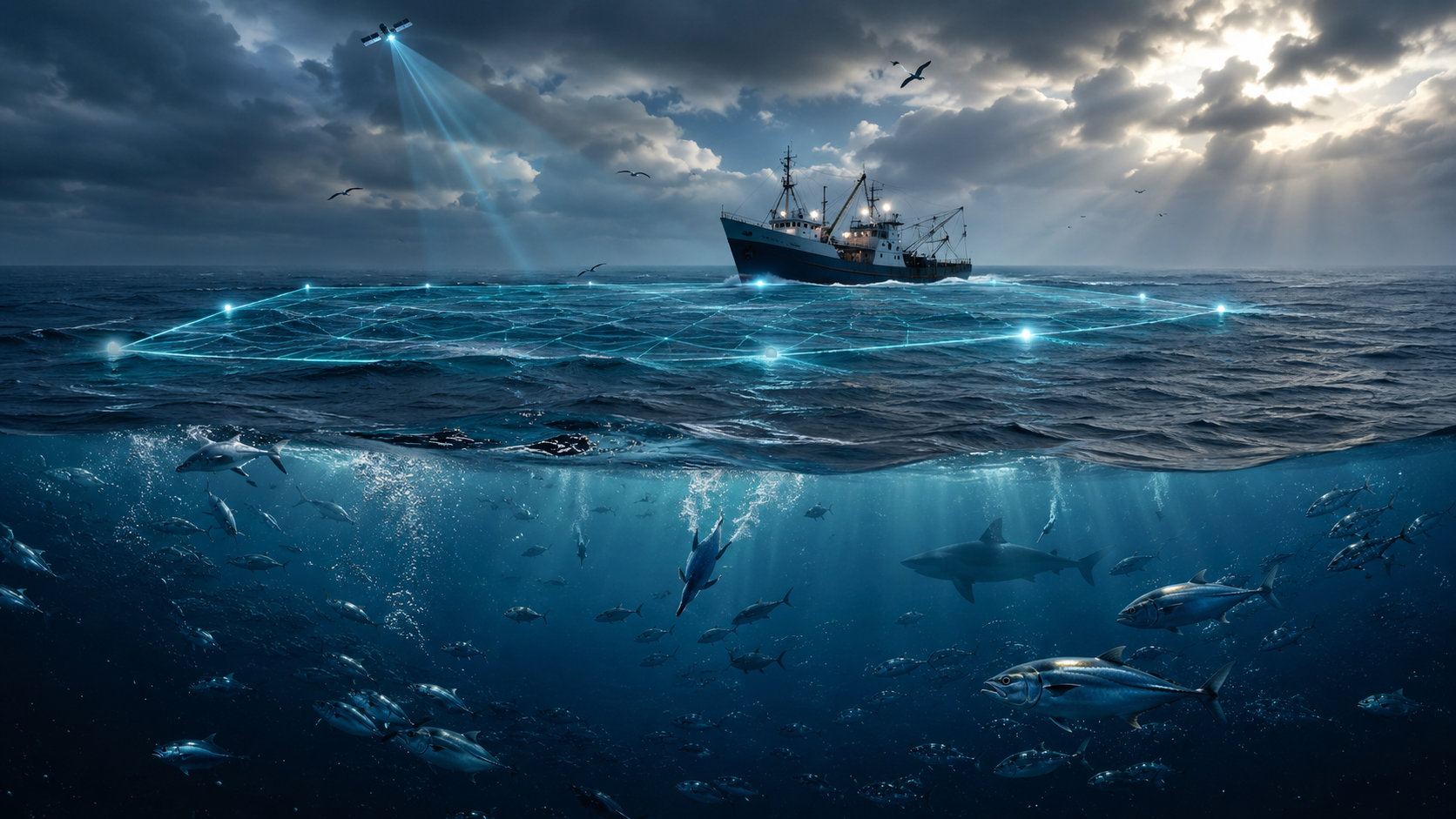
Satellite monitoring and vessel tracking systems can help identify suspicious behaviour. AIS systems can show where vessels are moving, whether they slow down in ways that suggest fishing, and whether they enter areas where certain activities are restricted.
Groups like Global Fishing Watch have helped make previously hidden activity more visible. That visibility matters because it creates accountability.
But there are still gaps.
Not every vessel keeps tracking systems active. Some vessels can turn systems off. Some governments do not have strong enforcement capacity. Political and economic interests can also weaken compliance.
So the problem is not only scientific. It is political, economic, and legal.
Why the High Seas Treaty Matters
The High Seas Treaty gives the world a chance to create large-scale ocean protection beyond national waters.
That is a major step.
But the treaty itself is only the beginning. Success depends on whether countries are willing to turn commitments into action.
That means creating national laws, investing in monitoring systems, funding enforcement, supporting scientific research, and cooperating across borders.
Without implementation, high seas MPAs could become another example of ocean protection that sounds good but fails in practice.
The Bigger Question
The future of high seas protection may depend less on drawing lines on a map and more on whether the world is willing to enforce them.
That is the real test.
If countries follow through, high seas marine protected areas could help protect biodiversity, reduce destructive activity, and create a new era of ocean governance.
If they do not, the high seas could remain one of the most difficult places on Earth to protect.

CEO
The Biggest Mouthful: How Blue Whales Eat and Why Krill Matters