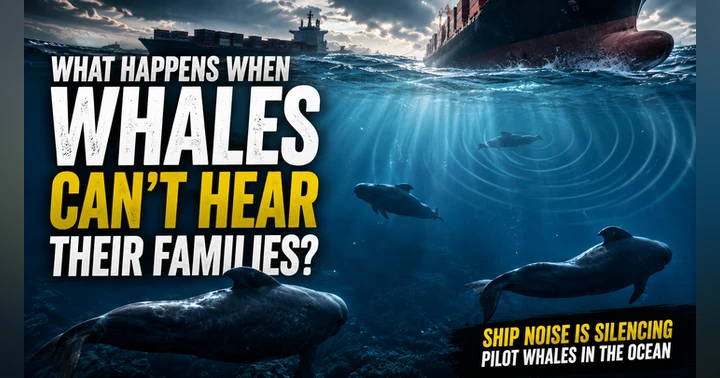
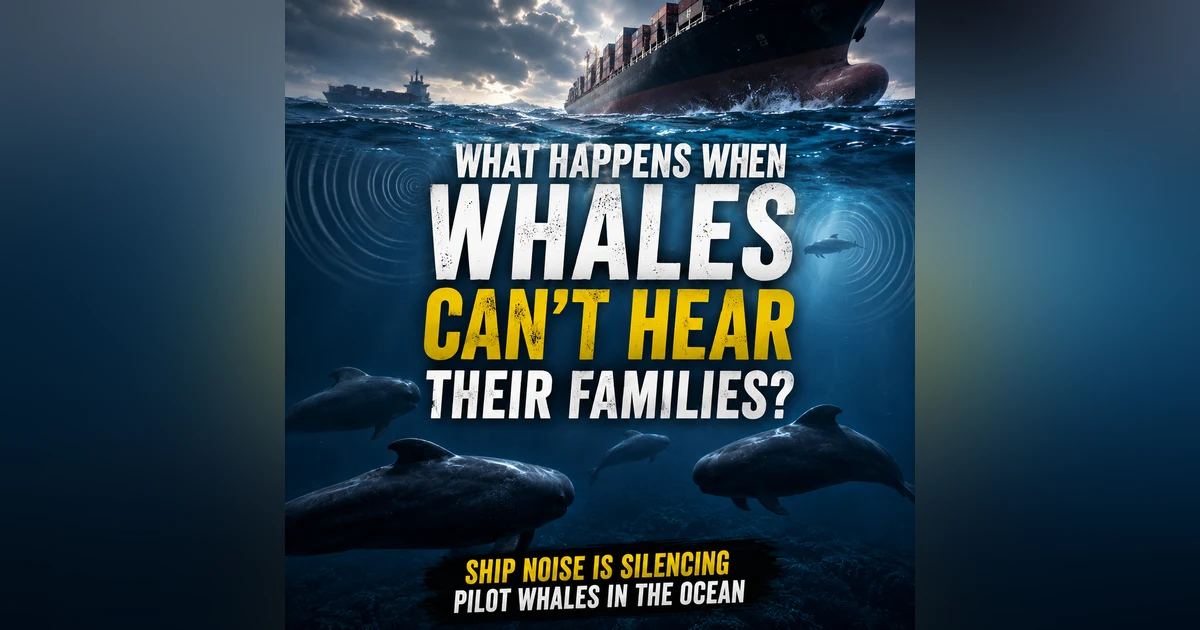
What Happens When Whales Can’t Hear Their Families?

 Apple Podcasts
 Spotify
 YouTube
 Amazon Music
 PocketCasts
 Overcast
 Pilot whales rely on sound for nearly every aspect of their lives. They use vocalizations to communicate with family members, coordinate movements, find food, and navigate through their environment. But what happens when the ocean becomes so noisy that those sounds are drowned out? In this episode of How to Protect the Ocean, we explore new research suggesting that commercial shipping noise in the Strait of Gibraltar may be interfering with the ability of pilot whales to hear and communicate with one another.
The Strait of Gibraltar is one of the busiest shipping routes on the planet, connecting the Atlantic Ocean to the Mediterranean Sea. Every day, hundreds of vessels move through these waters, generating a constant background of underwater noise. Scientists are increasingly concerned that this noise pollution is masking whale calls, forcing animals to change how they communicate and potentially affecting their ability to stay connected with their social groups. For highly social species like pilot whales, losing the ability to communicate effectively could have serious consequences.
In this episode, Andrew Lewin breaks down why sound is so important in the ocean, how human activities are changing underwater soundscapes, and what can be done to reduce noise pollution. You’ll learn why scientists consider sound an essential part of marine habitat, how quieter ships could help protect marine mammals, and why ocean conservation is about more than just protecting physical spaces. If you’ve ever wondered how something as invisible as noise can impact whale survival, this episode is for you.
Support Independent Podcasts: https://www.speakupforblue.com/patreon
Need help with your ocean non-profit, company, or project? Get the help you need with Pisces Oceans Inc.: https://www.piscesoceans.ca
Connect with Speak Up For Blue
Website: https://bit.ly/3fOF3Wf
Instagram: https://bit.ly/3rIaJSG
TikTok: https://www.tiktok.com/@speakupforblue
Twitter: https://bit.ly/3rHZxpc
YouTube: www.speakupforblue.com/youtube
00:00:00,049 --> 00:00:02,279
Imagine trying to have a
conversation with your family
2
00:00:02,279 --> 00:00:04,369
while standing beside a jet engine.
3
00:00:04,899 --> 00:00:07,699
Now imagine that noise never stops.
4
00:00:08,047 --> 00:00:10,967
That's the reality for some pilot
whales living in one of the busiest
5
00:00:10,967 --> 00:00:13,427
shipping corridors in the world.
6
00:00:13,737 --> 00:00:17,377
This is the How to Protect the Ocean
podcast, your weekday ocean news update.
7
00:00:17,377 --> 00:00:21,847
If you care about staying informed
of the ocean every weekday, Monday to
8
00:00:21,847 --> 00:00:25,517
Friday, hit that follow button right
now on the podcast app that you're
9
00:00:25,517 --> 00:00:28,458
listening to this episode right now.
10
00:00:28,838 --> 00:00:33,208
Listen, a new study highlighted by
Mongabay found that pilot whales
11
00:00:33,278 --> 00:00:36,758
in the Strait of Gibraltar may be
struggling to hear each other because
12
00:00:36,767 --> 00:00:39,138
of noise from commercial ships.
13
00:00:39,138 --> 00:00:40,967
That's how busy it is in that corridor.
14
00:00:40,968 --> 00:00:42,118
And you can't really blame them.
15
00:00:42,118 --> 00:00:45,027
It's a huge corridor going
into the Mediterranean, coming
16
00:00:45,028 --> 00:00:45,867
out of the Mediterranean.
17
00:00:46,057 --> 00:00:50,598
So I can't really blame it for being that
loud when there's so much going on within.
18
00:00:50,598 --> 00:00:52,348
So many countries are
involved in the Mediterranean.
19
00:00:52,348 --> 00:00:53,468
They line the Mediterranean.
20
00:00:53,697 --> 00:00:56,988
And so it makes it really
difficult to navigate that traffic.
21
00:00:57,268 --> 00:01:00,537
And while that might sound like a
niche whale story, it's actually
22
00:01:00,537 --> 00:01:01,847
about something much bigger.
23
00:01:01,847 --> 00:01:05,854
And today we're gonna answer a
simple question: What happens
24
00:01:05,874 --> 00:01:09,804
when the ocean gets so loud
that whales can't communicate?
25
00:01:10,044 --> 00:01:13,424
Now, let's just talk about whales
for a second and in the way that they
26
00:01:13,444 --> 00:01:18,244
communicate, because it's not well known
to people who are not scientists and
27
00:01:18,244 --> 00:01:22,554
people who are not interested in whales,
but whales communicate by sound, and each
28
00:01:22,654 --> 00:01:24,994
whale species has their own dialect.
29
00:01:24,994 --> 00:01:29,394
And even within whale species, the
pods tend to have their own dialect
30
00:01:29,404 --> 00:01:31,404
for many species, like orcas and stuff.
31
00:01:31,564 --> 00:01:34,014
I don't know if it's for every
species, but they tend to
32
00:01:34,014 --> 00:01:35,467
develop their own language.
33
00:01:35,477 --> 00:01:39,747
And so that's a way for them to be
able to communicate across, like, tens
34
00:01:39,764 --> 00:01:41,784
if not hundreds of kilometers away.
35
00:01:41,784 --> 00:01:46,204
These pods are huge, like sometimes
greater than 50, sometimes even 100.
36
00:01:46,204 --> 00:01:49,664
And so they can't all just be
scrunched up in the middle of the pod.
37
00:01:49,854 --> 00:01:53,494
A lot of times they're spread out and
they have to communicate over a distance.
38
00:01:53,704 --> 00:01:57,541
And when they can't communicate or
there's other noise that gets in the way,
39
00:01:57,571 --> 00:02:00,801
that interrupts their communication, and
they just don't know what's going on.
40
00:02:00,991 --> 00:02:04,274
So imagine like you have a son
or daughter, you have a kid.
41
00:02:04,414 --> 00:02:07,664
And they're in the-- maybe five or
six, and you're in a busy place.
42
00:02:08,024 --> 00:02:12,064
If you are in a busy place and your
son or daughter or kid goes a little
43
00:02:12,064 --> 00:02:15,311
further away, and say they're like
maybe five feet away, and you yell
44
00:02:15,311 --> 00:02:16,951
out, they might be able to hear you.
45
00:02:16,951 --> 00:02:19,901
They're probably gonna be able to hear
if you yell out long, loud enough.
46
00:02:19,901 --> 00:02:23,081
But if the noise gets louder and
louder or you're at a concert, it's
47
00:02:23,081 --> 00:02:24,181
really difficult for you to hear.
48
00:02:24,181 --> 00:02:26,551
Imagine being like a kilometer away.
49
00:02:26,751 --> 00:02:29,361
Obviously you don't wanna be that far away
from your kid in a busy area, but then
50
00:02:29,361 --> 00:02:33,261
it gets really more difficult to project
your voice across that whole area 'cause
51
00:02:33,261 --> 00:02:35,451
that noise kinda interferes with that.
52
00:02:35,501 --> 00:02:37,194
And that's what this new study examined.
53
00:02:37,194 --> 00:02:39,255
They examined pilot whales
in the Strait of Gibraltar.
54
00:02:39,442 --> 00:02:42,519
And the research found that
shipping noise may be interfering
55
00:02:42,529 --> 00:02:43,869
with whale communication.
56
00:02:44,009 --> 00:02:47,559
And that Strait of Gibraltar is one of
the busiest shipping routes in the world.
57
00:02:47,692 --> 00:02:51,239
And pilot whales rely heavily on sound.
58
00:02:51,249 --> 00:02:54,759
So that's a big, big problem right
there when we just introduced.
59
00:02:54,809 --> 00:02:57,519
So most of us experience the
world, primarily through sight.
60
00:02:57,559 --> 00:03:03,059
We look at around a room, we watch the
traffic, we see people approaching.
61
00:03:03,319 --> 00:03:06,372
These are just things that
we constantly feel, right?
62
00:03:06,582 --> 00:03:08,132
But whales don't live in our world.
63
00:03:08,142 --> 00:03:10,212
They live in the world of sound.
64
00:03:10,492 --> 00:03:15,482
And sound travels much further underwater
than in light, like, than in air.
65
00:03:15,729 --> 00:03:18,779
For marine mammals, sound is
often more important than vision.
66
00:03:19,059 --> 00:03:20,429
It's how they communicate.
67
00:03:20,429 --> 00:03:22,659
It's how they find their family members.
68
00:03:22,669 --> 00:03:24,579
It's how they coordinate movement.
69
00:03:24,579 --> 00:03:25,949
It's how they navigate.
70
00:03:26,129 --> 00:03:28,839
And it's how they actually grab
food too, using echolocation.
71
00:03:29,722 --> 00:03:33,522
And according to this new research, the
growing amount of shipping traffic in
72
00:03:33,522 --> 00:03:38,282
the Strait of Gibraltar is making those
conversations increasingly difficult.
73
00:03:38,636 --> 00:03:41,396
Like I said, imagine being in
this big area and you can't
74
00:03:41,456 --> 00:03:42,346
really hear what's going…
75
00:03:42,346 --> 00:03:44,836
You can't talk to people who
are two, three, four feet away.
76
00:03:45,176 --> 00:03:47,013
This becomes a huge problem.
77
00:03:47,113 --> 00:03:53,843
I was a marine mammal observer in the
Arctic when I was younger, in 2008, 2009.
78
00:03:54,043 --> 00:03:57,463
I had the opportunity to go to the Arctic,
and the goal there, we were on a ship
79
00:03:57,463 --> 00:03:59,313
where there was a seismic survey going on.
80
00:03:59,343 --> 00:04:02,743
So we were trailing acoustic
guns that were trailing about
81
00:04:02,743 --> 00:04:04,153
nine kilometers behind the boat.
82
00:04:04,153 --> 00:04:06,973
It was an array of guns, and what
that array of guns would do, the array
83
00:04:06,973 --> 00:04:10,463
goes down to the bottom, looks for
hydrocarbon deposits, and then the
84
00:04:10,463 --> 00:04:12,463
sound travels up and it gives a signal.
85
00:04:12,463 --> 00:04:16,679
But the thing is, is if you and I were
swimming around those guns when they
86
00:04:16,679 --> 00:04:18,479
went off, it would blow our eardrums off.
87
00:04:18,489 --> 00:04:19,989
That's how loud these guns are.
88
00:04:20,176 --> 00:04:23,006
Now, of course, as we mentioned
before, being underwater, sound
89
00:04:23,016 --> 00:04:26,526
travels, and if you've ever scuba dived
or gone swimming and you hear noise
90
00:04:26,526 --> 00:04:29,236
underwater, it's difficult to find
out where that noise is coming from.
91
00:04:29,286 --> 00:04:30,626
It's often disorientating.
92
00:04:30,966 --> 00:04:32,496
And so that could also be a problem.
93
00:04:32,716 --> 00:04:35,646
Now, when out, we were out there
being marine mammal observers,
94
00:04:35,646 --> 00:04:38,306
what we would do is we'd watch
whales, especially in the Arctic.
95
00:04:38,306 --> 00:04:41,879
So we're watching beluga whales,
we're watching bowhead whales, and
96
00:04:41,889 --> 00:04:43,729
sometimes we saw gray whales as well.
97
00:04:43,809 --> 00:04:44,769
Some people saw orcas.
98
00:04:44,799 --> 00:04:47,399
I never saw orcas, which is
very disappointing, but we were
99
00:04:47,399 --> 00:04:48,309
in the Canadian Beaufort Sea.
100
00:04:48,329 --> 00:04:52,069
And so, what happened is like we had a
specific radius we were looking at, one
101
00:04:52,069 --> 00:04:55,493
or two kilometers, depending on where we
were in the Beaufort Sea, and that had
102
00:04:55,493 --> 00:04:57,063
to do with acoustics of sound travel.
103
00:04:57,313 --> 00:05:01,103
And the whole point was once a whale
came close within our range or was
104
00:05:01,103 --> 00:05:04,643
coming close or looked like it was
gonna enter that radius, we know we
105
00:05:04,643 --> 00:05:06,153
had to shut the instrumentation off.
106
00:05:06,163 --> 00:05:08,743
We were telling the captain and the
crew to shut the instrumentation
107
00:05:08,743 --> 00:05:12,973
off until that whales got out of the
area where the noise would affect.
108
00:05:13,213 --> 00:05:17,233
And the reason being is because the
noise would affect them so much and
109
00:05:17,233 --> 00:05:21,879
then it was so loud that after they
heard that or were exposed to it, they
110
00:05:21,879 --> 00:05:23,539
wouldn't be able to hear as well.
111
00:05:23,539 --> 00:05:27,329
And if they were constantly exposed, and
at the time the Arctic was being heavily
112
00:05:27,369 --> 00:05:32,729
surveyed for hydrocarbon deposits, they
would be like, okay, like this could
113
00:05:32,729 --> 00:05:36,689
actually affect their hearing if they're
exposed more than once or multiple times.
114
00:05:36,949 --> 00:05:41,263
Essentially, like think about if you've
ever listened to music in earbuds, and
115
00:05:41,273 --> 00:05:43,449
you listen to them as loud as possible.
116
00:05:43,729 --> 00:05:46,249
And then when you take them
out, you can't hear as well.
117
00:05:46,249 --> 00:05:48,923
So you may seem like, uh, things
are muffled or things like that.
118
00:05:49,119 --> 00:05:50,899
That's how they feel, essentially.
119
00:05:51,109 --> 00:05:55,839
And so having that feeling is gonna
interrupt communication for feeding,
120
00:05:55,849 --> 00:05:57,129
for navigation, for everything.
121
00:05:57,129 --> 00:05:59,799
And if you look at pilot whales,
going back to the pilot whales,
122
00:05:59,876 --> 00:06:01,286
pilot whales can get disoriented.
123
00:06:01,286 --> 00:06:06,369
And because they follow one pilot whale,
that pilot whale goes off anywhere, like
124
00:06:06,369 --> 00:06:10,159
if it gets off course and it beaches
itself, the whole pod will beach itself.
125
00:06:10,309 --> 00:06:13,805
And that's where we see these
mass strandings of pilot whales
126
00:06:13,845 --> 00:06:17,515
in specific areas like New
Zealand, the UK, and so forth.
127
00:06:17,742 --> 00:06:22,062
So it's very important that these
animals do not feel disoriented.
128
00:06:22,252 --> 00:06:25,392
And I think that's something that
people don't realize and something
129
00:06:25,392 --> 00:06:26,392
that we should be more of…
130
00:06:26,402 --> 00:06:31,712
The amount of noise underwater is
absolutely phenomenal in that regard.
131
00:06:31,722 --> 00:06:33,232
So, it's quite interesting.
132
00:06:33,572 --> 00:06:36,595
And that's where the story kind of
shifts from being about whales to being
133
00:06:36,595 --> 00:06:38,385
about us because there's so much noise.
134
00:06:38,385 --> 00:06:39,455
We produce so much noise.
135
00:06:39,715 --> 00:06:41,655
Because the noise isn't
coming from nature.
136
00:06:42,035 --> 00:06:43,645
It's coming from human activity.
137
00:06:43,965 --> 00:06:46,055
It's coming from ships.
138
00:06:46,105 --> 00:06:48,485
It's could be coming from sonar.
139
00:06:48,495 --> 00:06:52,355
It could be coming from seismic
activity, boats, speed boats and stuff.
140
00:06:52,365 --> 00:06:54,945
It really does do that kind of stuff.
141
00:06:54,975 --> 00:06:57,545
And the thing is, is pilot whales
are highly social animals, so they
142
00:06:57,545 --> 00:06:59,105
need to have that communication.
143
00:06:59,335 --> 00:07:00,845
They live in close family groups.
144
00:07:00,875 --> 00:07:03,465
Communication is essential
for group cohesion.
145
00:07:03,465 --> 00:07:06,015
If we don't have that,
things can get disoriented.
146
00:07:06,055 --> 00:07:08,265
Either parts of the pod can
go off on its own, and that's
147
00:07:08,265 --> 00:07:09,585
not good for the entire pod.
148
00:07:09,975 --> 00:07:12,475
And noise pollution can
reduce communication distance.
149
00:07:12,555 --> 00:07:15,105
That means the pod has to be closer
together, which could interrupt the
150
00:07:15,105 --> 00:07:16,555
way, their natural way of being.
151
00:07:16,729 --> 00:07:20,679
The problem likely affects any
other marine mammal species, just
152
00:07:20,679 --> 00:07:23,889
like I talked about in the bowheads
as well as other dolphin species.
153
00:07:24,249 --> 00:07:26,069
Pilot whales aren't solitary animals.
154
00:07:26,069 --> 00:07:27,782
They're very incredibly social.
155
00:07:27,955 --> 00:07:29,035
They travel in groups.
156
00:07:29,035 --> 00:07:30,345
They coordinate the movements.
157
00:07:30,535 --> 00:07:32,325
They stay connected through sound.
158
00:07:32,545 --> 00:07:36,345
Researchers have found that the ship noise
can dramatically reduce the distance over
159
00:07:36,355 --> 00:07:38,495
which the whales can hear each other.
160
00:07:38,865 --> 00:07:40,145
Think about that for a second.
161
00:07:40,475 --> 00:07:43,495
Imagine you're talking to a
family member across a room,
162
00:07:43,725 --> 00:07:44,955
just like I mentioned before.
163
00:07:45,425 --> 00:07:47,055
Now imagine somebody
turns on a leaf blower.
164
00:07:47,132 --> 00:07:48,492
That person's not gonna
be able to hear that.
165
00:07:48,502 --> 00:07:51,539
You have to raise your voice, or
maybe you just stop talking
166
00:07:51,549 --> 00:07:53,229
altogether if you need to move closer.
167
00:07:53,759 --> 00:07:55,469
That's essentially what's
happening with these whales.
168
00:07:55,469 --> 00:07:56,839
That's what they're dealing with here.
169
00:07:57,229 --> 00:07:58,669
Except the leaf blower doesn't turn off.
170
00:07:58,679 --> 00:07:59,849
The ships are always there.
171
00:07:59,849 --> 00:08:01,909
The Strait of Gibraltar, the
ships are always coming and going.
172
00:08:02,119 --> 00:08:08,139
These massive ships, these over 250,000
ton ships, these are extremely loud.
173
00:08:08,479 --> 00:08:10,649
And the noise feels like it's
coming from all over the place.
174
00:08:10,839 --> 00:08:12,829
It's like being at a concert all the time.
175
00:08:13,142 --> 00:08:15,272
And I think what you have to ask
yourself is like, what would happen
176
00:08:15,272 --> 00:08:18,332
if every important conversation
in your life became harder?
177
00:08:18,669 --> 00:08:19,619
Just think about that.
178
00:08:20,079 --> 00:08:22,289
That's essentially what's
happening for these animals.
179
00:08:22,569 --> 00:08:25,699
You're trying to make sure they're
safe, so they're out of harm's way.
180
00:08:25,699 --> 00:08:27,219
So you're trying to
warn them of something.
181
00:08:27,445 --> 00:08:31,835
And if you can't warn your kids or
you can't warn an elderly person
182
00:08:31,835 --> 00:08:33,425
in your family, that's difficult.
183
00:08:33,665 --> 00:08:37,325
If they can't hear you, say like take
the elderly person, if they can't
184
00:08:37,325 --> 00:08:40,605
hear you well, 'cause some elderly
people can't hear as well, then it's
185
00:08:40,605 --> 00:08:44,819
difficult to communicate with them what
they want to eat, how they're feeling.
186
00:08:45,079 --> 00:08:47,439
Trying to communicate with them to
say they have to go to the hospital
187
00:08:47,439 --> 00:08:49,939
and be treated, it's hard for the
doctors to communicate with them
188
00:08:49,939 --> 00:08:51,839
because they just can't hear as well.
189
00:08:52,119 --> 00:08:54,719
It's difficult to navigate
complex environments.
190
00:08:54,719 --> 00:08:56,299
It's difficult to have social bonds.
191
00:08:56,325 --> 00:08:59,625
I'm not sure if you've ever had like
an elderly person who can't hear very
192
00:08:59,625 --> 00:09:01,765
well and they're out of conversations.
193
00:09:02,025 --> 00:09:05,055
They can't participate in conversations
as much 'cause they can't hear as much.
194
00:09:05,355 --> 00:09:07,615
That's what happens
essentially with pilot whales.
195
00:09:07,615 --> 00:09:11,035
If they can't hear, they can't participate
in some important conversations.
196
00:09:11,035 --> 00:09:13,255
Let's be honest, like we
have it easy as humans.
197
00:09:13,415 --> 00:09:16,665
Safety for some people is
not as difficult to achieve.
198
00:09:16,695 --> 00:09:20,025
But when you need to hear someone
talk to like, say, get out of
199
00:09:20,025 --> 00:09:22,355
the way for something, you wanna
make sure you can hear them.
200
00:09:22,545 --> 00:09:25,745
So like when we talk about the
noise in these habitats, we often
201
00:09:25,765 --> 00:09:27,715
refer to it as acoustic habitat.
202
00:09:27,815 --> 00:09:31,325
We talk about protecting physical habitat
all the time, which is really important.
203
00:09:31,675 --> 00:09:34,689
We talk about coral reefs, we talk
about seagrass beds, mangroves,
204
00:09:34,709 --> 00:09:37,759
salt marshes, anywhere, sponge
reefs, and all that kind of stuff.
205
00:09:38,079 --> 00:09:40,289
But animals also need
healthy sound environments.
206
00:09:40,289 --> 00:09:43,809
For humans, we talk about noise pollution,
how we need to reduce noise pollution.
207
00:09:44,169 --> 00:09:45,919
Well, the same thing goes for animals.
208
00:09:45,919 --> 00:09:49,569
Like, just a case in point, another
analogy that's very, very, with
209
00:09:49,649 --> 00:09:51,259
today's time is data centers.
210
00:09:51,609 --> 00:09:55,019
A lot of people are starting to put
videos up where they have, like,
211
00:09:55,019 --> 00:09:57,859
these sound measurements, these
instruments that's, measure sound.
212
00:09:58,059 --> 00:10:00,939
And they're showing that houses that
are right beside data centers are
213
00:10:00,939 --> 00:10:04,579
hearing sounds, like this buzzing
sound, loud buzzing sound above what
214
00:10:04,579 --> 00:10:07,429
you're normally supposed to hear that
could affect your hearing all the
215
00:10:07,429 --> 00:10:08,989
time, every day, twenty-four/seven.
216
00:10:09,299 --> 00:10:10,729
Obviously, that's not something you want.
217
00:10:10,729 --> 00:10:13,339
You can't sell your home if that's
the case, or you wanna move, or it's
218
00:10:13,339 --> 00:10:16,559
very difficult to just be in that
place, living in a place like that
219
00:10:16,559 --> 00:10:18,189
when you hear noise all the time.
220
00:10:18,399 --> 00:10:19,559
So you have to deal with that.
221
00:10:19,909 --> 00:10:21,639
The same thing's happening to species.
222
00:10:21,679 --> 00:10:24,099
You need to protect that acoustic habitat.
223
00:10:24,259 --> 00:10:27,099
And especially for species that
rely on communication, noise
224
00:10:27,099 --> 00:10:29,089
pollution is habitat degradation.
225
00:10:29,422 --> 00:10:33,482
And I think that's something that could
be a really, really difficult thing to do.
226
00:10:33,842 --> 00:10:37,952
We often focus on the threats that we
can see, but we hardly ever address
227
00:10:37,952 --> 00:10:39,372
the threats that we can't see.
228
00:10:39,755 --> 00:10:41,985
We can see plastic pollution,
we can see oil spills, we
229
00:10:41,985 --> 00:10:43,305
can see habitat destruction.
230
00:10:43,482 --> 00:10:46,322
That's easy to say over time
this habitat has gotten worse.
231
00:10:46,639 --> 00:10:50,519
Because we don't always measure
noise, it's difficult to manage that.
232
00:10:50,619 --> 00:10:53,269
Although, there are some places,
especially around whales, and whale
233
00:10:53,269 --> 00:10:56,662
watching, like orcas on the west
coast of Canada, you have to be
234
00:10:56,662 --> 00:10:59,972
with two hundred meters away from
the orca to make sure that the noise
235
00:10:59,972 --> 00:11:01,712
doesn't affect their natural habitat.
236
00:11:02,002 --> 00:11:06,562
So there are certain marine mammals that
are protected from that type of thing.
237
00:11:06,562 --> 00:11:10,802
And the Marine Mammal Protection Act also
protects animals from noise distribution
238
00:11:10,802 --> 00:11:12,342
or noise pollution, or it used to.
239
00:11:12,552 --> 00:11:15,412
I don't know if it will anymore
with this different administration.
240
00:11:15,792 --> 00:11:18,352
So, you know, you have noise pollution,
chemical pollution, climate impacts.
241
00:11:18,352 --> 00:11:20,842
Those are very difficult to
measure when you really look at it.
242
00:11:21,302 --> 00:11:22,352
Now, I just have to ask a question.
243
00:11:22,362 --> 00:11:25,532
Like, if you're getting value from this
podcast, this is just about the podcast
244
00:11:25,625 --> 00:11:28,725
from these updates, from these quick
shows five days a week, please follow
245
00:11:28,725 --> 00:11:30,355
the show so you never miss an episode.
246
00:11:30,365 --> 00:11:32,145
We're gonna be talking about
a lot of different stuff
247
00:11:32,145 --> 00:11:33,609
tomorrow and the day after.
248
00:11:33,629 --> 00:11:34,869
Monday to Friday is what we do.
249
00:11:34,869 --> 00:11:36,075
So don't forget to follow.
250
00:11:36,129 --> 00:11:39,859
When you follow, it helps us get
to the top of charts so that other
251
00:11:39,859 --> 00:11:42,439
people can learn about the ocean
and can follow the ocean as well,
252
00:11:42,439 --> 00:11:43,709
just as much as you get value.
253
00:11:44,079 --> 00:11:44,779
So that's always good.
254
00:11:44,959 --> 00:11:46,049
Now, what's happening next?
255
00:11:46,069 --> 00:11:49,719
Now that we've identified that this
area in the Strait of Gibraltar gets
256
00:11:49,729 --> 00:11:53,882
a lot of noise, more than normal, and
it's affecting pilot whales, shipping
257
00:11:53,882 --> 00:11:56,062
traffic is unlikely to decrease.
258
00:11:56,072 --> 00:11:59,842
Like, we know that, because business is
booming, and this is what we need to do.
259
00:12:00,192 --> 00:12:04,412
A lot of things, most things come by
boat when we think about how things get
260
00:12:04,412 --> 00:12:06,232
to our places, like when we order stuff.
261
00:12:06,455 --> 00:12:08,895
Scientists are exploring
mitigating options.
262
00:12:08,895 --> 00:12:13,475
So slowing vessel speeds can reduce noise,
and new ship designs can be quieter.
263
00:12:13,619 --> 00:12:16,359
And of course, there's also policy
solutions that can help too.
264
00:12:16,519 --> 00:12:19,939
Now, I wanna say that the shipping
industry has been pretty good,
265
00:12:19,939 --> 00:12:23,369
from my understanding, about
participating in these types of
266
00:12:23,369 --> 00:12:28,155
things to make better efficiency,
less noise, looking at shipping lanes.
267
00:12:28,155 --> 00:12:30,785
I'm sure they haven't been perfectly
cooperative, but you're starting
268
00:12:30,785 --> 00:12:32,705
to see this happen a lot more.
269
00:12:32,705 --> 00:12:35,945
So I think that's a good thing from the
shipping industry to say, "Hey, you know,
270
00:12:35,945 --> 00:12:39,475
we're actually looking to help in a way."
And I hope they are in that situation
271
00:12:39,545 --> 00:12:41,265
in the Strait of Gibraltar as well.
272
00:12:41,439 --> 00:12:43,309
The challenge is that
shipping isn't going away.
273
00:12:43,309 --> 00:12:48,609
Around ninety percent of the global trade
moves by sea, not by plane, but by sea.
274
00:12:48,929 --> 00:12:53,709
And the products we buy every day
arrive on ships, so food, electronics,
275
00:12:53,765 --> 00:12:56,612
clothing, furniture, everything.
276
00:12:56,992 --> 00:12:59,052
So the solution isn't
to eliminate shipping.
277
00:12:59,175 --> 00:13:03,625
The question is whether we can make
shipping quieter, and how do we do that?
278
00:13:03,635 --> 00:13:08,225
And the good news is that researchers
and engineers think we can do that.
279
00:13:08,329 --> 00:13:12,939
Some studies suggest slower vessel speeds
can reduce underwater noise, but I know
280
00:13:12,939 --> 00:13:16,799
that's not the objective because the
faster we get to places, the more business
281
00:13:16,819 --> 00:13:18,339
can be done and people get paid more.
282
00:13:18,579 --> 00:13:21,292
Now, new propeller designs
can also help, and different
283
00:13:21,302 --> 00:13:22,792
engine technologies can help.
284
00:13:22,792 --> 00:13:25,022
So we've started to see
some activities in there.
285
00:13:25,112 --> 00:13:29,312
The challenge is that all of those
solutions require awareness first.
286
00:13:29,479 --> 00:13:31,389
Without awareness, people
are not gonna change.
287
00:13:31,389 --> 00:13:34,909
People have to recognize there's a
problem before they're willing to
288
00:13:34,909 --> 00:13:37,929
solve it, and hopefully it doesn't
take orcas sinking some of these
289
00:13:37,929 --> 00:13:39,849
ships to get less noise being done.
290
00:13:39,959 --> 00:13:44,839
I want you to think about how
important it is to reduce this noise.
291
00:13:44,849 --> 00:13:49,042
It's going to reduce noise pollution in
the ocean around the world, essentially.
292
00:13:49,072 --> 00:13:54,322
If we start mandating that ships
have better propellers, slower
293
00:13:54,322 --> 00:13:59,562
speeds, better designs, these are
all things that we can manage, and
294
00:13:59,562 --> 00:14:01,202
we can help by reducing the noise.
295
00:14:01,202 --> 00:14:04,605
We may not get rid of the noise
altogether, but we can make significant
296
00:14:04,605 --> 00:14:08,772
fronts and significant advances in
changing that and see what happens.
297
00:14:08,875 --> 00:14:10,972
But you can't manage
what you can't measure.
298
00:14:11,282 --> 00:14:15,082
And so having a monitoring system
and measuring the level of noise and
299
00:14:15,082 --> 00:14:18,422
seeing how much we have to reduce
by for pilot whales to be okay,
300
00:14:18,682 --> 00:14:19,942
that's something that's interesting.
301
00:14:19,992 --> 00:14:24,862
This study itself helps quantify the
problem, and science often reveals
302
00:14:24,892 --> 00:14:26,785
impacts that were invisible before.
303
00:14:26,962 --> 00:14:30,772
So I think that's a really important
point is that like a lot of times
304
00:14:30,772 --> 00:14:33,032
the engineering and science of
it all, we can find stuff that
305
00:14:33,032 --> 00:14:34,572
we just didn't realize was there.
306
00:14:34,822 --> 00:14:36,872
I think that's the same thing as
like when we look at the shark
307
00:14:36,872 --> 00:14:38,432
episode that we did on Monday.
308
00:14:38,762 --> 00:14:41,942
It's been a long while, I don't
even think ever, we had great white
309
00:14:41,962 --> 00:14:43,382
on video in the Mediterranean.
310
00:14:43,642 --> 00:14:44,692
We didn't know that it was there.
311
00:14:44,922 --> 00:14:48,012
It was like invisible to us before
'cause we hadn't really been in that
312
00:14:48,012 --> 00:14:51,792
area looking for a shark, obviously,
and we just so happened to be around it.
313
00:14:51,802 --> 00:14:54,092
Like Healthy Seas, that is,
happened to be around it.
314
00:14:54,265 --> 00:14:56,175
So, there's ways to be able to detect it.
315
00:14:56,175 --> 00:14:59,425
You just have to be in the ocean,
spend more time in the ocean, and have
316
00:14:59,425 --> 00:15:03,085
research and funding to be able to say,
"Hey, you know what? This is something
317
00:15:03,095 --> 00:15:07,125
that is important because we need to
make sure that we are measuring stuff."
318
00:15:07,365 --> 00:15:10,415
And today's story reminds us that
even when animals are present, the
319
00:15:10,415 --> 00:15:14,645
environment around them may be changing
in ways we don't immediately notice.
320
00:15:14,645 --> 00:15:17,745
We don't notice how much noise there is
'cause we're probably not in those areas.
321
00:15:17,785 --> 00:15:20,715
It's probably not like a
very big swimming area.
322
00:15:21,045 --> 00:15:23,365
One thing that I find fascinating
about ocean conservation, though,
323
00:15:23,365 --> 00:15:26,535
is that many of these biggest
threats are completely invisible.
324
00:15:26,982 --> 00:15:28,592
Carbon dioxide, we didn't really know.
325
00:15:28,642 --> 00:15:31,662
We can measure it, but it's really hard
to physically see what's happening.
326
00:15:31,672 --> 00:15:35,285
Warming oceans, although we can measure
it, we don't really notice all that much.
327
00:15:35,285 --> 00:15:36,445
It's very anecdotal.
328
00:15:36,512 --> 00:15:39,402
And then noise pollution is another
thing that we don't really notice.
329
00:15:39,582 --> 00:15:43,672
I live in an area where I have train
tracks on one side in the front of the
330
00:15:43,672 --> 00:15:46,652
house, like a little further, but in the
front of the house, and then a highway
331
00:15:46,652 --> 00:15:48,102
behind the house a little further.
332
00:15:48,215 --> 00:15:50,375
And a lot of times it becomes white noise.
333
00:15:50,425 --> 00:15:52,425
So we've been here for over 20 years.
334
00:15:52,715 --> 00:15:56,235
And so, a lot of the times, like when
we hear the noise, 'cause there's
335
00:15:56,245 --> 00:15:58,135
an extra wind coming from that area.
336
00:15:58,135 --> 00:16:00,425
So if we hear the highway, 'cause
there's a wind blowing to the
337
00:16:00,425 --> 00:16:03,655
south, or if we hear the train,
the wind's blowing to the north.
338
00:16:04,005 --> 00:16:05,865
And because the wind will
take that sound with us.
339
00:16:05,895 --> 00:16:07,565
Other than that, it's
just kinda white noise.
340
00:16:07,565 --> 00:16:09,985
We'll know that the train's there,
but we don't really talk about it.
341
00:16:10,015 --> 00:16:10,585
We don't really notice.
342
00:16:10,585 --> 00:16:12,575
It's not that big of a noise where we are.
343
00:16:12,575 --> 00:16:13,295
We're very fortunate.
344
00:16:13,295 --> 00:16:15,745
Other places, it's a lot
louder, but we're pretty good.
345
00:16:16,005 --> 00:16:17,105
It's just kinda like white noise.
346
00:16:17,105 --> 00:16:19,945
We just don't realize it, but we don't
realize how it affects us either,
347
00:16:19,945 --> 00:16:21,892
with these constant noise going off.
348
00:16:21,892 --> 00:16:25,952
So that's something that you have
to worry about after a while, and
349
00:16:25,952 --> 00:16:28,202
I think that's something that's
important to really look at.
350
00:16:28,379 --> 00:16:30,879
But the most important part of this
story isn't that the pilot whales
351
00:16:30,879 --> 00:16:32,219
are struggling to hear each other.
352
00:16:32,549 --> 00:16:35,689
It's that we're learning the ocean
isn't just a physical habitat.
353
00:16:35,989 --> 00:16:37,549
It's also an acoustical habitat.
354
00:16:37,789 --> 00:16:41,009
And if we want marine mammals to
thrive, protecting the ocean means
355
00:16:41,009 --> 00:16:45,729
protecting the sounds that allow them
to communicate, navigate, and survive.
356
00:16:46,112 --> 00:16:48,822
I think that's what's really
important is there's multiple scales
357
00:16:48,822 --> 00:16:51,902
to conservation and protection, and
sometimes it's physical where we can
358
00:16:51,902 --> 00:16:54,512
actually see what's being protected,
and sometimes it's just audible.
359
00:16:54,572 --> 00:16:56,072
It's an acoustic protection.
360
00:16:56,432 --> 00:16:59,852
And sometimes it's a taste or smell,
like there's some nasty pollutants out
361
00:16:59,852 --> 00:17:01,389
there that can really affect the water.
362
00:17:01,389 --> 00:17:04,994
Like, we can't detect if there are
metals in the water molecules that get
363
00:17:05,014 --> 00:17:09,724
ingested or get absorbed into, like, whale
blubber or fish or anything like that.
364
00:17:09,784 --> 00:17:11,124
But that's the episode for today.
365
00:17:11,154 --> 00:17:13,464
I wanna thank you so much for joining me.
366
00:17:13,464 --> 00:17:14,994
This has been a fun episode to go over.
367
00:17:14,994 --> 00:17:16,954
Obviously, this is a problem
that needs to be solved.
368
00:17:17,120 --> 00:17:19,224
It can be solved over
time, quicker the better.
369
00:17:19,354 --> 00:17:22,554
Hopefully, the shipping industry is being
included on this conservation action
370
00:17:22,554 --> 00:17:25,974
and this trend that we're seeing, and
hopefully we can see better rudders,
371
00:17:25,984 --> 00:17:30,120
better propellers, better ship design,
slower speeds, all that kinda stuff,
372
00:17:30,130 --> 00:17:31,400
the management could come through.
373
00:17:31,570 --> 00:17:34,584
If we manage it, we can protect it,
and that's what's really important.
374
00:17:34,734 --> 00:17:37,464
That's it for today's episode of the
How to Protect the Ocean podcast.
375
00:17:37,484 --> 00:17:38,704
I'm your host, Andrew Lewin.
376
00:17:38,914 --> 00:17:39,774
You can DM me.
377
00:17:39,774 --> 00:17:41,744
You can do whatever you'd
like with those socials.
378
00:17:41,904 --> 00:17:43,347
You can contact me through there.
379
00:17:43,547 --> 00:17:45,787
I wanna thank you so much for
joining me on today's episode.
380
00:17:45,797 --> 00:17:46,397
Have a great day.
381
00:17:46,397 --> 00:17:49,257
We'll talk to you tomorrow,
and happy conservation.