What Happens When Whales Can’t Hear Their Families?
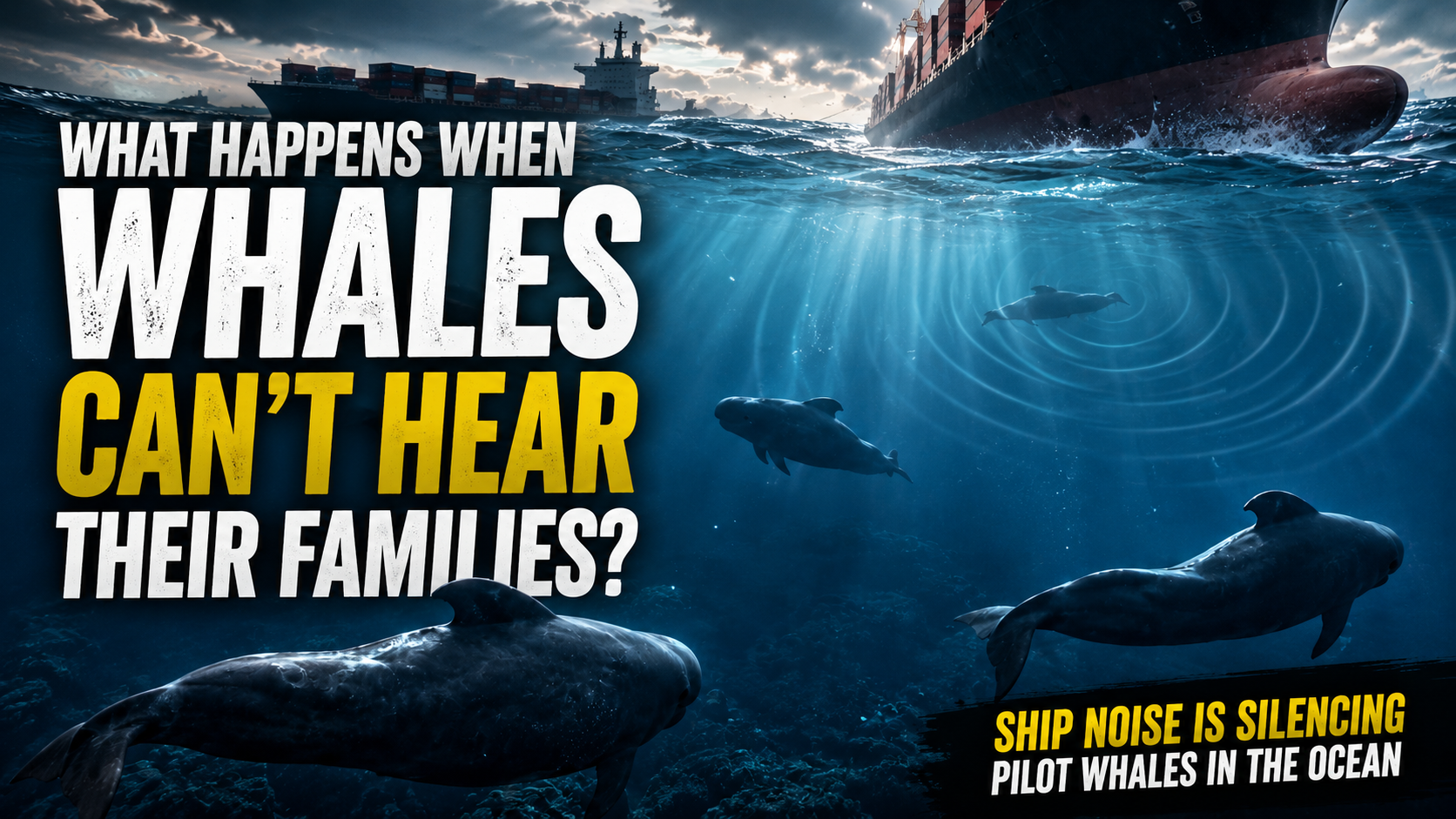
Imagine trying to talk to your family while standing beside a jet engine. Now imagine that noise never really stops. That is the kind of challenge some pilot whales may be facing in one of the busiest shipping corridors in the world.
A recent story highlighted research on pilot whales in the Strait of Gibraltar. The concern is that commercial ship noise may be making it harder for these whales to hear each other. That may sound like a small problem, but for whales, sound is survival.
Why Sound Matters to Whales
Whales use sound to communicate, navigate, stay connected, and find food. Many whale species live in social groups where individuals may spread out over long distances. Sound allows them to stay in touch across the ocean.
Pilot whales are highly social animals. If ship noise masks their calls, it can interfere with how they coordinate as a group. That means noise pollution is not just annoying background sound. It can affect family connection, safety, and survival.
The Strait of Gibraltar Problem
The Strait of Gibraltar is a major route for ships moving between the Atlantic Ocean and the Mediterranean Sea. That means constant vessel traffic, engine noise, and propeller sound. For animals that depend on hearing, this creates a serious challenge.
When the ocean becomes too loud, whales may need to call louder, call more often, or change their behaviour. Over time, that can add stress and make everyday life harder. The issue is not just one ship, but the constant overlap of many ships in one important habitat.
The Ocean Is an Acoustic Habitat
We often think about ocean protection in physical terms. We picture coral reefs, kelp forests, seagrass beds, coastlines, and marine protected areas. But the ocean is also an acoustic habitat.
For whales and dolphins, sound is part of the environment they live in. If that soundscape is damaged, their habitat is damaged too. Protecting the ocean means paying attention to what animals hear, not just what we can see.
Can This Problem Be Fixed?
The good news is that shipping noise can be reduced. Ships can slow down in sensitive areas. Better propellers, quieter engines, improved hull designs, and route changes can all help reduce underwater noise.
The challenge is getting conservation groups, governments, scientists, and the shipping industry to work together. The faster that happens, the better chance pilot whales and other marine mammals have to communicate, navigate, and survive in busy ocean spaces.

CEO

Nature's Kidneys: How Coastal Wetlands Filter Nitrogen Pollution for Free