Why This El Niño Matters More Than You Think

 Apple Podcasts
 Spotify
 YouTube
 Amazon Music
 PocketCasts
 Overcast
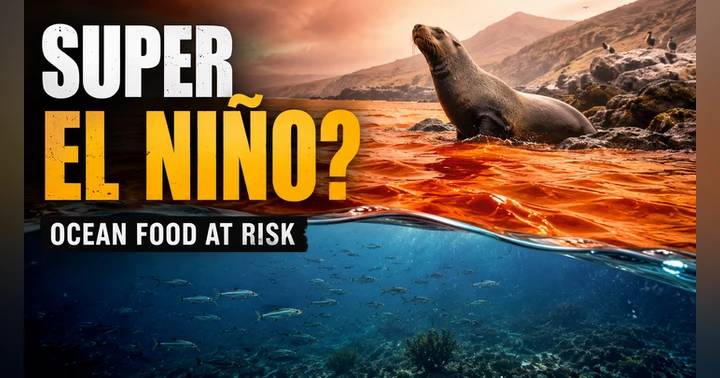
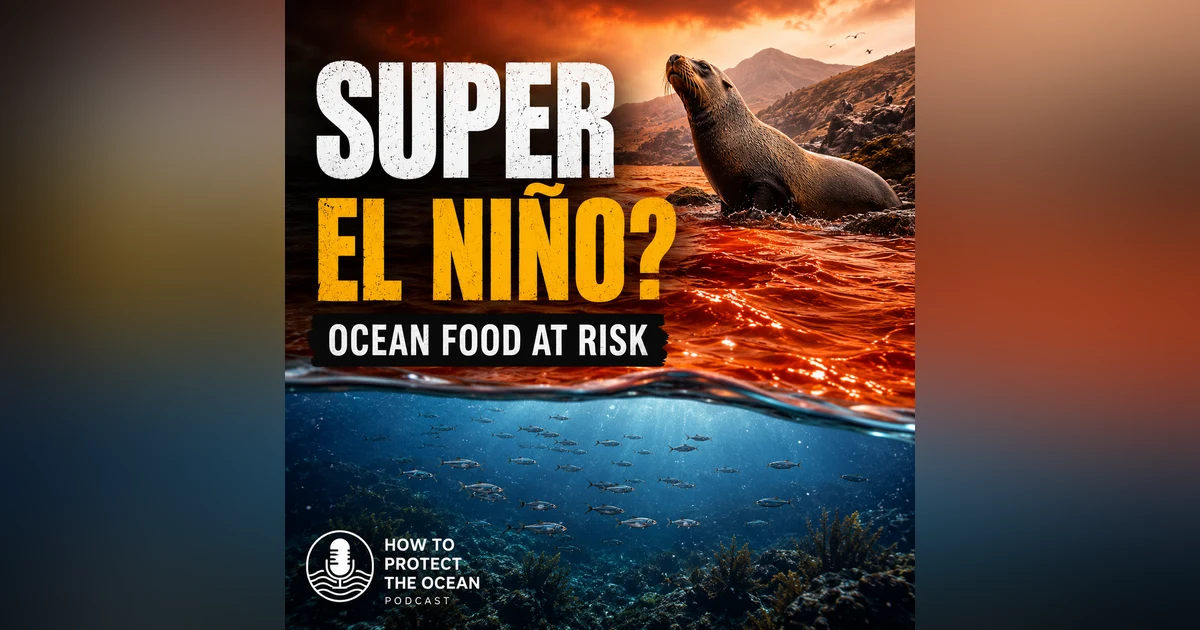
 A potential super El Niño is developing in the Pacific Ocean, and scientists are warning that it could have major consequences for marine ecosystems around the world. While El Niño is a natural climate pattern, stronger events can dramatically alter ocean conditions by warming surface waters and reducing the nutrients that support marine food webs. In this episode, we explore why researchers are watching this event so closely and what it could mean for the future of the ocean.
One of the biggest concerns is how a super El Niño could affect fisheries and marine wildlife. When warmer water prevents nutrients from reaching the surface, phytoplankton production can decline, reducing food availability for fish, seabirds, seals, and sea lions. Some of the world’s most important fisheries, including the Peruvian anchoveta fishery, have experienced major disruptions during past El Niño events, creating ripple effects throughout global seafood supply chains.
We also discuss why this story matters beyond the ocean. A strong El Niño can influence food security, coastal economies, coral reef health, and climate impacts across the globe. Although scientists cannot stop an El Niño from forming, improved forecasting and monitoring systems give communities more time to prepare. This episode examines the science behind the headlines and explains why what happens in the Pacific Ocean rarely stays in the Pacific Ocean.
Support Independent Podcasts: https://www.speakupforblue.com/patreon
Need help with your ocean non-profit, company, or project? Get the help you need with Pisces Oceans Inc.: https://www.piscesoceans.ca
Connect with Speak Up For Blue
Website: https://bit.ly/3fOF3Wf
Instagram: https://bit.ly/3rIaJSG
TikTok: https://www.tiktok.com/@speakupforblue
Twitter: https://bit.ly/3rHZxpc
YouTube: www.speakupforblue.com/youtube
00:00:00,049 --> 00:00:03,909
What if one patch of unusually warm
water in the Pacific Ocean could trigger
2
00:00:03,929 --> 00:00:09,629
droughts, floods, coral bleaching,
food shortages, and record-breaking
3
00:00:09,629 --> 00:00:12,119
temperatures around the world?
4
00:00:12,530 --> 00:00:15,969
This is the How to Protect the Ocean
podcast, your weekday ocean news update.
5
00:00:15,969 --> 00:00:20,429
If you care about staying informed about
the ocean every weekday, Monday to Friday,
6
00:00:20,629 --> 00:00:23,909
hit that follow button right now on the
podcast app that you're listening to this
7
00:00:23,909 --> 00:00:26,076
to, and let's get started with the show.
8
00:00:26,526 --> 00:00:30,246
Today, we're talking about something
that ocean scientists, climate
9
00:00:30,256 --> 00:00:34,516
researchers, and governments around
the world are watching very closely.
10
00:00:34,786 --> 00:00:38,373
It's a developing El Niño,
but not just any El Niño, a
11
00:00:38,373 --> 00:00:41,043
potentially very strong El Niño.
12
00:00:41,053 --> 00:00:44,419
Some scientists are even using
the phrase super El Niño.
13
00:00:44,489 --> 00:00:48,246
And if you wanna get, like, a true
breakdown of what El Niño is and
14
00:00:48,246 --> 00:00:52,353
you follow the Basement Biologist
on TikTok or on Instagram, I
15
00:00:52,373 --> 00:00:53,473
highly recommend that you go there.
16
00:00:53,473 --> 00:00:57,626
If I could link to it, I will, because
he did a very good rendition of, like,
17
00:00:57,636 --> 00:01:00,556
what this is, like, from a scientific
point of view, a biologist point of view.
18
00:01:00,716 --> 00:01:01,776
I highly recommend that you go do it.
19
00:01:01,776 --> 00:01:04,506
But we're gonna talk a little bit about
today especially from the conservation,
20
00:01:04,506 --> 00:01:07,076
like, why people are so worried.
21
00:01:07,096 --> 00:01:10,056
Like, why are scientists so
concerned about this year's El Niño?
22
00:01:10,086 --> 00:01:13,133
We've had them before but what
it could mean for the ocean and
23
00:01:13,133 --> 00:01:14,353
for people around the world.
24
00:01:14,353 --> 00:01:15,563
So let's get into it.
25
00:01:15,860 --> 00:01:19,173
If you've listened to the podcast before,
you've probably heard the term El Niño.
26
00:01:19,203 --> 00:01:20,453
I've talked about it before.
27
00:01:20,646 --> 00:01:23,886
But let's get a quick breakdown, unless
you wanna go… If you wanna stop
28
00:01:23,886 --> 00:01:27,336
this or wait till after and go back
to the Basement Biologist to listen
29
00:01:27,336 --> 00:01:31,126
to his rendition of what an El Niño
is, he did a really great explanation.
30
00:01:31,126 --> 00:01:32,366
But here is the brief.
31
00:01:32,653 --> 00:01:36,393
El Niño is a natural climate pattern
that happens when the surface waters
32
00:01:36,423 --> 00:01:40,813
of the eastern and central Pacific
Ocean become warmer than normal.
33
00:01:41,056 --> 00:01:43,336
That warming changes the wind patterns.
34
00:01:43,566 --> 00:01:45,706
Those wind changes affect rainfall.
35
00:01:45,986 --> 00:01:47,786
Rainfall affects agriculture.
36
00:01:48,006 --> 00:01:49,906
Agriculture affects food prices.
37
00:01:50,106 --> 00:01:52,916
And suddenly, a patch of warm
ocean is influencing communities
38
00:01:52,916 --> 00:01:54,926
thousands of kilometers away.
39
00:01:55,332 --> 00:01:58,152
And that's why El Niño is often
described as one of the most
40
00:01:58,162 --> 00:02:00,502
powerful climate patterns on Earth.
41
00:02:00,602 --> 00:02:04,645
And right now, scientists are seeing
signals that suggest this event
42
00:02:04,645 --> 00:02:06,755
could become exponentially strong.
43
00:02:07,088 --> 00:02:10,328
NOAA recently estimated a significant
chance that the upcoming event
44
00:02:10,328 --> 00:02:14,078
could rank among the strongest
El Niño events observed since
45
00:02:14,138 --> 00:02:15,658
modern records began in 1950.
46
00:02:16,992 --> 00:02:19,142
That's pretty scary because
the last few, especially the
47
00:02:19,142 --> 00:02:21,122
one in 2016 was pretty scary.
48
00:02:21,172 --> 00:02:24,762
There was also a warm blob
that came down from the Arctic.
49
00:02:24,762 --> 00:02:27,578
It lasted a number of years and
it definitely changed our
50
00:02:27,578 --> 00:02:29,278
system, like our entire planet.
51
00:02:29,588 --> 00:02:32,342
But scientists have been tracking
unusually warm water temperatures,
52
00:02:32,418 --> 00:02:36,322
large pools of heat below the ocean
surface, and atmospheric changes that
53
00:02:36,352 --> 00:02:40,512
are all lining up in a way that suggests
a major event might be developing.
54
00:02:40,512 --> 00:02:42,322
This is why we have baseline data, folks.
55
00:02:42,322 --> 00:02:45,415
This is why ocean observing systems
are really, really important.
56
00:02:45,595 --> 00:02:47,355
Now, here's something important.
57
00:02:47,682 --> 00:02:51,342
A strong El Niño doesn't
automatically guarantee a disaster.
58
00:02:51,775 --> 00:02:54,945
Scientists repeatedly emphasize
that stronger events increase
59
00:02:54,945 --> 00:02:58,325
the odds of extreme impacts,
but they don't guarantee them.
60
00:02:58,665 --> 00:03:00,475
Now, think of it as loading the dice.
61
00:03:00,755 --> 00:03:03,935
You don't know exactly what number will
come up, but you know the odds have
62
00:03:03,935 --> 00:03:07,672
changed, and that's why researchers
are paying so much attention.
63
00:03:08,015 --> 00:03:10,155
So why should ocean conservationists care?
64
00:03:10,505 --> 00:03:11,305
That's the question.
65
00:03:11,492 --> 00:03:14,992
Because El Niño can affect
almost every major ocean issue
66
00:03:14,992 --> 00:03:16,472
we talk about on this show.
67
00:03:16,812 --> 00:03:18,172
So let's start with coral reefs.
68
00:03:18,222 --> 00:03:21,702
When ocean temperature stays elevated
for long periods, we know what happens.
69
00:03:21,702 --> 00:03:22,812
Corals become stressed.
70
00:03:23,065 --> 00:03:26,425
That stress can lead to coral bleaching,
and we've already seen widespread
71
00:03:26,445 --> 00:03:28,235
bleaching events in recent years.
72
00:03:28,255 --> 00:03:33,195
And a strong El Niño can add even more
heat to already stressed ocean ecosystems.
73
00:03:33,982 --> 00:03:36,732
And you talk about cumulative
effects, like, the fisheries.
74
00:03:37,195 --> 00:03:41,245
In the Eastern Pacific, warm waters can
disrupt nutrient-rich upwelling systems.
75
00:03:41,478 --> 00:03:44,878
Normally, cold water rises from the
deep in those upwelling systems and
76
00:03:44,878 --> 00:03:46,268
bring nutrients to the surface.
77
00:03:46,688 --> 00:03:50,928
Those nutrients support plankton, plankton
support fish, fish support fisheries.
78
00:03:51,348 --> 00:03:54,838
When that process is disrupted,
the entire food web changes,
79
00:03:54,998 --> 00:03:56,268
and it can feel the impact.
80
00:03:56,575 --> 00:04:00,105
So historically, some major El
Niño events have severely affected
81
00:04:00,105 --> 00:04:04,042
fisheries, including Peru's anchovy
fishery during the early 1970s.
82
00:04:04,385 --> 00:04:06,095
But the story doesn't stop in the ocean.
83
00:04:06,495 --> 00:04:10,575
A strong El Niño can influence droughts
in some regions and flooding in others.
84
00:04:11,015 --> 00:04:14,372
Parts of Australia, Southeast
Asia, and portions of the Amazon
85
00:04:14,372 --> 00:04:18,081
often experience hotter and drier
conditions during major events.
86
00:04:18,351 --> 00:04:21,251
Other regions may see increased
rainfall and flooding.
87
00:04:21,671 --> 00:04:24,801
That matters because food
systems are connected globally.
88
00:04:25,321 --> 00:04:29,791
Recent reporting suggests crops like
cocoa, coffee, and sugar may be
89
00:04:29,791 --> 00:04:33,131
particularly vulnerable if a strong
El Niño develops later this year.
90
00:04:33,488 --> 00:04:35,988
And here's where the story
becomes even bigger than weather.
91
00:04:36,371 --> 00:04:38,831
We're not experiencing this
El Niño in the same world that
92
00:04:38,831 --> 00:04:41,675
existed in 1982 or even in 2015.
93
00:04:42,041 --> 00:04:46,141
We are experiencing it in a world that is
already warmer because of climate change.
94
00:04:46,581 --> 00:04:49,761
Scientists have repeatedly pointed
out that the additional heat already
95
00:04:49,761 --> 00:04:52,771
present in the atmosphere and the
oceans may amplify some of the
96
00:04:52,771 --> 00:04:54,311
impacts associated with El Niño.
97
00:04:54,558 --> 00:04:58,138
So it's not just El Niño, it's
El Niño plus warming planet.
98
00:04:58,461 --> 00:05:01,171
That combination is what many
researchers find concerning.
99
00:05:01,692 --> 00:05:02,942
Now I'm gonna just interrupt quickly.
100
00:05:02,942 --> 00:05:07,142
If you are getting value from this quick
ocean news update on El Niño, and you
101
00:05:07,142 --> 00:05:10,115
wanna follow the show and never miss an
episode, please hit that follow button.
102
00:05:10,115 --> 00:05:13,625
If you wanna go above that, and you
wanna support me and the work that I do
103
00:05:13,625 --> 00:05:16,885
about putting out the podcast, putting out
YouTube videos, putting out newsletters,
104
00:05:16,942 --> 00:05:20,722
doing all the social media posts that
you can enjoy anywhere and wherever
105
00:05:20,722 --> 00:05:25,945
you'd like, please join my Patreon,
speakupforblue.com/patreon, so you
106
00:05:25,945 --> 00:05:27,725
can support the show if you so choose.
107
00:05:27,822 --> 00:05:30,422
We also have options to listen to
the different feeds if you just
108
00:05:30,422 --> 00:05:32,922
want one episode a week or if
you want five episodes a week.
109
00:05:32,992 --> 00:05:34,129
You can do it there for free.
110
00:05:34,245 --> 00:05:35,295
So there's lots of things to do.
111
00:05:35,295 --> 00:05:38,065
I'll be putting up updates of some of
the videos that are gonna come out in
112
00:05:38,065 --> 00:05:41,022
the future and where I'm gonna go and
my strategy, all that kinda stuff.
113
00:05:41,032 --> 00:05:46,546
You can support me on Patreon,
speakupforblue.com/patreon So what
114
00:05:46,546 --> 00:05:50,813
should we watch for over the next few
months during this potential El Niño?
115
00:05:51,333 --> 00:05:54,723
First, scientists will continue monitoring
the Pacific Ocean temperatures because
116
00:05:54,723 --> 00:05:57,883
they have the observing system to do
that, which is why we need baseline
117
00:05:57,883 --> 00:05:59,373
data, and we need to fund baseline data.
118
00:05:59,566 --> 00:06:02,726
The strength of the El Niño is
measured using several indicators, and
119
00:06:02,726 --> 00:06:06,536
researchers will be looking closely to
see whether current forecasts continue
120
00:06:06,536 --> 00:06:08,686
to strengthen or begin to weaken.
121
00:06:09,006 --> 00:06:11,366
Second, we're gonna watch
for coral bleaching reports.
122
00:06:11,633 --> 00:06:15,153
If ocean temperatures remain elevated,
reefs in vulnerable regions could
123
00:06:15,153 --> 00:06:16,693
experience additional stress.
124
00:06:16,866 --> 00:06:19,886
We've seen the Great Barrier Reef
go ninety-four percent bleaching.
125
00:06:20,009 --> 00:06:21,736
They recovered in many of those places.
126
00:06:21,913 --> 00:06:25,103
But as those bleaches continue to
increase, and then we start to get longer
127
00:06:25,103 --> 00:06:29,583
periods of ocean warming, that bleaching
becomes more and more severe every year.
128
00:06:29,886 --> 00:06:31,316
Now, the third thing we're
gonna do is we're gonna watch
129
00:06:31,326 --> 00:06:32,816
for food and fishery stories.
130
00:06:33,023 --> 00:06:36,273
Many of the earliest impacts of
El Niño show up in agriculture,
131
00:06:36,273 --> 00:06:38,163
fisheries, and water availability.
132
00:06:38,339 --> 00:06:41,103
You can almost even see it in the gray
whale populations off the West Coast.
133
00:06:41,113 --> 00:06:45,419
Something is going on there, and they
think that the food shortages or the food
134
00:06:45,429 --> 00:06:48,329
displacement because of climate change
and current displacement, everything
135
00:06:48,329 --> 00:06:51,619
like that, is affecting these gray whales
on the West Coast of North America.
136
00:06:51,863 --> 00:06:55,083
And finally, we're gonna watch how
governments and organizations prepare.
137
00:06:55,473 --> 00:06:58,793
The World Meteorological Organization
has already urged countries to prepare
138
00:06:58,793 --> 00:07:02,356
for potential extreme weather impacts
associated with the developing event.
139
00:07:02,466 --> 00:07:05,676
If you're on TikTok or Instagram and
you follow any meteorologist, they
140
00:07:05,676 --> 00:07:07,416
are talking about this super El Niño.
141
00:07:07,556 --> 00:07:10,076
I guarantee you they're talking
about the super El Niño.
142
00:07:10,466 --> 00:07:14,123
The encouraging part is that the
forecasting has improved dramatically.
143
00:07:14,463 --> 00:07:17,853
Scientists can now see many of the
signals months before the strongest
144
00:07:17,893 --> 00:07:19,779
impacts occur, so we can prepare better.
145
00:07:20,026 --> 00:07:21,386
That doesn't prevent the event.
146
00:07:21,646 --> 00:07:24,446
It just gives the communities
time to prepare for the event.
147
00:07:24,823 --> 00:07:29,363
Farmers can adjust, emergency managers
can plan, conservation organizations
148
00:07:29,363 --> 00:07:33,673
can monitor vulnerable ecosystems,
and policymakers can make decisions
149
00:07:33,673 --> 00:07:35,833
before conditions become critical.
150
00:07:36,169 --> 00:07:39,189
That's a much better position than
humanity was in during some of the most
151
00:07:39,199 --> 00:07:41,699
historical El Niño events of the past.
152
00:07:42,063 --> 00:07:45,023
So the most important thing to
remember is this: a strong El Niño
153
00:07:45,213 --> 00:07:49,403
starts in the ocean, but its impacts
reach far beyond those coastlines.
154
00:07:49,729 --> 00:07:53,609
It can affect coral reefs, fisheries,
food systems, water supplies,
155
00:07:53,909 --> 00:07:55,259
and communities around the world.
156
00:07:55,626 --> 00:07:59,486
That's why ocean monitoring
matters, because what happens in
157
00:07:59,486 --> 00:08:03,646
the Pacific rarely stays in the
Pacific Now, I wanna thank you
158
00:08:03,656 --> 00:08:05,016
for joining me on today's episode.
159
00:08:05,046 --> 00:08:06,166
That's it for today's episode.
160
00:08:06,166 --> 00:08:09,216
If you wanna get ahold of me, you
can do so by going to the show notes,
161
00:08:09,286 --> 00:08:11,106
looking at my social media posts.
162
00:08:11,106 --> 00:08:14,126
You can DM me on Instagram, on
TikTok, Facebook, wherever you'd like.
163
00:08:14,233 --> 00:08:16,463
I'd be more than happy
to answer those DMs.
164
00:08:16,653 --> 00:08:19,999
And of course, if you wanna support
the podcast, and you support the work
165
00:08:19,999 --> 00:08:23,469
that I do, putting out the podcast,
YouTube videos, newsletters, all the
166
00:08:23,469 --> 00:08:27,149
stuff that I do, social media posts,
you can do so by becoming a patron.
167
00:08:27,149 --> 00:08:29,749
Go to speakupforblue.com/patreon.
168
00:08:30,439 --> 00:08:33,749
That's speakupforblue.com/patreon.
169
00:08:33,759 --> 00:08:34,729
Link is in the show notes.
170
00:08:35,029 --> 00:08:37,386
But thank you for joining me
on today's episode of the How
171
00:08:37,386 --> 00:08:38,466
to Protect the Ocean podcast.
172
00:08:38,686 --> 00:08:39,346
Have a great day.
173
00:08:39,346 --> 00:08:41,526
We'll talk to you next
time, and happy conservation