Could a Super El Niño Starve the Ocean?
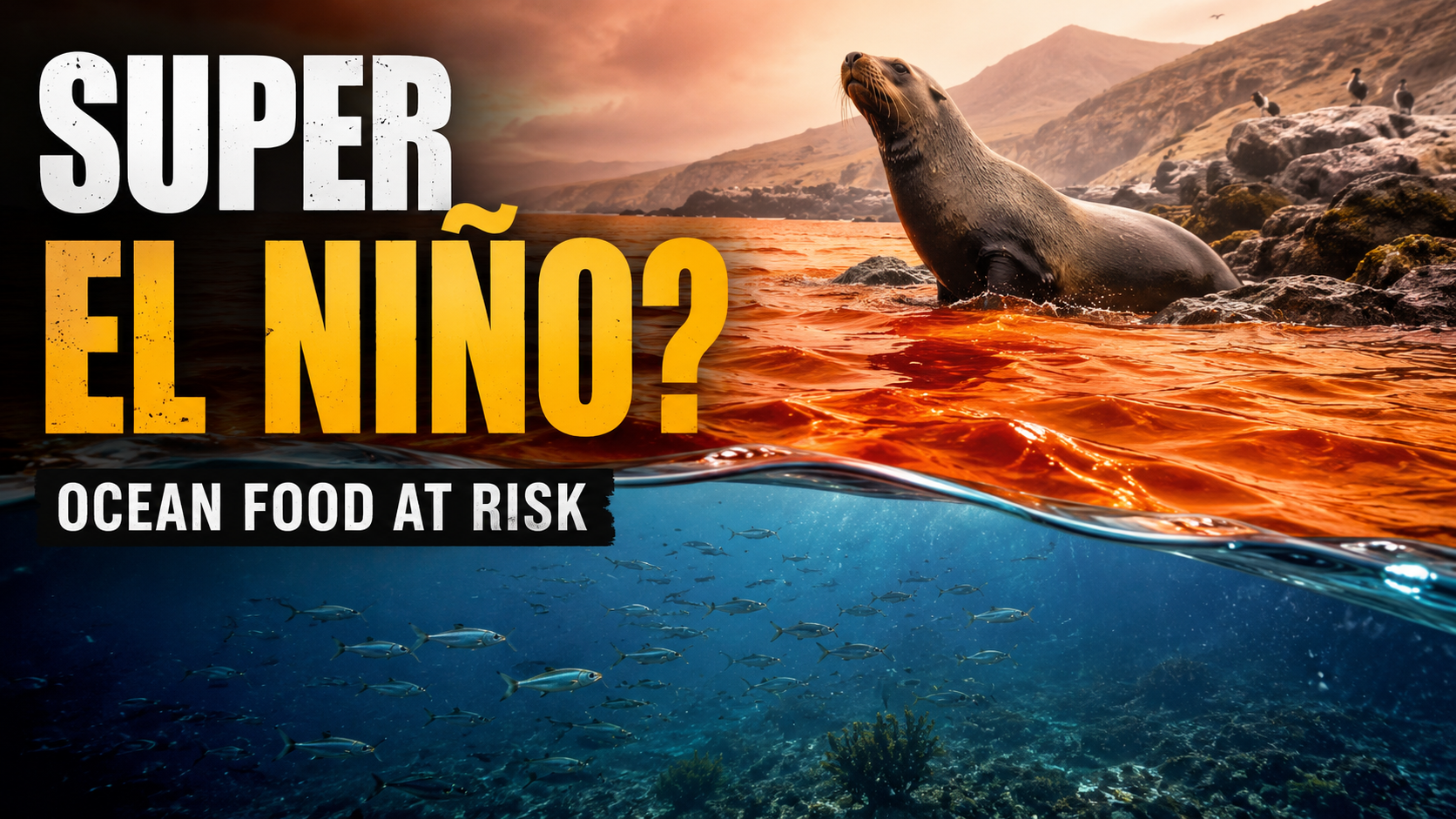
A potential super El Niño is one of the biggest ocean stories to watch this year. It starts with unusually warm water in the tropical Pacific, but the impacts can travel far beyond one region.
When the Pacific warms enough, it can shift weather patterns, disrupt fisheries, and place extra stress on marine ecosystems. That is why scientists are paying close attention to what could happen next.
What Is a Super El Niño?
El Niño happens when surface waters in the central and eastern tropical Pacific become warmer than normal. A super El Niño is an especially strong version, with sea surface temperatures rising more than 2°C above normal.
That extra heat does not just sit in the ocean. It can move into the atmosphere, affect global temperatures, and reshape ocean conditions in ways that marine life may struggle to handle.
Why Fisheries Are at Risk
One of the biggest concerns is what happens to ocean food webs. Warmer water can make the ocean more layered, with warm, nutrient-poor water sitting on top and colder, nutrient-rich water trapped below.
That matters because nutrients help feed phytoplankton, the tiny ocean plants at the base of the marine food chain. Less phytoplankton can mean less food for zooplankton, fish, seabirds, seals, sea lions, and other marine animals.
The Peruvian anchoveta fishery is especially vulnerable. It is one of the most important fisheries in the world, supporting fishmeal production and global aquaculture feed.
Marine Mammals Feel the Impact
When fish become harder to find, marine mammals can suffer quickly. Seals and sea lions may have to travel farther and stay at sea longer to find food.
That can be especially dangerous for mothers and pups. If adults cannot find enough prey, young animals may be left hungry, and entire colonies can experience major stress.
El Niño can also increase the risk of harmful algal blooms. These blooms can produce toxins that move through food webs and harm whales, sea lions, fish, seabirds, and people.
Coral Reefs and Kelp Forests Are Also Vulnerable
A strong El Niño can push already warm ocean temperatures even higher. That creates a serious risk for coral bleaching, especially in tropical reef systems already stressed by climate change.
Kelp forests and mangroves can also be affected. These habitats support biodiversity, fisheries, coastal protection, and carbon storage, so damage to them can ripple through ecosystems and communities.
The Bigger Message
A super El Niño is not just a weather event. It is an ocean food web event, a fisheries event, a wildlife event, and a people event.
The good news is that monitoring has improved. Scientists can track warming conditions, forecast risks, and help governments and communities prepare.
The ocean gives us warning signs. The question is whether we act on them early enough.

CEO
300 People, 50 Tribes, One Meeting: How California Built Its Marine Protected Areas