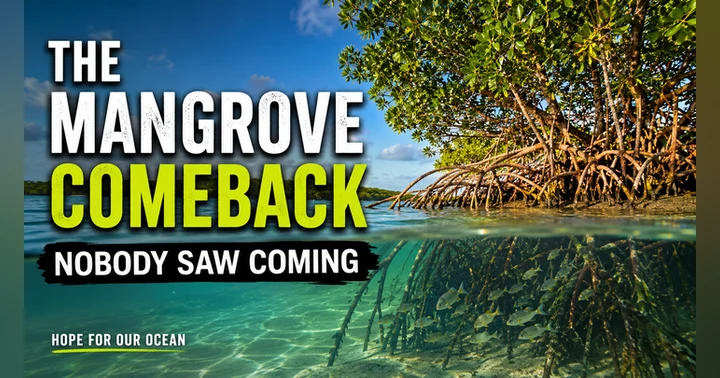
The Return of Mangroves Should Give You Hope
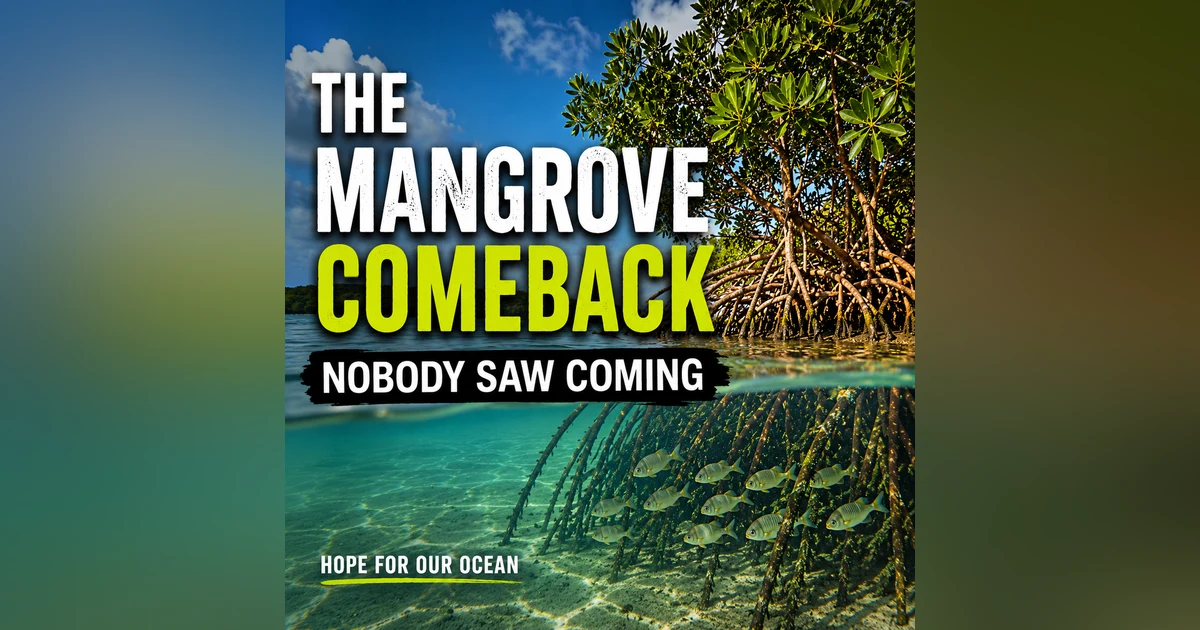

 Apple Podcasts
 Spotify
 YouTube
 Amazon Music
 PocketCasts
 Overcast
 For years, mangrove forests were seen as one of the world’s fastest disappearing coastal ecosystems. Cleared for development, shrimp farming, and agriculture, these unique forests seemed locked in a steady decline. But a new global study tells a much more hopeful story. Researchers have found that mangroves are recovering in many parts of the world, offering one of the most encouraging conservation success stories in recent years.
In this episode, I break down why mangroves are so important for the health of our oceans and the people who depend on them. You’ll learn how these coastal forests protect communities from storms, provide critical nursery habitat for fish, and store massive amounts of carbon that help fight climate change. We’ll also explore why scientists believe nature can recover when we give it the opportunity.
Finally, we’ll look at what this recovery means for the future. While the findings are encouraging, mangroves still face threats from coastal development, pollution, and climate change. This episode is a reminder that conservation works, restoration can succeed, and protecting coastal ecosystems remains one of the smartest investments we can make for both people and the planet.
00:00:00,050 --> 00:00:03,610
What if I told you that one of the
most important ecosystems on Earth
2
00:00:03,630 --> 00:00:07,449
has quietly been making a comeback
after decades of destruction?
3
00:00:07,980 --> 00:00:11,360
This is the How to Protect the Ocean
podcast, your weekday ocean news update.
4
00:00:11,540 --> 00:00:15,379
If you care about staying informed on
the ocean every single weekday, Monday
5
00:00:15,379 --> 00:00:18,759
to Friday, hit that follow button
right now so you don't miss tomorrow's
6
00:00:18,759 --> 00:00:21,039
story, which is gonna be a really
interesting one, where we're gonna talk
7
00:00:21,049 --> 00:00:25,939
about studying devil rays in Gaza, a
war-torn area, which there's a lot of
8
00:00:25,939 --> 00:00:28,309
implications of that, so we're gonna get
into a lot of stuff like that tomorrow.
9
00:00:28,310 --> 00:00:31,180
So hit that follow button so you
don't miss tomorrow's episode.
10
00:00:31,470 --> 00:00:35,776
So today, we're answering a simple but
important question: Can mangrove forests
11
00:00:35,816 --> 00:00:38,416
actually recover after deforestation?
12
00:00:38,676 --> 00:00:41,896
And what does their recovery
mean for the future of the
13
00:00:41,896 --> 00:00:44,136
coasts, fisheries, and climate?
14
00:00:44,663 --> 00:00:48,813
For years, mangroves have been one of the
most cited examples of environmental loss.
15
00:00:49,123 --> 00:00:53,033
Across tropical coastlines around
the world, these unique forests
16
00:00:53,103 --> 00:00:56,893
have been cleared for shrimp farms,
agriculture, urban development,
17
00:00:56,903 --> 00:00:59,083
ports, and tourism infrastructure.
18
00:00:59,643 --> 00:01:03,143
Scientists often describe mangroves
as one of the most threatened coastal
19
00:01:03,143 --> 00:01:06,073
ecosystems on Earth, and for good reason.
20
00:01:06,503 --> 00:01:09,936
Since the 1980s, thousands of
square kilometers of mangrove
21
00:01:09,946 --> 00:01:11,656
forests disappeared worldwide.
22
00:01:11,956 --> 00:01:15,306
But according to new research
highlighted by Mongabay and
23
00:01:15,306 --> 00:01:19,166
published in the Journal of Science,
there is finally some good news.
24
00:01:19,486 --> 00:01:22,446
The world's mangrove forests
may be bouncing back.
25
00:01:22,699 --> 00:01:24,769
And not just in a few isolated locations.
26
00:01:25,259 --> 00:01:29,439
Researchers analyzed four decades of
satellite data and found that global
27
00:01:29,440 --> 00:01:33,119
mangrove losses have slowed down
dramatically, while gains over the last
28
00:01:33,119 --> 00:01:35,809
16 years have actually outpaced losses.
29
00:01:36,309 --> 00:01:39,259
As a result, global mangrove
coverage is now close to where it
30
00:01:39,259 --> 00:01:44,149
was decades ago, with only about
1% net decline since the 1980s.
31
00:01:44,159 --> 00:01:44,889
That's huge.
32
00:01:44,889 --> 00:01:45,869
That's remarkable.
33
00:01:45,979 --> 00:01:50,389
That's a huge find, especially when so
many environmental stories seem to be
34
00:01:50,399 --> 00:01:52,509
on the move in the opposite direction.
35
00:01:53,119 --> 00:01:54,669
So what exactly happened?
36
00:01:54,809 --> 00:01:56,339
Let's start with the basics.
37
00:01:56,809 --> 00:01:58,239
What exactly are mangroves?
38
00:01:58,579 --> 00:02:02,109
Mangroves are forests that
grow where land meets the sea.
39
00:02:02,443 --> 00:02:06,143
They're built from salt-tolerant
trees that thrive in muddy
40
00:02:06,143 --> 00:02:09,413
coastal areas throughout the
tropical and subtropical regions.
41
00:02:09,783 --> 00:02:13,603
If you've ever seen a shoreline covered in
tangled roots sticking out of the water,
42
00:02:13,793 --> 00:02:15,803
you've probably seen a mangrove forest.
43
00:02:16,073 --> 00:02:18,793
These roots do much more than
just hold the trees upright.
44
00:02:19,113 --> 00:02:23,239
They trap the sediments, they reduce
erosion, they slow storm surges,
45
00:02:23,289 --> 00:02:28,069
and they create a nursery habitat
for countless fish and invertebrates.
46
00:02:28,069 --> 00:02:31,039
Now, I've been in mangroves before,
and I've walked through them.
47
00:02:31,039 --> 00:02:34,649
I was in Singapore on the way
back from the IMCC, I think
48
00:02:34,649 --> 00:02:39,829
it was five, in Malaysia, in
Borneo, at Kuching in particular.
49
00:02:39,859 --> 00:02:44,606
And when we came back, Andrew Thaler and
I and a friend of ours, went out to a
50
00:02:44,606 --> 00:02:49,546
marine protected area on an island, and
we were walking through the mangroves.
51
00:02:49,556 --> 00:02:51,416
There was, like, a nice
boardwalk in there.
52
00:02:51,576 --> 00:02:53,126
And these mangroves are dense.
53
00:02:53,126 --> 00:02:54,456
They're thick, thick, thick.
54
00:02:54,476 --> 00:02:58,326
Like, not the trees, but the root
systems are all over the place, and they
55
00:02:58,326 --> 00:03:02,459
intertwine with each other's trees but
the mud that they just kinda keep together
56
00:03:02,729 --> 00:03:06,339
and that coastline they keep together
secure that coastline from erosion.
57
00:03:06,379 --> 00:03:07,799
It's just absolutely phenomenal.
58
00:03:07,799 --> 00:03:10,029
It goes on land and into the water.
59
00:03:10,239 --> 00:03:14,439
So it's the home of a number of different
species in different realms, ocean as
60
00:03:14,439 --> 00:03:17,379
well as intertidal as well as land.
61
00:03:17,379 --> 00:03:18,489
And it's really, really cool.
62
00:03:18,729 --> 00:03:21,009
And they're all, of course, for
many commercially important seafood
63
00:03:21,009 --> 00:03:24,549
species, they spend part of their
time in the mangrove habitats.
64
00:03:24,739 --> 00:03:27,949
So without mangroves, many
coastal fisheries would struggle.
65
00:03:28,349 --> 00:03:32,199
Now, for decades, however, humans
removed these forests faster
66
00:03:32,199 --> 00:03:33,359
than nature could replace them.
67
00:03:33,639 --> 00:03:37,269
Large areas were converted into
shrimp ponds and coastal developments.
68
00:03:37,559 --> 00:03:40,409
Scientists expected them
to continue to decline.
69
00:03:40,909 --> 00:03:42,539
Instead, something surprising happened.
70
00:03:43,179 --> 00:03:46,279
In many places, mangroves
began returning on their own.
71
00:03:46,869 --> 00:03:50,049
Researchers found that abandoned
aquaculture ponds, newly formed
72
00:03:50,049 --> 00:03:52,959
mudflats, and protected coastlines
create opportunities for
73
00:03:52,969 --> 00:03:54,789
mangroves to naturally regenerate.
74
00:03:55,289 --> 00:03:57,779
Restoration programs also
played an important role.
75
00:03:58,186 --> 00:04:01,586
This doesn't mean that every mangrove
forest is healthy, but it does mean
76
00:04:01,586 --> 00:04:04,756
that the mangroves appear to be
far more resilient than many people
77
00:04:04,756 --> 00:04:09,346
realize, and they seem to come back a
lot faster than many people realize.
78
00:04:09,850 --> 00:04:12,650
Now, this is where the story becomes
really important because mangroves
79
00:04:12,690 --> 00:04:15,760
aren't just trees, they're an
infrastructure, a coastal infrastructure,
80
00:04:15,760 --> 00:04:17,470
like a natural infrastructure.
81
00:04:17,830 --> 00:04:22,060
Imagine a coastal community facing a
hurricane or a cyclone or even a tsunami
82
00:04:22,060 --> 00:04:24,450
like the 2004 tsunami in the Indian Ocean.
83
00:04:24,800 --> 00:04:27,770
A healthy mangrove forest can
absorb wave energy before it
84
00:04:27,780 --> 00:04:29,200
reaches homes and businesses.
85
00:04:29,420 --> 00:04:33,520
And in fact, areas where mangroves
were intact in the 2004 tsunami in the
86
00:04:33,520 --> 00:04:38,010
Indian Ocean actually showed much more
protection than areas that had that loss.
87
00:04:38,020 --> 00:04:41,070
So in areas where they were doing
coastal development or they had like
88
00:04:41,070 --> 00:04:44,300
they removed the mangroves for shrimping
like we just, shrimp farming like we just
89
00:04:44,300 --> 00:04:49,650
talked about, those areas had much more
damage and much more lives lost than the
90
00:04:49,650 --> 00:04:51,630
areas where they had that protection.
91
00:04:52,043 --> 00:04:55,613
So it meant like less flooding,
less erosion, less damage.
92
00:04:55,893 --> 00:04:58,913
Millions of people around the world
benefit from this protection every year.
93
00:04:59,433 --> 00:05:01,743
Mangroves are also climate allies.
94
00:05:02,263 --> 00:05:05,573
They store enormous amounts of
carbon in their roots and sediments.
95
00:05:06,053 --> 00:05:08,673
In fact, mangroves are among the
most effective carbon-storing
96
00:05:08,673 --> 00:05:10,143
ecosystems on the planet.
97
00:05:10,963 --> 00:05:13,383
When they are protected,
they lock carbon away.
98
00:05:13,583 --> 00:05:16,723
When they're destroyed, much
of that carbon can be released
99
00:05:16,733 --> 00:05:17,983
back into the atmosphere.
100
00:05:18,410 --> 00:05:22,790
That's why mangroves are often considered
a powerful nature-based climate solution.
101
00:05:23,140 --> 00:05:27,270
When you hear oil companies and you hear
a lot of conservatives like in Canada and
102
00:05:27,270 --> 00:05:31,440
the US talk about having carbon capture,
the best carbon capture are a lot of these
103
00:05:31,450 --> 00:05:35,620
natural systems, whether it be mangroves,
whether it be seagrass beds, whether
104
00:05:35,620 --> 00:05:37,940
it be kelp or other algae communities.
105
00:05:38,230 --> 00:05:42,443
These are the communities and habitats
that actually help secure carbon.
106
00:05:42,643 --> 00:05:44,663
And that if we restore, even
though that can be quite
107
00:05:44,664 --> 00:05:46,813
expensive, it will actually help.
108
00:05:46,813 --> 00:05:50,423
And I feel as though a lot of the oil
and gas companies should be made to
109
00:05:50,433 --> 00:05:53,850
actually be able to rebuild these and
fund the restoration of a lot of these
110
00:05:53,870 --> 00:05:57,230
places, especially coastal development
and coastal communities where there's,
111
00:05:57,250 --> 00:06:00,600
you see that coastal development happen
and the taking away of those areas.
112
00:06:00,870 --> 00:06:03,510
They should be forced to be, put
those back if they take it away.
113
00:06:03,987 --> 00:06:07,187
And of course, like we talk about
security, then there's also food security.
114
00:06:07,697 --> 00:06:11,407
Many fish, crabs, shrimp, and other
marine species depend on mangroves during
115
00:06:11,407 --> 00:06:13,047
critical parts of their life cycle.
116
00:06:13,534 --> 00:06:16,444
No mangroves often means
no nursery habitats.
117
00:06:16,773 --> 00:06:20,794
Fewer nursery habitats mean fewer
fish, and fewer fish can affect local
118
00:06:20,794 --> 00:06:22,444
fisheries and coastal livelihoods.
119
00:06:22,944 --> 00:06:26,030
So when mangroves recover,
the benefits ripple outward.
120
00:06:26,350 --> 00:06:30,767
The ecosystem benefits, the climate
benefits, coastal communities
121
00:06:30,767 --> 00:06:32,807
benefit, and fisheries benefit.
122
00:06:33,187 --> 00:06:35,287
That's why researchers are calling
this recovery one of the most
123
00:06:35,287 --> 00:06:39,097
encouraging conservation stories
we've seen in recent years.
124
00:06:39,493 --> 00:06:42,963
And speaking of like encouraging
conservation stories, if you like to
125
00:06:42,963 --> 00:06:46,373
hear these types of stories and you're
getting value from this podcast, these
126
00:06:46,373 --> 00:06:50,093
quick ocean news updates, follow this
show on your favorite podcast app
127
00:06:50,093 --> 00:06:53,753
so you don't miss tomorrow's episode
or any other episode after this.
128
00:06:53,933 --> 00:06:59,173
And of course, you can go back into
our back catalog of over 1,960 episodes
129
00:06:59,173 --> 00:07:02,843
so that you can listen to what's
been happening in the past before you
130
00:07:02,843 --> 00:07:06,033
get to know what's gonna happen in
the future or what's happening now.
131
00:07:06,663 --> 00:07:10,503
Now, before we celebrate too much
of this new mangrove resurgence,
132
00:07:10,693 --> 00:07:12,143
there are a few important caveats.
133
00:07:12,453 --> 00:07:14,773
The recovery is real, but it's fragile.
134
00:07:15,263 --> 00:07:17,513
Many of the new mangrove
forests are still pretty young.
135
00:07:17,983 --> 00:07:21,293
Young forests don't provide the same
level of protection, biodiversity,
136
00:07:21,293 --> 00:07:24,353
or carbon storage as mature forests
that have developed over decades.
137
00:07:24,843 --> 00:07:26,743
And there are also ongoing threats.
138
00:07:26,993 --> 00:07:30,773
Coastal development continues in many
regions, and pollution remains a problem.
139
00:07:30,773 --> 00:07:35,140
So just imagine a coastal city or a
coastal area decides, "Hey," somebody
140
00:07:35,140 --> 00:07:39,090
comes in and says, "Hey, I wanna build a
resort here," or, "I wanna build a shrimp
141
00:07:39,090 --> 00:07:42,820
farm here." And the people let it happen,
or they don't know it's happening, and
142
00:07:42,820 --> 00:07:44,330
it just gets to happen on their watch.
143
00:07:44,750 --> 00:07:49,710
That whole area is taken away in
months, or in days, or in weeks, and
144
00:07:49,710 --> 00:07:51,470
so you have to start that over again.
145
00:07:51,750 --> 00:07:55,687
Even though we see the recovery of
mangroves, a baby mangrove, like
146
00:07:55,687 --> 00:07:58,777
a small mangrove plant, is very,
very small and doesn't provide
147
00:07:58,817 --> 00:08:00,067
the protection that it needs.
148
00:08:00,297 --> 00:08:04,317
And as it grows bigger and bigger, that's
when the protection really comes in from
149
00:08:04,317 --> 00:08:08,137
coastal development, from pollution,
and then of course climate change will
150
00:08:08,137 --> 00:08:11,517
introduce a few risks if it takes out
through some storms and things like that.
151
00:08:11,787 --> 00:08:15,747
But this is where you really need
to really protect these areas.
152
00:08:15,767 --> 00:08:18,417
Not just restore, but protect
the restored ones and protect the
153
00:08:18,417 --> 00:08:20,037
ones that have always been there.
154
00:08:20,433 --> 00:08:23,663
One example highlighted by
researchers occurred in Texas, in
155
00:08:23,663 --> 00:08:27,784
the States, where expanded mangrove
populations suffered major losses
156
00:08:28,043 --> 00:08:29,574
after an extreme freeze event.
157
00:08:30,093 --> 00:08:34,304
A single climate-related event was
able to reverse years of progress.
158
00:08:34,604 --> 00:08:37,884
Now, researchers are also warning
that sea level rise could become
159
00:08:37,884 --> 00:08:39,674
a major challenge in the future.
160
00:08:40,213 --> 00:08:43,433
Mangroves can adapt to changing
coastlines, but only if they
161
00:08:43,433 --> 00:08:47,473
have space to migrate inland
and conditions remain suitable.
162
00:08:47,483 --> 00:08:51,113
So if sea levels rise too quickly or
development blocks their movement,
163
00:08:51,393 --> 00:08:53,113
some forests could struggle to survive.
164
00:08:53,113 --> 00:08:53,803
So think about it.
165
00:08:54,063 --> 00:08:57,653
You have this coastline, and there's like
a certain thickness off the coastline,
166
00:08:57,803 --> 00:08:59,813
so distance from the coastline inland.
167
00:09:00,257 --> 00:09:04,057
If the sea level starts to rise, it's
gonna take out that first level, those
168
00:09:04,067 --> 00:09:05,777
first trees that are exposed to the sea.
169
00:09:06,044 --> 00:09:09,543
So as those come in, they're gonna kill
those plants, and it's gonna move inland.
170
00:09:09,783 --> 00:09:12,573
Now, it's still gonna provide
protection because if the band is
171
00:09:12,574 --> 00:09:16,183
thick enough, like it goes from the
sea inland quite a bit, then you're
172
00:09:16,183 --> 00:09:17,454
gonna have some protection there.
173
00:09:17,963 --> 00:09:22,444
But if there's nowhere for it to develop,
like nowhere for those plants to migrate
174
00:09:22,444 --> 00:09:27,454
more inland, so if there's paved roads or
there's a highway or there's a community
175
00:09:27,454 --> 00:09:31,542
there It'll be difficult to restore
that even though there's sea level rise.
176
00:09:31,542 --> 00:09:34,002
It's gonna be really hard to stop
sea level rise because there's such
177
00:09:34,052 --> 00:09:35,502
pressure coming in from the ocean.
178
00:09:35,702 --> 00:09:38,742
But if you want to go back further
inland, that would be easy.
179
00:09:38,742 --> 00:09:42,092
But if there's a housing community
there or a highway or a road,
180
00:09:42,372 --> 00:09:45,302
that's gonna be harder for those
plants and those mangrove trees to
181
00:09:45,302 --> 00:09:47,232
actually develop and move forward.
182
00:09:47,242 --> 00:09:49,602
So that's the problem that
they're having with some of the
183
00:09:49,612 --> 00:09:51,002
areas that need to be restored.
184
00:09:51,382 --> 00:09:53,492
So the lesson isn't that
mangroves are saved.
185
00:09:53,842 --> 00:09:56,292
The lesson is that the
recovery is possible.
186
00:09:56,712 --> 00:09:58,382
Conservation works.
187
00:09:58,611 --> 00:10:00,972
Restoration works, even
though it's quite expensive.
188
00:10:01,322 --> 00:10:04,902
And sometimes nature can help
itself when given the opportunity.
189
00:10:05,412 --> 00:10:08,761
In a world where environmental
news often feels overwhelming, this
190
00:10:08,761 --> 00:10:12,381
matters because success stories show
us what's possible when protection
191
00:10:12,401 --> 00:10:14,201
efforts are sustained over time.
192
00:10:14,705 --> 00:10:18,485
Now, the biggest lesson from this
study is simple: nature is remarkably
193
00:10:18,485 --> 00:10:22,145
resilient, but only when it-- we
give it the chance to recover.
194
00:10:22,715 --> 00:10:26,655
Mangroves are proving that conservation
can work and that protecting
195
00:10:26,655 --> 00:10:30,215
coastal ecosystems is one of the
smartest investments we can make
196
00:10:30,215 --> 00:10:32,545
for people, fisheries, and climate.
197
00:10:33,051 --> 00:10:35,851
It's so important that
we follow these rules.
198
00:10:35,991 --> 00:10:40,561
It's so important that we look at how
restoration and how protection, which
199
00:10:40,561 --> 00:10:43,381
is a lot cheaper, ' cause you protect
what's there and not have to pay to
200
00:10:43,381 --> 00:10:46,617
put back, is such an important part
and should be a priority, especially
201
00:10:46,617 --> 00:10:47,907
when our coastlines are at risk.
202
00:10:48,257 --> 00:10:51,527
Sea level rise is happening, and it's
gonna continue to happen as long as
203
00:10:51,557 --> 00:10:54,487
governments around the world do not do
what they're supposed to do fast enough
204
00:10:54,747 --> 00:10:56,357
and reduce greenhouse gas effects.
205
00:10:56,377 --> 00:10:59,647
So we're seeing sea level rise
happen whether you like it or not.
206
00:10:59,847 --> 00:11:02,357
Coastal communities are
already feeling the pressure.
207
00:11:02,661 --> 00:11:06,707
So having coastal areas and coastal
habitats to reduce that or to help that
208
00:11:06,707 --> 00:11:11,481
out and remediate that and provide more
coastal resilience is going to help.
209
00:11:11,784 --> 00:11:16,454
Helping with storm surges, helping with
winds, helping with wave energy, all
210
00:11:16,454 --> 00:11:18,374
these things can help with mangroves.
211
00:11:18,704 --> 00:11:23,474
Being able to sequester a lot more
carbon, being able to help fisheries by
212
00:11:23,484 --> 00:11:27,614
having nursery habitats and protecting
young animals of a variety of different
213
00:11:27,614 --> 00:11:29,964
species is such an important aspect.
214
00:11:30,564 --> 00:11:32,234
So the fact is, conservation works.
215
00:11:32,294 --> 00:11:34,124
This is an example of
conservation working.
216
00:11:34,334 --> 00:11:37,964
When we leave the planet alone,
we can help restore it, and we can
217
00:11:37,964 --> 00:11:41,004
make it go faster, but we can also
destroy it at a very rapid rate,
218
00:11:41,284 --> 00:11:42,544
and that's what we have to prevent.
219
00:11:42,594 --> 00:11:44,004
That's where we need to
speak up for the blue.
220
00:11:44,461 --> 00:11:45,871
So that's it for today's episode.
221
00:11:45,881 --> 00:11:48,041
If you wanna get a hold of me, if
you have a question or comment,
222
00:11:48,201 --> 00:11:49,701
you can comment on Spotify.
223
00:11:49,871 --> 00:11:52,917
You can also just go to my socials
in the links in the show notes.
224
00:11:53,177 --> 00:11:55,967
You can also support me on Patreon
if you like what I do and you like
225
00:11:55,967 --> 00:11:57,867
to listen and you find value in this.
226
00:11:57,867 --> 00:12:00,327
I do newsletters, I do
podcasts, I do YouTube videos.
227
00:12:00,547 --> 00:12:02,007
I just post on social media.
228
00:12:02,037 --> 00:12:02,867
I do a lot of things.
229
00:12:02,867 --> 00:12:05,727
I'm also gonna start posting in
Patreon, sort of like behind the
230
00:12:05,727 --> 00:12:07,227
scenes kinda stuff with what I'm doing.
231
00:12:07,407 --> 00:12:10,227
If you'd like to support that and
you wanna talk to me and interact
232
00:12:10,227 --> 00:12:14,824
with me online there, you can
go to speakupforblue.com/patreon.
233
00:12:15,064 --> 00:12:17,884
That's speakupforblue.com/patreon.
234
00:12:18,164 --> 00:12:20,831
The reason why I'm advertising this
more, a lot of people have said,
235
00:12:20,831 --> 00:12:23,441
"Andrew, you need to do this because
people wanna support you." You're
236
00:12:23,451 --> 00:12:25,361
more than welcome to continue to
listen to this without supporting me.
237
00:12:25,361 --> 00:12:27,571
But if you wanna support me,
that'd be greatly appreciated.
238
00:12:27,821 --> 00:12:30,051
Speakupforblue.com/patreon.
239
00:12:30,231 --> 00:12:32,861
I wanna thank you so much for
joining me on today's episode of the
240
00:12:32,861 --> 00:12:34,071
How to Protect the Ocean podcast.
241
00:12:34,281 --> 00:12:35,291
I'm your host, Andrew Lewin.
242
00:12:35,301 --> 00:12:35,971
Have a great day.
243
00:12:35,971 --> 00:12:38,141
We'll talk to you next time,
and happy conservation.