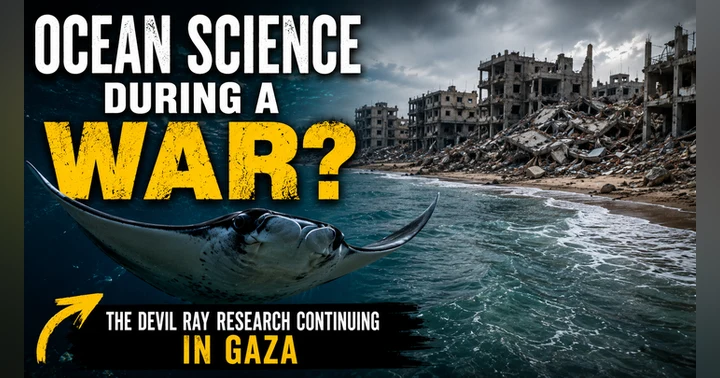
What Happens to Ocean Science During a War?

 Apple Podcasts
 Spotify
 YouTube
 Amazon Music
 PocketCasts
 Overcast
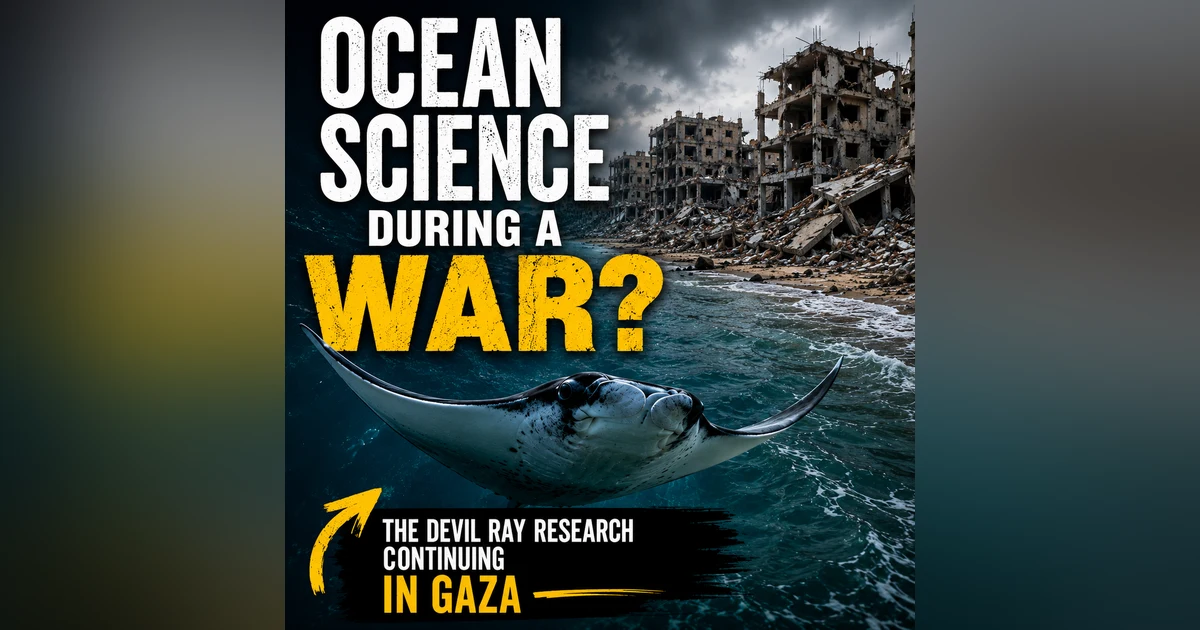
 What happens to marine conservation when a humanitarian crisis unfolds? In this episode of How to Protect the Ocean, we explore the remarkable story of marine scientist Mohammed Abu Daya, whose work studying endangered giant devil rays has continued despite the immense challenges of living and working in Gaza. His story reminds us that conservation is ultimately about people as much as it is about wildlife.
You’ll learn why giant devil rays are among the Mediterranean’s most vulnerable species, why scientists still know so little about them, and how local research can shape global conservation efforts. We also look at the unique challenges facing marine ecosystems during times of conflict and why protecting biodiversity cannot simply be put on hold.
This episode is about resilience, science, and hope. It highlights the dedication of researchers who continue gathering critical information under extraordinary circumstances and shows why every piece of knowledge matters for protecting our ocean. Follow How to Protect the Ocean for your next weekday ocean news update.
Support Independent Podcasts: https://www.speakupforblue.com/patreon
Need help with your ocean non-profit, company, or project? Get the help you need with Pisces Oceans Inc.: https://www.piscesoceans.ca
Connect with Speak Up For Blue
Website: https://bit.ly/3fOF3Wf
Instagram: https://bit.ly/3rIaJSG
TikTok: https://www.tiktok.com/@speakupforblue
Twitter: https://bit.ly/3rHZxpc
YouTube: www.speakupforblue.com/youtube
00:00:00,050 --> 00:00:03,429
What would you do if your research
species was endangered, your
2
00:00:03,460 --> 00:00:08,010
coastline was under constant pressure,
and a war broke out around you?
3
00:00:08,419 --> 00:00:12,020
One marine scientist in Gaza is trying
to answer this question while studying
4
00:00:12,020 --> 00:00:16,736
one of the Mediterranean Sea's most
mysterious animals, the giant devil ray.
5
00:00:17,166 --> 00:00:19,906
This is the How to Protect the Ocean
podcast, your weekday ocean news update.
6
00:00:19,956 --> 00:00:22,956
If you care about staying informed
on the ocean every weekday, Monday to
7
00:00:22,956 --> 00:00:26,063
Friday, hit that follow button right
now on your favorite podcast app, and
8
00:00:26,063 --> 00:00:30,691
you won't miss tomorrow's episode Today's
episode is about more than devil rays.
9
00:00:30,741 --> 00:00:34,365
It's about what happens when
science, conservation, and human
10
00:00:34,365 --> 00:00:38,635
resilience collide in one of the
most difficult places on Earth.
11
00:00:38,828 --> 00:00:43,278
Now, before we go into this, this
is a very sensitive subject matter.
12
00:00:43,398 --> 00:00:46,668
Obviously, the crisis that's
happening in Gaza, we are not
13
00:00:46,688 --> 00:00:48,588
overlooking this on this podcast.
14
00:00:48,618 --> 00:00:52,068
It is a tragedy and I have feelings
on this, but I'm not gonna bring my
15
00:00:52,068 --> 00:00:54,575
political beliefs on this in this area.
16
00:00:54,718 --> 00:00:58,468
What we're gonna be doing is focusing
on a Mongabay article that has to
17
00:00:58,468 --> 00:01:03,138
do with someone studying devil
rays in Gaza and obviously being
18
00:01:03,138 --> 00:01:04,598
endangered of this person's life.
19
00:01:04,608 --> 00:01:06,048
This is a very serious thing.
20
00:01:06,218 --> 00:01:10,155
Unfortunately, we also saw a sea
turtle biologist killed in Lebanon this
21
00:01:10,755 --> 00:01:12,985
past week, which is a huge tragedy.
22
00:01:13,275 --> 00:01:15,485
She felt that she wanted to
be there to protect them.
23
00:01:15,485 --> 00:01:18,385
She's from Lebanon, didn't live
there, went back, and unfortunately
24
00:01:18,385 --> 00:01:19,885
she was hit in a missile strike.
25
00:01:20,005 --> 00:01:21,245
Absolute tragedy.
26
00:01:21,291 --> 00:01:23,845
I'm against war in all major facets.
27
00:01:24,048 --> 00:01:27,291
You care for the people that are
affected by this, and unfortunately,
28
00:01:27,460 --> 00:01:31,445
losing scientists to war when
they're trying to study their species
29
00:01:31,445 --> 00:01:33,755
is just so tragic in all cases.
30
00:01:33,755 --> 00:01:36,935
And so I want to go forward with this
episode because I think it's important
31
00:01:36,935 --> 00:01:40,415
to tell this person's story, and help
amplify the story that's on Mongabay
32
00:01:40,415 --> 00:01:41,705
News, which is really well done.
33
00:01:41,878 --> 00:01:45,522
But I wanted to make sure that we got
this out of the way to just let you know
34
00:01:45,522 --> 00:01:48,522
of where we stand here at the How to
Protect the Ocean podcast, and well, it
35
00:01:48,532 --> 00:01:52,645
really is me, because this is something
that I care about very, very deeply
36
00:01:52,645 --> 00:01:55,285
about these scientists, and we wanna
support scientists who are out there.
37
00:01:55,285 --> 00:01:57,185
So this is something
that we're gonna go do.
38
00:01:57,345 --> 00:01:58,775
We're gonna answer a question today.
39
00:01:58,775 --> 00:02:02,435
It's, can ocean conservation continue
during a humanitarian crisis?
40
00:02:02,658 --> 00:02:06,098
So the story comes from a recent interview
published by Mongabay featuring marine
41
00:02:06,098 --> 00:02:11,438
ecologist Mohammed Abu Daya, a scientist
from Gaza who has spent years studying
42
00:02:11,458 --> 00:02:15,698
giant devil rays and other marine
species in the Eastern Mediterranean.
43
00:02:16,025 --> 00:02:18,505
So let's start with the animal
at the center of the story.
44
00:02:18,918 --> 00:02:21,778
Giant devil rays are among
the largest rays in the world.
45
00:02:21,778 --> 00:02:24,548
If you've ever seen a manta
ray, they look somewhat similar.
46
00:02:24,858 --> 00:02:28,458
They have broad wing-like fins,
can grow several meters across,
47
00:02:28,568 --> 00:02:31,958
and spend much of their lives
moving through open ocean waters.
48
00:02:32,262 --> 00:02:36,442
But unlike manta rays, giant devil
rays remain relatively mysterious.
49
00:02:36,922 --> 00:02:40,512
Scientists still know surprisingly
little about population sizes,
50
00:02:40,652 --> 00:02:42,752
migration routes, and breeding behavior.
51
00:02:43,182 --> 00:02:47,002
That uncertainty is a problem because
the species is already considered
52
00:02:47,002 --> 00:02:50,365
endangered and recovers very
slowly from population declines.
53
00:02:50,552 --> 00:02:53,842
Female devil rays produce
very few offspring, making it
54
00:02:53,842 --> 00:02:57,492
difficult for populations to
bounce back when it numbers fall.
55
00:02:57,982 --> 00:03:01,582
For years, Mohammed Abu Daya has
been working to understand these
56
00:03:01,582 --> 00:03:03,412
animals along Gaza's coastline.
57
00:03:03,805 --> 00:03:07,565
His research became internationally
recognized after helping reveal that
58
00:03:07,575 --> 00:03:10,925
what many media outlets once described
as a mysterious mass stranding
59
00:03:10,935 --> 00:03:14,945
of devil rays on Gaza beaches
was actually a targeted fishery.
60
00:03:15,325 --> 00:03:18,775
Hundreds of rays had been caught
and landed by fishers rather
61
00:03:18,775 --> 00:03:20,635
than washing ashore naturally.
62
00:03:21,015 --> 00:03:23,535
That discovery helped scientists
better understand both the
63
00:03:23,535 --> 00:03:27,375
species and the challenges facing
conservation in the region.
64
00:03:27,985 --> 00:03:30,595
But then the situation
became far more difficult.
65
00:03:30,885 --> 00:03:35,445
The ongoing war in Gaza has disrupted
nearly every aspect of daily life,
66
00:03:35,445 --> 00:03:37,295
including scientific research.
67
00:03:37,645 --> 00:03:42,820
Fieldwork became dangerous, if not
impossible Equipment and resources
68
00:03:42,820 --> 00:03:46,540
became difficult to access, and
communication with collaborators
69
00:03:46,560 --> 00:03:48,220
became even more complicated.
70
00:03:48,410 --> 00:03:52,270
And yet Abu Daya has continued working
whenever possible to document marine
71
00:03:52,270 --> 00:03:55,940
life and contribute to conservation
knowledge, even though he was
72
00:03:55,960 --> 00:03:58,020
probably in danger when doing it.
73
00:03:58,384 --> 00:04:01,564
That's where the story becomes
much bigger than devil rays.
74
00:04:01,914 --> 00:04:05,124
When we talk about ocean conservation,
we often focus on protected areas,
75
00:04:05,204 --> 00:04:07,424
fishing regulations, or climate change.
76
00:04:07,424 --> 00:04:11,030
But conservation depends on something
even more fundamental: people, right?
77
00:04:11,030 --> 00:04:13,090
If we manage the people,
we can manage the ocean.
78
00:04:13,347 --> 00:04:14,914
The ocean can almost manage itself,
79
00:04:14,964 --> 00:04:18,990
Scientists collect data, communities
share knowledge, managers make decisions.
80
00:04:19,030 --> 00:04:21,430
Without people doing that
work, conservation slows
81
00:04:21,430 --> 00:04:22,894
down or stops entirely.
82
00:04:23,294 --> 00:04:26,754
Now, the story of Mohammed Abu
Daya highlights something we rarely
83
00:04:26,754 --> 00:04:28,484
discuss in ocean conservation.
84
00:04:28,964 --> 00:04:32,284
Many of the world's most important
ecosystems are located in regions
85
00:04:32,284 --> 00:04:36,144
experiencing political instability,
conflict, or economic hardship.
86
00:04:36,384 --> 00:04:39,074
Yet biodiversity doesn't
pause during a crisis.
87
00:04:39,300 --> 00:04:43,034
Species continue migrating,
fish continue spawning, threats
88
00:04:43,044 --> 00:04:45,064
continue to affect wildlife.
89
00:04:45,334 --> 00:04:48,484
And scientists working in those
places often become the only
90
00:04:48,484 --> 00:04:50,004
source of information available.
91
00:04:50,364 --> 00:04:53,124
In Gaza, the marine environment
faces unique pressures.
92
00:04:53,364 --> 00:04:57,174
Fishing areas are restricted, economic
challenges influence how marine
93
00:04:57,184 --> 00:05:01,297
resources are used, and conservation
measures can be difficult to implement.
94
00:05:01,687 --> 00:05:05,307
Yet the coastline still supports
important marine species, including
95
00:05:05,307 --> 00:05:06,927
the endangered devil rays.
96
00:05:07,330 --> 00:05:10,740
What's remarkable is that despite
these obstacles, researchers continue
97
00:05:10,740 --> 00:05:14,440
finding ways to collect data and
engage with fishing communities.
98
00:05:14,754 --> 00:05:16,184
That collaboration matters.
99
00:05:16,574 --> 00:05:19,654
Many conservation successes
begin with local knowledge.
100
00:05:19,857 --> 00:05:23,347
Fishers often know when the species
arrive, where they gather, and how
101
00:05:23,347 --> 00:05:24,967
populations appear to be changing.
102
00:05:25,384 --> 00:05:28,594
Scientists can then combine
their observations with research
103
00:05:28,594 --> 00:05:31,394
to better understand what is
happening beneath the surface.
104
00:05:31,784 --> 00:05:34,704
In other words, conservation isn't
something done to communities.
105
00:05:34,957 --> 00:05:38,847
The best conservation is usually done
with communities, and that's a lesson that
106
00:05:38,847 --> 00:05:43,340
applies whether you're working in Gaza,
Canada, Australia, or anywhere else.
107
00:05:43,790 --> 00:05:47,310
The future of devil ray
conservation remains uncertain.
108
00:05:47,730 --> 00:05:50,647
Scientists still need better
information about population trends,
109
00:05:50,667 --> 00:05:53,544
migration patterns, and habitat
use throughout the Mediterranean.
110
00:05:53,984 --> 00:05:57,094
The species faces ongoing risk
from fishing pressure, accidental
111
00:05:57,094 --> 00:05:59,030
capture, and habitat degradation.
112
00:05:59,310 --> 00:06:01,390
But there's also a reason for optimism.
113
00:06:01,740 --> 00:06:04,870
Every new piece of information
helps build a cleaner picture
114
00:06:04,870 --> 00:06:06,730
of how to protect these animals.
115
00:06:07,034 --> 00:06:11,264
Researchers across the Mediterranean are
increasingly collaborating on the devil
116
00:06:11,264 --> 00:06:15,370
ray conservation, and citizen science
programs are helping document sightings.
117
00:06:15,577 --> 00:06:19,387
Conservation groups are raising awareness
about the species, and scientists like
118
00:06:19,457 --> 00:06:24,097
Mohammed Abu Daya continue contributing
knowledge under circumstances that many
119
00:06:24,097 --> 00:06:25,987
researchers would find unimaginable.
120
00:06:26,200 --> 00:06:29,900
His story remind us that conservation
isn't only about species.
121
00:06:30,044 --> 00:06:32,814
It's also about the people
who dedicate their lives to
122
00:06:32,884 --> 00:06:34,514
understanding and protecting them.
123
00:06:34,914 --> 00:06:38,064
When we read scientific papers,
we often see just the data.
124
00:06:38,344 --> 00:06:40,534
We see the graphs, we see the conclusions.
125
00:06:40,864 --> 00:06:44,777
What we don't always see are the human
stories behind that work, the long
126
00:06:44,777 --> 00:06:48,220
days in the field, the uncertainty,
the setbacks, and sometimes, as
127
00:06:48,220 --> 00:06:51,350
in this case, the extraordinary
determination required simply to
128
00:06:51,370 --> 00:06:53,130
continue doing the science at all.
129
00:06:53,140 --> 00:06:56,494
Like, let's be honest, nobody
expects science to go on, especially
130
00:06:56,494 --> 00:06:59,110
for the marine environment, while
there's a war that breaks out.
131
00:06:59,194 --> 00:07:00,594
I don't even know what
we expect people to do.
132
00:07:00,594 --> 00:07:01,624
I've never been in a war zone.
133
00:07:01,624 --> 00:07:03,894
I could never even imagine
what people go through.
134
00:07:03,894 --> 00:07:07,844
I can only just be afraid for the people
who are experiencing this, the innocent
135
00:07:07,844 --> 00:07:12,554
people who have done nothing but just
have to deal with bombs every single day.
136
00:07:13,144 --> 00:07:15,624
How do you expect someone
to go out and study these?
137
00:07:15,624 --> 00:07:19,404
The fact that they're doing this
says a lot about who they are as
138
00:07:19,404 --> 00:07:23,057
a scientist and who they are as a
person, and I have the utmost respect
139
00:07:23,057 --> 00:07:24,557
for the people who are doing this.
140
00:07:25,019 --> 00:07:27,289
The ocean story is really a people story.
141
00:07:27,412 --> 00:07:30,412
Because protecting species like the
giant devil rays depends not only
142
00:07:30,412 --> 00:07:33,172
on the animals themselves, but on
the people willing to keep studying
143
00:07:33,172 --> 00:07:35,986
and protecting them even when
the odds are stacked against them.
144
00:07:36,469 --> 00:07:41,262
Just like to even think about going
out when you may or may not see or
145
00:07:41,262 --> 00:07:45,072
hear bombs going off and buildings just
coming to rubble and people screaming
146
00:07:45,072 --> 00:07:48,322
and people scared, people trying to
find food, just trying to survive.
147
00:07:48,712 --> 00:07:50,022
That's a difficult problem.
148
00:07:50,022 --> 00:07:53,666
Gaza is not a very big place and
from what I gather from what's been
149
00:07:53,666 --> 00:07:55,512
happening, there's nowhere to go.
150
00:07:55,872 --> 00:07:59,122
And so they're facing this and here's
Mohammed who's actually out there
151
00:07:59,122 --> 00:08:02,406
trying to collect data as much as
he can, whether he's trying to keep
152
00:08:02,416 --> 00:08:05,596
busy, keep his mind off what's going
on or just continue to do his work
153
00:08:05,596 --> 00:08:07,056
because he's passionate about it.
154
00:08:07,269 --> 00:08:09,429
The fact that he's actually
doing it is amazing.
155
00:08:09,839 --> 00:08:14,509
Like, I just can't even consider thinking
about what this guy is going through.
156
00:08:14,509 --> 00:08:17,129
And I would love to get his story
and get him on the podcast at some
157
00:08:17,129 --> 00:08:20,256
point, but I would rather him be
safe, him survive, him and his
158
00:08:20,256 --> 00:08:22,056
family survive what's going on.
159
00:08:22,252 --> 00:08:26,839
And hopefully he can one day tell a story
at a conference or on this podcast or
160
00:08:26,839 --> 00:08:30,239
wherever he can because I think it's one
of bravery, I think it's one of courage.
161
00:08:30,896 --> 00:08:34,176
I think it's one of trying
to do something good in a bad
162
00:08:34,176 --> 00:08:36,066
situation, a really bad situation.
163
00:08:36,066 --> 00:08:38,686
And there are a lot of biologists
out there and conservationists,
164
00:08:38,866 --> 00:08:42,236
whether they're terrestrial,
freshwater or marine, that have to go
165
00:08:42,236 --> 00:08:44,256
through dangers on a regular basis.
166
00:08:44,256 --> 00:08:46,996
They live in countries where there's
political instability, where there's
167
00:08:47,006 --> 00:08:50,516
drug trafficking, where there's human
trafficking, where there's a lot of
168
00:08:50,516 --> 00:08:55,642
crime, and they have to go out in remote
areas where they're unprotected and they
169
00:08:55,672 --> 00:08:59,342
are vulnerable to what's happening in
and around the area that they live in.
170
00:08:59,608 --> 00:09:01,488
And you just never know
what's gonna happen.
171
00:09:01,488 --> 00:09:03,348
And we wanna protect the people there.
172
00:09:03,428 --> 00:09:05,498
and we want to support the
people who are doing that.
173
00:09:05,498 --> 00:09:06,618
We want them to be safe.
174
00:09:06,861 --> 00:09:08,971
I don't know if I have the
bravery and courage to do that.
175
00:09:09,011 --> 00:09:09,581
There's no way.
176
00:09:09,731 --> 00:09:10,724
I don't think I could do that.
177
00:09:10,724 --> 00:09:14,558
So I give a lot of respect to Mohammed and
what he's been able to do, and what he's
178
00:09:14,558 --> 00:09:18,228
been able to gather over these last few
years, and even just throughout his time
179
00:09:18,228 --> 00:09:21,398
living in Gaza, and the fact that he's
staying there, like, is just phenomenal.
180
00:09:21,588 --> 00:09:23,118
I hope everything goes well for him.
181
00:09:23,118 --> 00:09:27,211
I wish him well, and I hope that we get
not only more data, but his safety, and
182
00:09:27,211 --> 00:09:28,761
his family's safety, and his friends'.
183
00:09:28,971 --> 00:09:31,381
And then just the end to the
war in general, obviously.
184
00:09:31,391 --> 00:09:32,158
It's just awful.
185
00:09:32,374 --> 00:09:34,184
So, that's the episode for today.
186
00:09:34,411 --> 00:09:37,911
If you enjoyed this episode and you
wanna listen to more, you can follow
187
00:09:37,911 --> 00:09:39,401
the How to Protect the Ocean podcast.
188
00:09:39,614 --> 00:09:43,864
If you wanna support the work I do, you
can go to speakupforblue.com/patreon.
189
00:09:44,094 --> 00:09:46,854
That's speakupforblue.com/patreon.
190
00:09:46,864 --> 00:09:47,904
Link is in the show notes.
191
00:09:48,041 --> 00:09:50,891
And of course, if you wanna contact
me, you can do so on my socials.
192
00:09:51,201 --> 00:09:53,681
I wanna thank you for joining
me on today's episode of the How
193
00:09:53,681 --> 00:09:54,771
to Protect the Ocean podcast.
194
00:09:54,781 --> 00:09:58,081
I also wanna thank Mongabay News for
writing this article and the one that
195
00:09:58,081 --> 00:10:01,441
we covered yesterday on the podcast
'cause they're an amazing organization.
196
00:10:01,624 --> 00:10:03,974
You should check them out at mongabay.com.
197
00:10:04,128 --> 00:10:07,278
And I wanna thank you for listening
to this episode, and have a good day.
198
00:10:07,298 --> 00:10:09,178
We'll talk to you next time,
and happy conservation.