Are We Ignoring the Best Climate Solution We Already Have?
We talk a lot about climate solutions.
Plant more trees. Build more clean energy. Reduce emissions. Protect forests.
All of those things matter.
But there is another climate solution that often gets left out of the conversation, and it is sitting right along our coasts.
It is called blue carbon.
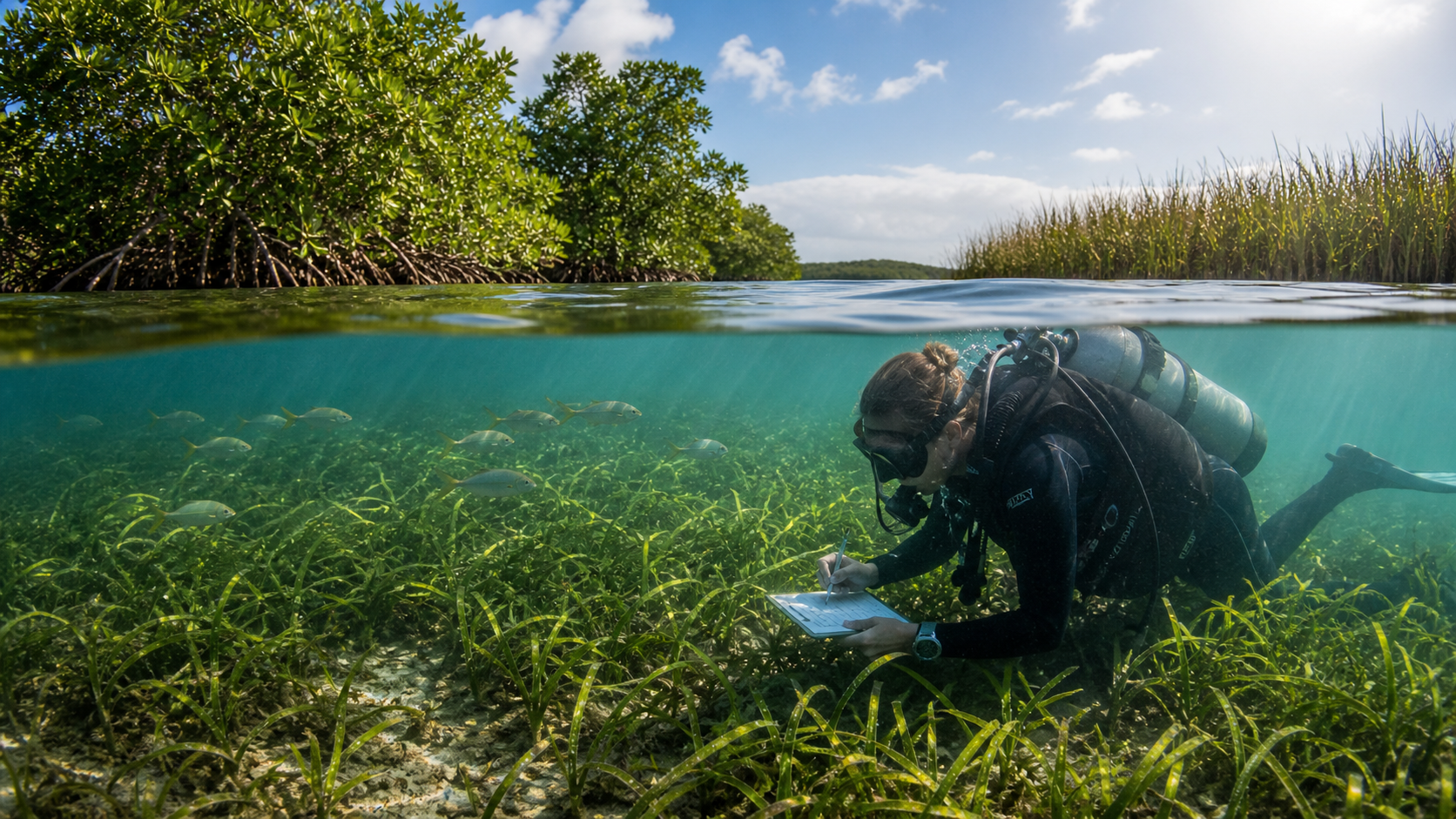
Blue carbon refers to the carbon stored by coastal and marine ecosystems such as mangroves, seagrasses, and salt marshes. These habitats pull carbon out of the atmosphere and store it in plants and sediments, often for long periods of time.
And here is the part that matters: these ecosystems are not just nice to have. They are climate infrastructure.
They store carbon.
They protect coastlines.
They support biodiversity.
They help buffer communities from storms and waves.
And yet, they are still missing from many climate plans.
Why Blue Carbon Matters
When people think about carbon storage, they usually think about forests.
That makes sense. Forests are visible. We walk through them. We see trees. We understand that trees absorb carbon dioxide.
But the ocean is different.
A lot of its most important systems are hidden below the surface. Seagrass meadows, mangrove roots, salt marsh sediments, and kelp forests do not always get the same public attention.
That is a problem.
Because when these systems are healthy, they help store carbon. When they are destroyed, that stored carbon can be released back into the environment.
So protecting blue carbon ecosystems is not just about saving habitat. It is about preventing more carbon from being released.
The Ocean Is Climate
One of the biggest mistakes in climate conversations is treating the ocean as separate from climate change.
It is not.
The ocean absorbs heat.
The ocean absorbs carbon dioxide.
The ocean produces oxygen through marine plants and phytoplankton.
The ocean influences weather, storms, fisheries, coastlines, and human safety.
So when climate conferences, policies, or funding programs leave the ocean out, they are missing a major part of the solution.
Blue carbon is one of the clearest examples of that gap.
This Is Not Just a Science Problem
The science is not the biggest barrier anymore.
We know these ecosystems matter.
We know they store carbon.
We know they protect coastlines.
We know they support marine life.
The real problem is implementation.
Countries need to map these habitats, protect the ones that still exist, restore the ones that have been damaged, and include them in serious climate policy.
That takes funding.
It takes political will.
It takes public pressure.
And it takes ocean voices showing up in climate spaces.
The Bottom Line
We are not short on climate solutions.
We are short on using the ones we already have.
Blue carbon ecosystems are not a replacement for reducing emissions. But they are a powerful part of the climate solution that we cannot afford to ignore.
The ocean is not just a victim of climate change.
It is part of the solution.

CEO
Boat Wake Erosion Explained: The Coastal Threat With Nothing to Do With Climate Change