The Tiny Fish Holding the Ocean Together
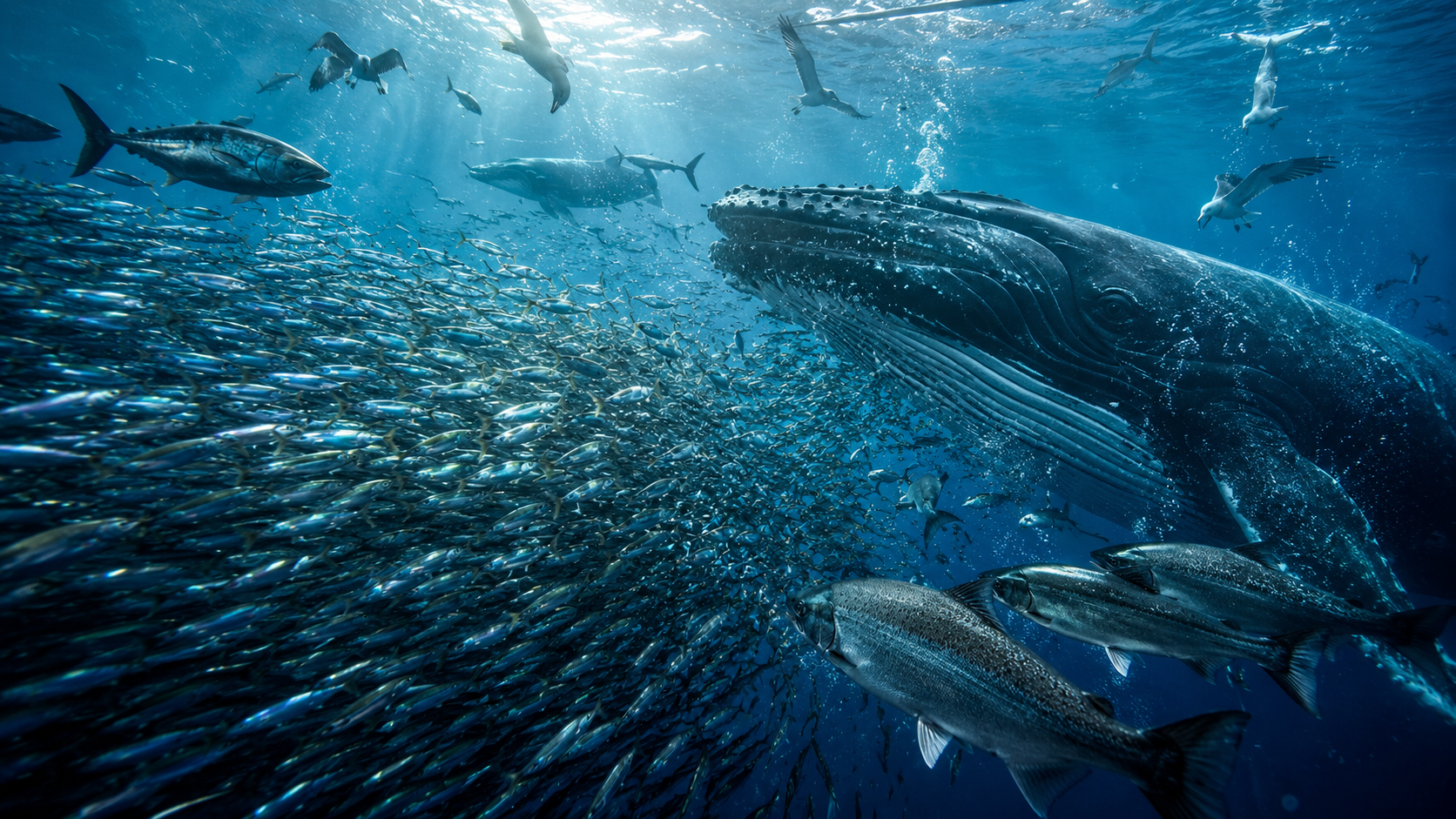
Some of the most important animals in the ocean are fish most people never think about.
They are not whales. They are not sharks. They are not tuna or salmon.
They are forage fish.
Forage fish are small schooling fish like sardines, anchovies, herring, capelin, and sand lance. They may not get the same attention as larger marine animals, but they play one of the most important roles in the ocean.
They move energy through the food web.
They eat plankton. Larger fish eat them. Whales, seabirds, salmon, tuna, and many other predators depend on them.
Without forage fish, the ocean food web starts to weaken.
Why Forage Fish Matter
Forage fish are sometimes described as the “middle” of the food web.
They take energy from plankton and move it up to larger animals. That makes them essential for ocean life.
A healthy forage fish population can support whales, seabirds, salmon, tuna, cod, and many other marine species.
But when forage fish decline, the impact does not stay small.
Seabirds may struggle to feed their chicks.
Whales may have to travel farther to find food.
Commercial fish species may become less productive.
Coastal communities and fisheries can feel the effects too.
The Problem Nobody Talks About
Forage fish are often overlooked because they are small and not very charismatic.
People rally around whales.
People rally around sharks.
Very few people rally around herring.
But ecosystems do not care about charisma. They care about energy flow.
That is why forage fish are so important. They help keep the system running.
Industrial Fishing and Forage Fish
Many forage fish are caught at large scales by industrial fisheries.
In many cases, they are not caught for people to eat directly.
They are processed into fish meal and fish oil, which can be used in aquaculture feed, livestock feed, pet food, and supplements.
That creates a difficult conservation question:
How many forage fish can we remove before the rest of the ocean starts to struggle?
Why Climate Change Makes This Harder
Climate change adds another layer of pressure.
Warming oceans can shift where forage fish live.
Marine heatwaves can disrupt plankton production.
Predators may arrive in traditional feeding areas and find that the fish they depend on are no longer there.
That kind of mismatch can affect seabirds, whales, salmon, and many other species.
The Bigger Ocean Lesson
Protecting the ocean is not only about protecting the biggest, most visible animals.
Sometimes, it starts with protecting the small fish that keep everything else alive.
Forage fish may not be famous.
But the future of whales, seabirds, salmon, and entire marine ecosystems may depend on them.

CEO
What Happens to Fish When Our Pills Reach the Water?