Why Communities Are Fighting Back
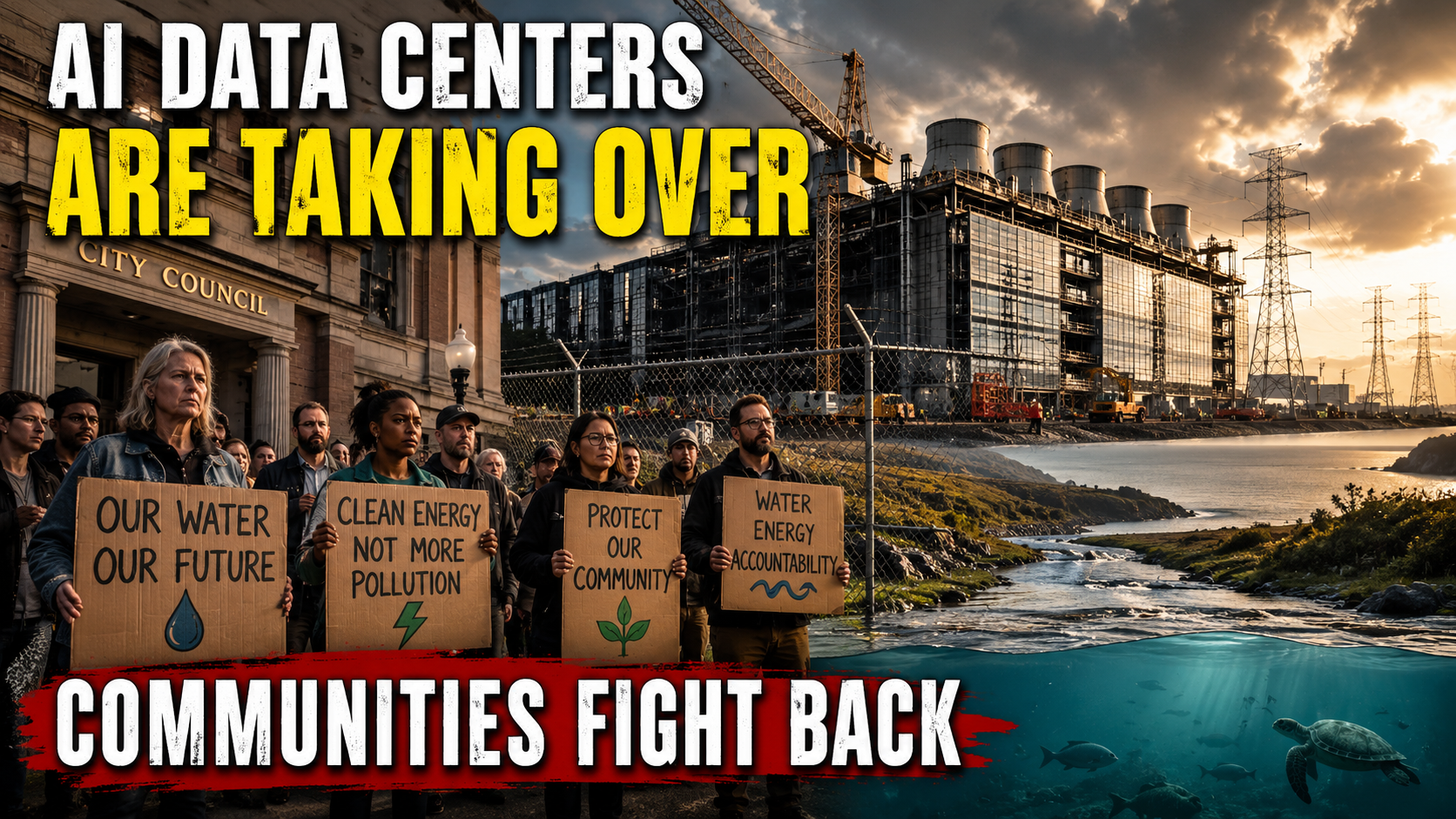
It Is Easy to Feel Powerless
Environmental news can feel overwhelming. Governments roll back regulations, corporations announce massive projects, and it often seems like ordinary people have little influence over what happens next. Many people assume that once a project is proposed, the decision has already been made behind closed doors.
But that is not always true.
Recent protests against AI data centers are reminding us of something important: communities still have power when they show up.
The Fight Is Bigger Than AI
Across North America, communities have been pushing back against proposed AI data centers. Residents have raised concerns about water use, electricity demand, environmental impacts, noise, and a lack of transparency in the approval process. While the specifics vary from place to place, the message has been remarkably consistent.
People want a seat at the table before major decisions are made about their communities.
The story is not really about AI. It is about whether citizens still have a voice.
What Happens When People Get Involved
When residents organize, attend meetings, write letters, and ask difficult questions, decision-makers are forced to respond. Public officials may delay approvals, request additional studies, or demand greater transparency from developers. In some cases, projects are modified or even rejected altogether.
None of this happens because people complain on social media.
It happens because people show up.
The Hamilton Example
In Hamilton, Ontario, residents raised concerns about a proposed AI data center and made sure local leaders heard them. Community members attended meetings, contacted officials, and asked questions about water, energy, and environmental impacts. Their efforts helped bring the issue into the public spotlight and ensured that the proposal received greater scrutiny.
Whether the project moves forward or not is only part of the story.
The bigger lesson is that people demonstrated their ability to influence the conversation.
Why This Matters for Ocean Conservation
Ocean conservation can sometimes feel like a global problem that is too large for any individual to influence. We hear about climate change, plastic pollution, overfishing, and biodiversity loss and wonder whether our actions matter. The scale of these challenges can make people feel disconnected from solutions.
The reality is that conservation often begins at the local level.
Many of the biggest environmental victories start when communities decide they are going to pay attention.
Every Environmental Victory Starts Somewhere
Marine protected areas, clean water regulations, habitat restoration projects, and fisheries reforms rarely happen because politicians suddenly decide to act. They happen because people advocate for change over long periods of time. Scientists provide evidence, organizations build support, and citizens demand action.
Eventually, decision-makers respond.
The process is often slow, but it works more often than many people realize.
Showing Up Is a Conservation Tool
We often think of conservation tools as scientific research, protected areas, or restoration projects. Those tools are incredibly important, but there is another tool that receives far less attention: civic engagement. Attending meetings, voting, participating in consultations, and holding leaders accountable can directly influence environmental outcomes.
The protests against AI data centers are a reminder that democracy is still one of the most powerful conservation tools we have.
The Real Lesson
The lesson from these community movements is not that every data center should be stopped. The lesson is that communities deserve a voice in decisions that affect their future. When people show up, ask questions, and refuse to be ignored, they can change the course of projects that once seemed inevitable.
That principle applies far beyond AI.
It applies to coastal development, marine conservation, fisheries management, pollution prevention, and climate action.
Why Communities Are Fighting Back
Communities are fighting back because they care about what happens where they live. They care about their water, their environment, their families, and their future. More importantly, they are proving that public participation still matters.
For anyone working to protect the ocean, that should be encouraging.
The next environmental victory may not start with a government announcement. It may start with ordinary people deciding to show up.

CEO


