Why Sustainable Companies Save Money: The Circular Economy Case
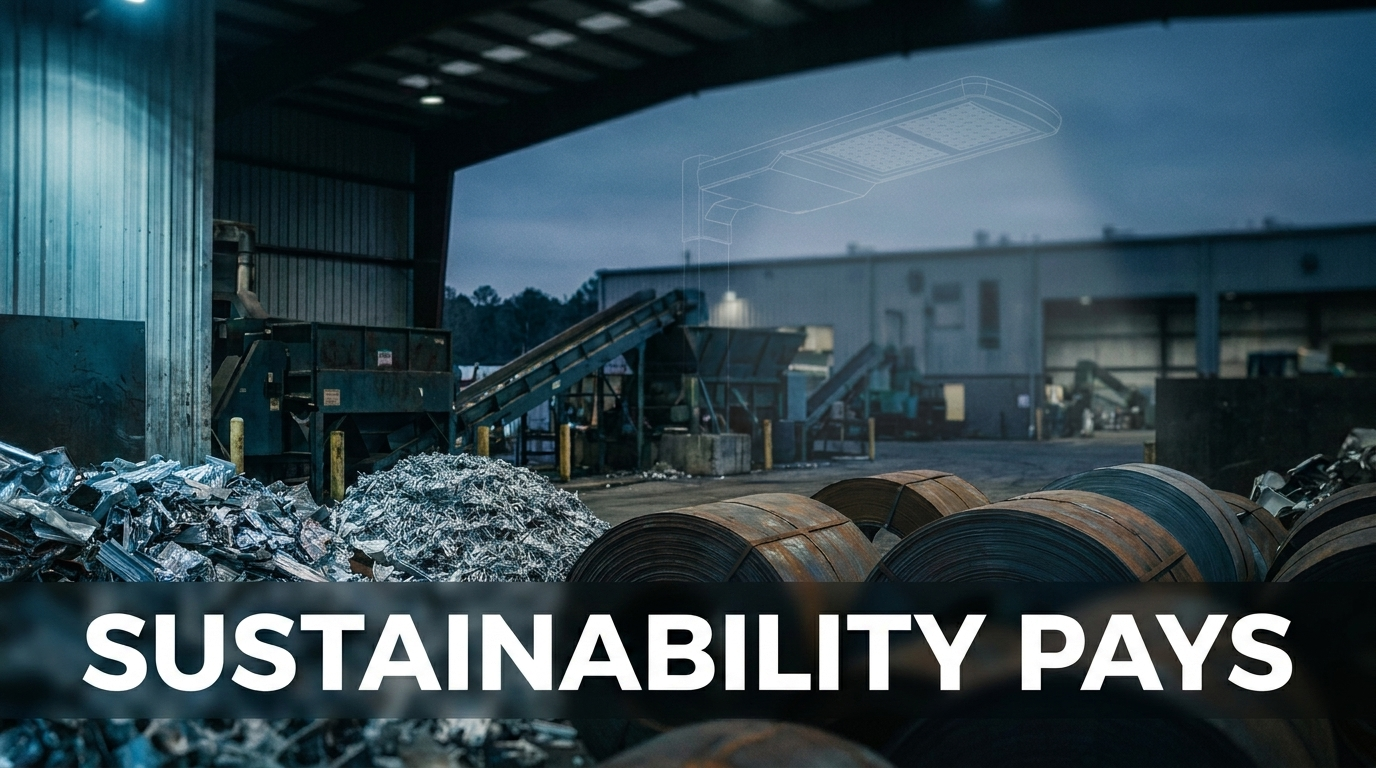
Why Sustainable Companies Actually Save Money
Companies don't usually go sustainable purely out of goodwill. Most of the time, it comes down to money. Businesses that build circularity into their supply chains often find they can cut costs, reduce risk, and improve their bottom line at the same time they reduce their environmental footprint. That combination is what makes the circular economy such a compelling business case, and it's the focus of this episode.
Philips Lighting: selling light, not bulbs
One example that stands out is Philips Lighting, which shifted its business model from selling lighting products to selling lighting as a service. Instead of a customer buying a bulb outright, Philips retains ownership, extends the product's lifespan through maintenance, and reuses components when a fixture reaches end of life. Customers spend more on maintenance and service over time, but they get a longer lasting, better maintained lighting system, and Philips builds an ongoing revenue relationship instead of a single transaction.
The numbers behind circularity
The economics show up clearly in the data. Aluminum recycling can deliver major energy savings compared to producing new aluminum from raw bauxite ore. A British study on industrial symbiosis, where companies share waste streams and byproducts with each other, found substantial cost savings alongside significant reductions in CO2 emissions (this figure needs same day verification before publishing). A separate PwC Sweden study modeling circular business models in the electronics sector found a meaningful average reduction in operating costs alongside lower emissions.
Even the lending world is taking notice. Banks and lenders increasingly evaluate ESG performance, meaning environmental, social, and governance factors, alongside a company's financial history. Sustainability linked loans now offer lower interest rates to companies that hit circularity targets, which means going circular is becoming a factor in accessing capital, not just a marketing angle.
The greenwashing problem
Not every sustainability claim holds up under scrutiny. Greenwashing is common, and even well intentioned frameworks like B Corp certification aren't perfect. Consulting firms that help companies build sustainability strategies have, in some cases, also taken on fossil fuel clients, which raises questions about how consistently these standards are applied. No certification system is flawless, but the direction of travel matters: more companies are being pushed, by regulation, lending markets, and consumer expectation, toward real circular practices rather than surface level PR.
Right to repair and the EU's circular economy push
A big part of the circular economy conversation is right to repair. Appliances that once lasted 20 to 25 years now frequently fail within a decade, and repairing them is often more expensive or slower than simply replacing them. The EU's upcoming circular economy legislation aims to change that by introducing stricter product design rules, a digital product passport for traceability, and consumer repair rights (verify current legislative status and official name before publishing). Similar direction of travel is being discussed in Canada, the US, Mexico, Australia, and the UK, though none have matched the EU's pace yet.
Deposit return systems for bottles and cans are a simpler, older version of the same idea. Returning empties for a small refund creates a direct financial incentive to keep materials in circulation instead of the landfill, something as simple as a retired school principal collecting bottles and cans for 25 years to fund his old school shows how powerful that incentive can be at any scale.
Takeaways
- Circular business models like Philips Lighting's lighting as a service can cut costs while extending product lifespans
- Industrial symbiosis and shared waste streams between companies can generate major cost savings and emissions reductions
- Sustainability linked loans now offer lower interest rates to companies that hit circularity targets
- Greenwashing and inconsistent B Corp standards make it hard to separate real sustainability action from marketing
- The EU's upcoming circular economy legislation includes stricter product design rules, a digital product passport, and consumer repair rights
- Right to repair laws could reverse the trend of appliances failing well before their expected lifespan
- Deposit return systems for bottles and cans show how take back models create financial incentive for recycling

CEO


