Why the Ocean’s Smallest Fish Matter More Than You Think
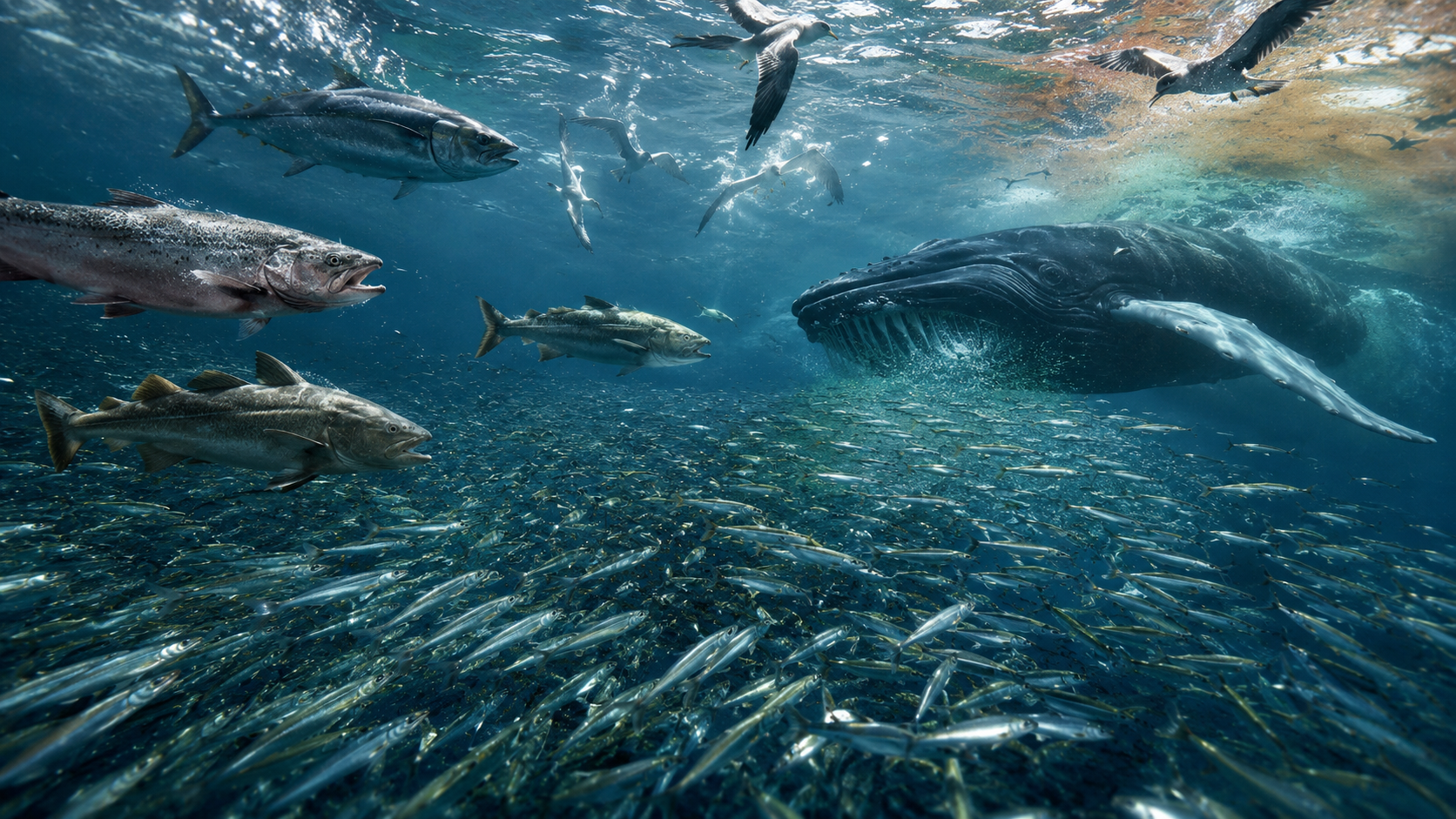
When most people think about important ocean animals, they picture whales, sharks, tuna, or salmon.
Very few people think about sardines, anchovies, capelin, or herring.
But these small fish may be some of the most important species in the entire ocean.
They are known as forage fish, and they act as the energy bridge between tiny plankton and larger predators. In other words, they transfer ocean productivity up the food chain. Without them, many marine ecosystems would struggle to function.
That is why scientists are becoming increasingly concerned about how climate change is affecting these species.
The Fish That Feed the Ocean
Forage fish are eaten by an enormous number of predators.
Whales depend on them. Tuna depend on them. Salmon, cod, seabirds, seals, dolphins, and countless other species rely on these fish as a primary food source.
Even though these fish are small individually, their collective role is massive.
In many ecosystems, they are the difference between a thriving food web and a struggling one.
When forage fish populations decline, predators often suffer quickly because the energy supply that supports the ecosystem starts to weaken.
Climate Change Is Shifting the System
Ocean warming is changing where many forage fish live, how quickly they reproduce, and whether young fish survive long enough to join the population.
Some species are moving toward cooler waters.
Others are struggling because warming oceans affect plankton availability, oxygen levels, and habitat conditions.
Scientists are beginning to see evidence that climate change may alter entire marine food webs by disrupting these small but essential species.
That means the impacts may not stop with the fish themselves.
The effects could spread to commercial fisheries, marine mammals, seabird colonies, and coastal communities that rely on healthy oceans for food and livelihoods.
Why This Matters to People
Most people never see this part of the system.
When seafood arrives at a grocery store or restaurant, the connection to small forage fish is invisible. But these species support many of the larger fish populations that people eat regularly.
Protecting forage fish is not just about protecting biodiversity.
It is about protecting the stability of ocean ecosystems and maintaining resilient fisheries in a changing climate.
The Bigger Picture
Ocean conservation often focuses on the most visible species.
But healthy ecosystems depend on the species in the middle of the food web just as much as the animals at the top.
The future of the ocean may depend on whether we can better understand and protect the smallest fish that keep everything else alive.

CEO
How Beach Cleanup Data Helped Canada Ban Plastic