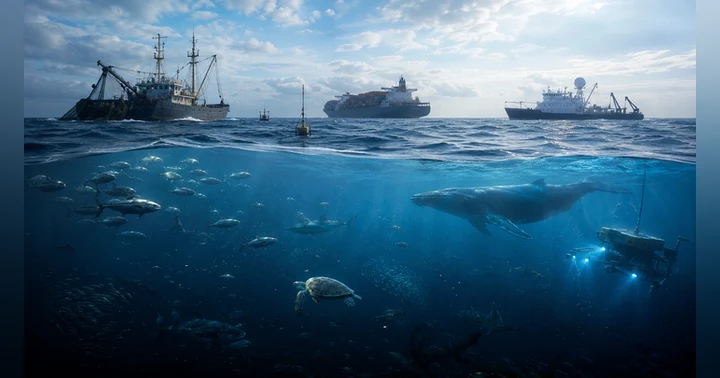
Who Actually Owns the Ocean?

 Apple Podcasts
 Spotify
 YouTube
 Amazon Music
 PocketCasts
 Overcast
 High seas conservation matters because nearly half of the planet lies beyond any one country’s control. In this episode of How to Protect the Ocean, we ask a deceptively simple question: who actually owns the ocean?
Andrew breaks down what the high seas are, why international waters have historically been treated like a free-for-all, and why that approach no longer works in a world of industrial fishing, deep-sea mining interests, global shipping, and climate change.
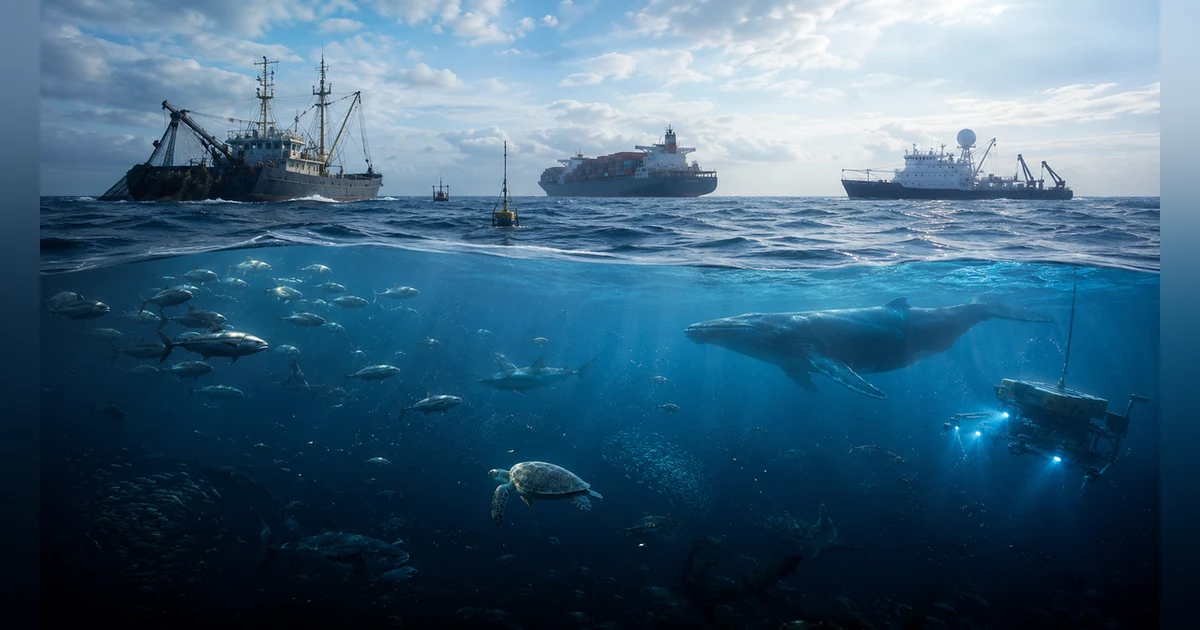
This episode explains why the high seas matter to tuna, sharks, whales, sea turtles, global food systems, and climate stability, and why the High Seas Treaty could become one of the most important ocean protection tools of our time.
Support Independent Podcasts: https://www.speakupforblue.com/patreon
Need help with your ocean non-profit, company, or project? Get the help you need with Pisces Oceans Inc.: https://www.piscesoceans.ca
Connect with Speak Up For Blue
Website: https://bit.ly/3fOF3Wf
Instagram: https://bit.ly/3rIaJSG
TikTok: https://www.tiktok.com/@speakupforblue
Twitter: https://bit.ly/3rHZxpc
YouTube: www.speakupforblue.com/youtube
00:00:00,049 --> 00:00:03,270
Almost half of the planet belongs
to no country at all, and for
2
00:00:03,270 --> 00:00:06,450
decades, much of it had been treated
like a resource free-for-all.
3
00:00:07,053 --> 00:00:10,523
This is the How to Protect the Ocean
podcast, your weekly ocean news update.
4
00:00:10,553 --> 00:00:14,592
If you care about staying informed on
the ocean every single weekday, Monday
5
00:00:14,592 --> 00:00:17,927
to Friday, hit that follow button on
your favorite podcast app now, so
6
00:00:17,927 --> 00:00:19,767
you don't miss tomorrow's story.
7
00:00:20,528 --> 00:00:23,657
Today, we're answering a
deceptively simple question.
8
00:00:23,967 --> 00:00:26,597
Who actually owns the ocean?
9
00:00:26,827 --> 00:00:29,941
Look, the ocean covers 71% of the planet.
10
00:00:30,171 --> 00:00:33,781
Every country manages about 200
nautical miles off of their coastline,
11
00:00:33,846 --> 00:00:35,406
so what happens to the rest of it?
12
00:00:35,861 --> 00:00:39,935
Because when we hear terms like high seas
or international waters, most people
13
00:00:39,935 --> 00:00:44,880
picture open ocean far from shore and
assume someone has to be in charge.
14
00:00:44,880 --> 00:00:47,190
But the reality is much more complicated.
15
00:00:47,333 --> 00:00:50,933
And that complexity is one of the
biggest reasons ocean conservation
16
00:00:50,998 --> 00:00:52,987
has struggled for decades.
17
00:00:53,446 --> 00:00:55,916
So the definition of the high
seas is basically open areas
18
00:00:55,986 --> 00:00:57,926
outside of any country's borders.
19
00:00:58,190 --> 00:01:01,984
So every coastal nation controls waters
close to shore through what's called
20
00:01:01,984 --> 00:01:04,414
the exclusive economic zone, or EEZ.
21
00:01:04,674 --> 00:01:08,244
It generally stretches out for
about two hundred nautical miles
22
00:01:08,244 --> 00:01:09,604
from the country's coastline.
23
00:01:10,104 --> 00:01:14,195
Inside those waters, countries control
fishing rights, oil exploration, shipping
24
00:01:14,195 --> 00:01:16,355
regulations, and conservation measures.
25
00:01:16,567 --> 00:01:20,897
But once you move beyond those
boundaries, you enter the high seas.
26
00:01:20,897 --> 00:01:22,592
And to be honest, they're massive.
27
00:01:22,778 --> 00:01:26,668
And I've covered a number of episodes
on the high seas over the years, but I
28
00:01:26,668 --> 00:01:30,880
want to reset today and just really
talk about, you know, the high seas
29
00:01:30,880 --> 00:01:32,500
and who owns it, especially today.
30
00:01:32,500 --> 00:01:35,130
And this week, we're gonna be
talking all about the high seas.
31
00:01:35,316 --> 00:01:39,126
We have a really great episode at the end
of the week where we do an interview with
32
00:01:39,126 --> 00:01:40,446
the director of the High Seas Alliance.
33
00:01:40,446 --> 00:01:43,776
We talk all about what's coming up
this year, why is this is such a
34
00:01:43,776 --> 00:01:45,706
big year in 2026 for the high seas.
35
00:01:45,931 --> 00:01:50,371
So we're talking nearly half of the
surface of the Earth for the high seas.
36
00:01:50,371 --> 00:01:51,491
Like, just the high seas.
37
00:01:51,491 --> 00:01:54,114
Like, taking out the exclusive
economic zones, just the high seas.
38
00:01:54,114 --> 00:01:57,704
That means the largest ecosystem
on the planet exists mostly outside
39
00:01:57,704 --> 00:02:00,064
any direct national control.
40
00:02:00,350 --> 00:02:01,270
That's a pretty big amount.
41
00:02:01,270 --> 00:02:03,370
It's a lot of responsibility for nobody.
42
00:02:03,648 --> 00:02:06,468
That's a hard thing to
wrap around your head.
43
00:02:06,767 --> 00:02:09,726
Imagine if half the Amazon
rainforest belonged to nobody.
44
00:02:10,206 --> 00:02:13,799
Imagine if there were almost no
enforceable protections around that.
45
00:02:14,269 --> 00:02:17,899
Imagine if countries, corporations,
and industries could operate
46
00:02:17,899 --> 00:02:19,679
there with limited oversight.
47
00:02:20,049 --> 00:02:22,579
That's essentially what the
world has allowed to happen
48
00:02:22,579 --> 00:02:24,579
in large parts of the ocean.
49
00:02:25,204 --> 00:02:29,159
Historically, the high seas were
built around the concept of freedom.
50
00:02:29,369 --> 00:02:34,916
Freedom to navigate, freedom to
fish, freedom to conduct commerce.
51
00:02:34,946 --> 00:02:38,182
And for centuries, that made
sense because people believed the
52
00:02:38,182 --> 00:02:40,002
ocean was too large to damage.
53
00:02:40,272 --> 00:02:41,002
It's so big.
54
00:02:41,002 --> 00:02:42,772
Like, it's this massive empty space.
55
00:02:43,002 --> 00:02:44,492
We can't do any damage to it.
56
00:02:44,492 --> 00:02:46,872
But industrial technology
changed everything.
57
00:02:46,872 --> 00:02:50,590
The Industrial Revolution just
changed absolutely everything.
58
00:02:50,590 --> 00:02:54,822
Now, massive fishing fleets can operate
thousands of kilometers from shore.
59
00:02:55,147 --> 00:02:58,707
Deep sea mining companies want
access to untouched ecosystems.
60
00:02:59,076 --> 00:03:02,585
And cargo shipping crosses
nearly every ocean basin.
61
00:03:02,925 --> 00:03:06,485
And climate change is stressing marine
life everywhere at the same time.
62
00:03:06,943 --> 00:03:10,933
The ocean may feel endless, but
it's no longer beyond human impact.
63
00:03:11,201 --> 00:03:14,621
In fact, every part of the ocean
has been impacted by humans.
64
00:03:14,891 --> 00:03:18,721
And it's really shown when you go to
the deepest part of the ocean, the
65
00:03:18,721 --> 00:03:23,311
Mariana Trench, and you actually see
plastic pollution in the Mariana Trench.
66
00:03:23,697 --> 00:03:26,697
And here's why this matters to
everyday people like yourself.
67
00:03:27,017 --> 00:03:29,887
The high seas help regulate the climate.
68
00:03:30,195 --> 00:03:31,515
I'm gonna say that one more time.
69
00:03:31,766 --> 00:03:34,466
The high seas help regulate the climate.
70
00:03:34,692 --> 00:03:40,192
And this is huge because when we talk
about climate change, we rarely talk about
71
00:03:40,192 --> 00:03:43,632
the ocean, unless you're on this podcast
and you're talking to a marine biologist.
72
00:03:43,902 --> 00:03:46,812
Climate change has to do with ocean,
and ocean has to do with climate change.
73
00:03:47,042 --> 00:03:48,942
They are interchangeable.
74
00:03:49,221 --> 00:03:52,831
But these high seas, they support
migratory species like tuna,
75
00:03:52,831 --> 00:03:54,461
sharks, whales, and sea turtles.
76
00:03:54,687 --> 00:03:58,790
They connect ecosystems
across entire ocean basins.
77
00:03:59,271 --> 00:04:01,911
And they help support global food systems.
78
00:04:02,316 --> 00:04:06,253
So what happens in the high seas
does not stay in the high seas.
79
00:04:06,283 --> 00:04:07,453
It's not like Vegas.
80
00:04:07,523 --> 00:04:09,313
It's not like Vegas one bit.
81
00:04:09,590 --> 00:04:13,312
If tuna populations collapse offshore,
coastal fisheries suffer too.
82
00:04:13,682 --> 00:04:16,852
If biodiversity disappears in
deep ocean ecosystems, we may lose
83
00:04:16,852 --> 00:04:19,504
species before we even discover them.
84
00:04:19,937 --> 00:04:22,747
And one of the biggest
problems is visibility.
85
00:04:22,787 --> 00:04:25,957
Most people never see
what happens far offshore.
86
00:04:26,323 --> 00:04:28,193
We'll see the plastic on beaches.
87
00:04:28,423 --> 00:04:29,903
We may see the coral bleaching.
88
00:04:30,301 --> 00:04:34,441
But industrial activity in the open
ocean often happens out of sight.
89
00:04:34,871 --> 00:04:36,791
That makes accountability harder.
90
00:04:37,511 --> 00:04:40,461
And this is what, to be honest, not
that I'm a huge fan of what they've
91
00:04:40,461 --> 00:04:44,211
done in the past, but Sea Shepherd has
done for decades, is they've actually
92
00:04:44,211 --> 00:04:47,507
gone out into the high seas, even
though nobody can really stop them
93
00:04:47,507 --> 00:04:51,180
from doing anything, and they've
gotten in the way of Japanese whalers.
94
00:04:51,358 --> 00:04:54,078
They've chased down illegal fishing
boats from all over the world.
95
00:04:54,295 --> 00:04:56,355
They've been able to do this
because it works on the high seas.
96
00:04:56,355 --> 00:04:59,000
There's nobody to stop the Sea Shepherd
from doing anything, and there's
97
00:04:59,000 --> 00:05:02,200
nobody to stop the illegal fishers and
the illegal whalers from doing the
98
00:05:02,200 --> 00:05:04,040
damage that they wanna do to the ocean.
99
00:05:04,450 --> 00:05:07,845
So it makes accountability harder, even
if you're trying to do conservation or
100
00:05:07,845 --> 00:05:10,745
if you're not trying to do conservation,
or you're trying to protect conservation.
101
00:05:11,182 --> 00:05:14,702
And enforcement becomes incredibly
difficult when vessels are operating
102
00:05:14,702 --> 00:05:17,182
days or weeks away from land.
103
00:05:17,692 --> 00:05:21,322
This is part of the reason ocean
advocates pushed so hard for the High
104
00:05:21,322 --> 00:05:24,901
Seas Treaty, which we're gonna be talking
about tomorrow and the rest of the
105
00:05:24,901 --> 00:05:26,301
week, to be honest, and to be honest,
106
00:05:26,391 --> 00:05:27,371
for a long, long time.
107
00:05:27,675 --> 00:05:32,015
Because the ocean can't function
effectively as disconnected pieces.
108
00:05:32,257 --> 00:05:35,057
Marine life, it does not
recognize political borders.
109
00:05:35,057 --> 00:05:37,077
They don't recognize the
exclusive economic zone.
110
00:05:37,472 --> 00:05:42,068
Ocean currents do not stop at exclusive
economic lines, and that's where
111
00:05:42,068 --> 00:05:44,099
like fisheries will be huge part.
112
00:05:44,389 --> 00:05:46,079
I've talked about this
before on the podcast.
113
00:05:46,079 --> 00:05:49,489
There is a squid fishery that starts
within the exclusive economic zone of
114
00:05:49,489 --> 00:05:53,100
Argentina along the coast, but then
eventually that fishery was gonna go
115
00:05:53,100 --> 00:05:58,167
over that border where there are a long
line of distant water fleets, like
116
00:05:58,167 --> 00:06:01,627
Chinese fleets and other countries'
fleets, who are waiting for those squids
117
00:06:01,627 --> 00:06:04,107
a certain time of year 'cause they know
they go over the exclusive economic
118
00:06:04,107 --> 00:06:07,031
zone, and they'll fish them, and they'll
try and grab as many possible 'cause
119
00:06:07,031 --> 00:06:09,311
there's nobody to hold them accountable.
120
00:06:09,733 --> 00:06:13,134
The ocean is connected, but
governance has remained fragmented.
121
00:06:13,442 --> 00:06:14,932
And that's an important piece, right?
122
00:06:14,932 --> 00:06:18,934
It's an important piece to talk about
how these governance system gets
123
00:06:18,934 --> 00:06:23,174
fragmented because you can't hold
people accountable in the high seas.
124
00:06:23,224 --> 00:06:26,634
It's pretty much the Wild Wild West
if you think about it in that way.
125
00:06:26,925 --> 00:06:29,875
But we can provide the information, and
now with the High Seas Treaty, which we're
126
00:06:29,875 --> 00:06:33,914
gonna talk about tomorrow, we can provide
that information, and we can give you the
127
00:06:33,914 --> 00:06:37,924
answers so that you can make responsible
decisions on what is coming from the high
128
00:06:37,924 --> 00:06:42,213
seas, whether it's seafood, whatever goes
to the high seas like plastic pollution.
129
00:06:42,438 --> 00:06:43,698
You can make those decisions.
130
00:06:43,698 --> 00:06:47,808
And that's what we try to do here on
the podcast, and if you're getting value
131
00:06:47,808 --> 00:06:50,728
from that on this podcast and you're
getting that information so you can make
132
00:06:50,728 --> 00:06:53,496
a better decision, I'd love for you
to hit that follow button right now on
133
00:06:53,496 --> 00:06:56,551
your favorite podcast app so that you
don't miss any of the other episodes
134
00:06:56,551 --> 00:06:59,861
that we're gonna be doing, not only
this week, but later on in the future.
135
00:06:59,981 --> 00:07:01,111
That's what we really wanna do.
136
00:07:01,450 --> 00:07:02,440
Now, what happens next?
137
00:07:02,440 --> 00:07:05,915
So now the big question
becomes, can the world actually
138
00:07:05,915 --> 00:07:07,795
govern the high seas effectively.
139
00:07:08,029 --> 00:07:10,934
We know that nobody really
owns it, but can we do that?
140
00:07:11,250 --> 00:07:13,710
And that's where the High
Seas Treaty enters the story.
141
00:07:13,979 --> 00:07:17,309
The treaty claims to create a
framework for protecting biodiversity
142
00:07:17,309 --> 00:07:19,239
beyond national jurisdiction.
143
00:07:19,739 --> 00:07:22,779
In simpler terms, it creates
a pathway for marine protected
144
00:07:22,779 --> 00:07:24,519
areas in international waters.
145
00:07:24,749 --> 00:07:27,737
That's a huge shift and a huge
challenge to come forward because
146
00:07:27,798 --> 00:07:31,661
until recently, creating meaningful
protections in those areas was
147
00:07:31,671 --> 00:07:35,031
incredibly difficult politically because
just nobody was there to manage it.
148
00:07:35,061 --> 00:07:37,831
You couldn't even enforce it
because there's no jurisdiction.
149
00:07:38,201 --> 00:07:41,581
So anybody who went in there to fish,
if, say, fishing was gonna be blocked for
150
00:07:41,581 --> 00:07:44,358
that marine protected area, anybody that
went in there, well, it doesn't matter.
151
00:07:44,358 --> 00:07:47,288
They can get away with whatever they
want because nobody has jurisdiction.
152
00:07:47,644 --> 00:07:49,684
But this is where it
gets really complicated.
153
00:07:49,684 --> 00:07:53,036
A treaty alone does not
automatically protect the ocean.
154
00:07:53,126 --> 00:07:57,561
Countries still need to ratify it, and
they need to agree on enforcement.
155
00:07:57,751 --> 00:08:03,558
They need funding, they need monitoring
systems, and they need political will.
156
00:08:04,098 --> 00:08:08,164
This is the part that Rebecca Hubbard
emphasized repeatedly in conversations
157
00:08:08,164 --> 00:08:10,664
around the treaty, which we're
gonna be talking about on Friday.
158
00:08:10,714 --> 00:08:14,067
From now until Thursday, this is
the setup for our Friday interview.
159
00:08:14,345 --> 00:08:18,545
And the agreement for the treaty
creates this type of opportunity, but
160
00:08:18,545 --> 00:08:22,295
implementation determines success,
and that's true for almost every
161
00:08:22,295 --> 00:08:23,935
conservation effort that we've seen.
162
00:08:24,057 --> 00:08:28,527
Protection only works when it becomes
real in the water, not just on paper.
163
00:08:28,527 --> 00:08:32,127
We've talked about that for a long
time about marine protected areas.
164
00:08:32,335 --> 00:08:36,785
So the high seas are not just some like
distant place disconnected from our lives.
165
00:08:36,835 --> 00:08:41,735
We know that we affect change
that happens, whether good or bad,
166
00:08:41,905 --> 00:08:45,255
among the ocean basins, across the
ocean basins, everywhere in the
167
00:08:45,255 --> 00:08:47,335
ocean, because we have that effect.
168
00:08:47,335 --> 00:08:47,845
We're humans.
169
00:08:47,845 --> 00:08:49,595
We have this ability to do that.
170
00:08:49,733 --> 00:08:52,073
But the high seas, they
help stabilize the planet.
171
00:08:52,453 --> 00:08:56,723
They support marine life, and they
influence the future of the ocean itself.
172
00:08:57,095 --> 00:09:00,627
And for the first time in history,
the world is trying to build a
173
00:09:00,627 --> 00:09:02,717
system to protect them collectively.
174
00:09:03,007 --> 00:09:08,107
And that matters because the ocean
story is really a shared responsibility.
175
00:09:08,447 --> 00:09:09,027
That's what it is.
176
00:09:09,027 --> 00:09:10,997
It's a shared responsibility story.
177
00:09:11,109 --> 00:09:14,769
And this story is what we're gonna be
talking about for the rest of this week.
178
00:09:14,895 --> 00:09:17,645
The High Seas Treaty, which we'll
talk about, focus on tomorrow, was
179
00:09:17,755 --> 00:09:20,455
just ratified finally by 60 countries.
180
00:09:20,455 --> 00:09:23,205
Now I think we're up to 89
countries the last time I checked.
181
00:09:23,457 --> 00:09:26,596
That will kinda tell who is involved.
182
00:09:26,596 --> 00:09:29,592
So we're at about just over half of
the countries in the world, and we
183
00:09:29,592 --> 00:09:33,787
can see that things are starting to
collectively get really great, and we're
184
00:09:33,787 --> 00:09:36,677
gonna start to see some really great
things that are happening in the future.
185
00:09:36,677 --> 00:09:38,857
We just need more countries
to ratify, including my own
186
00:09:38,857 --> 00:09:40,557
Canada has not ratified yet.
187
00:09:40,557 --> 00:09:42,397
We hope that they'll
ratify within the year.
188
00:09:42,557 --> 00:09:43,997
Not sure what's really happening there.
189
00:09:43,997 --> 00:09:45,367
They haven't really spoken about it.
190
00:09:45,627 --> 00:09:47,897
There's some other things that are
distracting them, I think, that are
191
00:09:47,897 --> 00:09:51,909
happening in the world, but that is
no excuse because we just do not have
192
00:09:51,909 --> 00:09:54,479
the time to wait to protect the ocean.
193
00:09:54,479 --> 00:09:57,589
That has to happen as soon as
possible, like yesterday, and the
194
00:09:57,589 --> 00:09:59,161
day before, and the day before that.
195
00:09:59,240 --> 00:10:00,670
So that's it for today's episode.
196
00:10:00,670 --> 00:10:05,419
I just wanna say, if you are interested
in learning more and you haven't followed
197
00:10:05,419 --> 00:10:07,509
the podcast yet, follow that podcast.
198
00:10:07,695 --> 00:10:11,085
The more people that follow the
podcast, the higher we get in the
199
00:10:11,085 --> 00:10:14,405
charts, and then that means the
more people that get access to it.
200
00:10:14,405 --> 00:10:15,145
They get to see it.
201
00:10:15,145 --> 00:10:16,015
They get to visualize it.
202
00:10:16,015 --> 00:10:18,845
There are a lot of podcasts in
these podcast stores, whether it's
203
00:10:18,845 --> 00:10:22,656
Spotify, Apple, Amazon Music,
wherever you get your podcasts.
204
00:10:23,076 --> 00:10:25,466
There's a lot of competition out
there, and there's some great podcasts
205
00:10:25,466 --> 00:10:27,436
that have some amazing information.
206
00:10:27,500 --> 00:10:31,590
However, for us to kinda get in
front of other people's faces, we
207
00:10:31,590 --> 00:10:33,390
like to get up into those charts.
208
00:10:33,577 --> 00:10:35,843
And the more you follow,
the higher we get.
209
00:10:35,843 --> 00:10:37,343
And plus you don't miss
any other episodes.
210
00:10:37,413 --> 00:10:39,883
So just from a selfish reason,
for yourself, like let's do it.
211
00:10:39,883 --> 00:10:42,935
If you wanna learn more about the ocean,
this is the podcast to do it with.
212
00:10:43,155 --> 00:10:43,455
All right.
213
00:10:43,595 --> 00:10:44,765
That's it for today's episode.
214
00:10:44,765 --> 00:10:47,465
I wanna thank you so much for
joining me on today's episode of the
215
00:10:47,465 --> 00:10:48,725
How to Protect the Ocean podcast.
216
00:10:48,905 --> 00:10:51,095
If you wanna get ahold of me,
just check the show notes.
217
00:10:51,135 --> 00:10:52,725
Until next time, have a great day.
218
00:10:52,725 --> 00:10:55,285
We'll talk to you tomorrow,
and happy conservation.