Can We Study the Ocean Without Harming It?
Ocean science depends on observation.
We need to know where marine animals go, how they behave, what they eat, how they migrate, and how they respond to human activity. Without that information, it becomes much harder to protect them.
But there is a question that does not always get enough attention.
Can we study marine life without disturbing it?
That question matters because the methods scientists use can influence the animals they are trying to understand. Boats, tags, divers, drones, and other tools can all provide important data, but they can also change animal behavior if they are not used carefully.
Why Research Methods Matter
When most people read about ocean science, they focus on the results.
What did the researchers find?
What does it mean for the species?
What does it mean for conservation?
But the methods matter just as much.
If the tool being used to collect information changes the behavior of the animal, then the results may not fully reflect what that animal does naturally. Even more importantly, scientists have a responsibility to reduce harm whenever possible.
That does not mean every research method is harmful.
It means every method should be tested, reviewed, and improved.
Drones and Marine Life
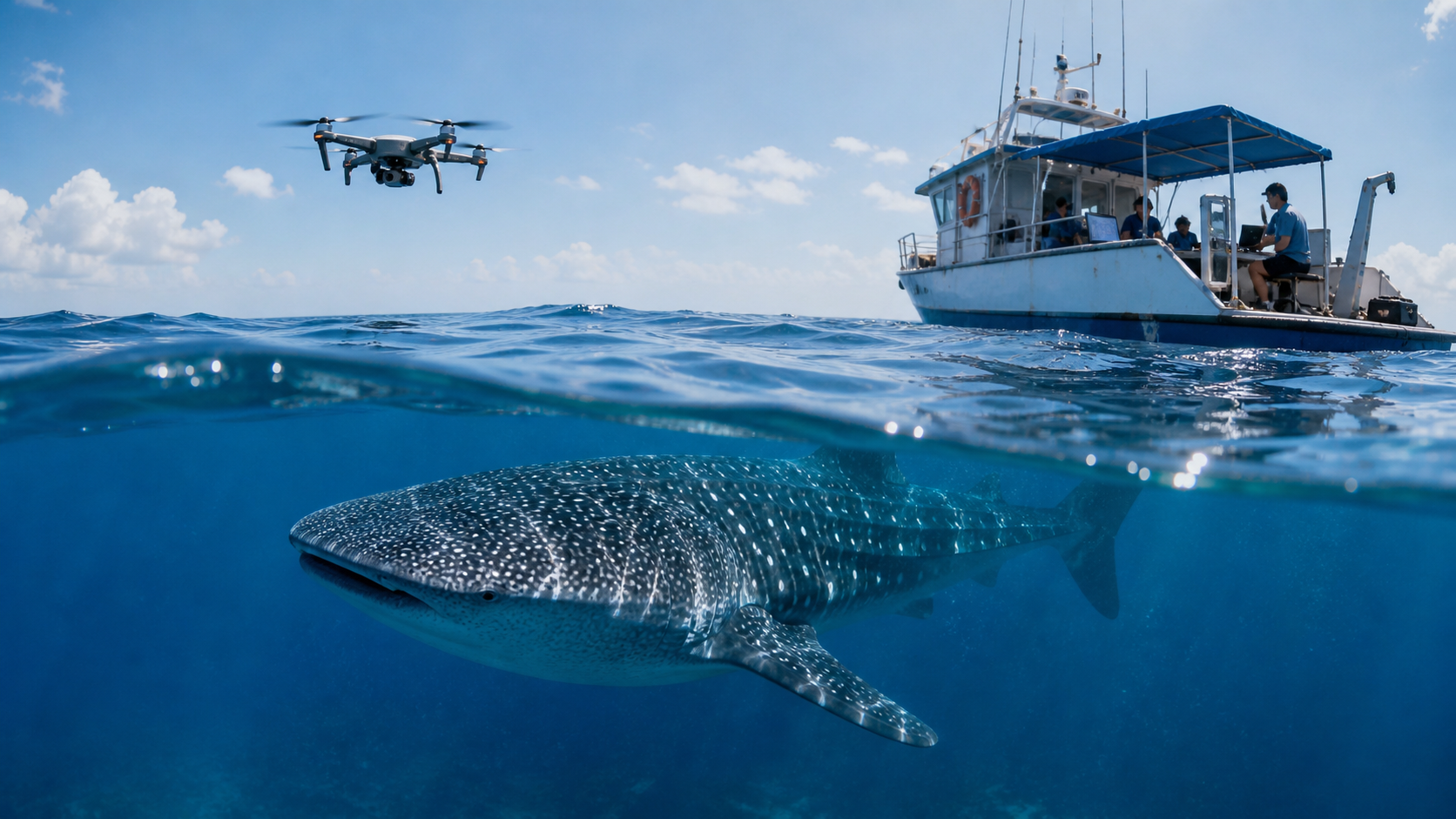
Drones are becoming more common in marine research because they can observe animals from above without putting people in the water or getting too close with boats.
For species like whale sharks, dolphins, and whales, drones may offer a lower-impact way to collect information.
They can help scientists observe movement, body condition, group behavior, and habitat use from a distance.
But drones are not automatically harmless.
They can make noise. They can fly too low. They can disturb certain species. That is why researchers need to study whether drones actually affect animal behavior before assuming they are safe.
The Trade-Off in Ocean Science
Some methods, like tagging, have helped scientists discover things that would have been impossible to know otherwise.
Tags have revealed long-distance migrations, important feeding areas, and critical habitats for sharks, turtles, whales, and other marine animals.
That information can lead to stronger protections.
But tagging also involves direct contact with an animal. That means it requires careful ethical review, skilled researchers, and a clear reason for why the data are needed.
The goal should not be to reject every method that involves disturbance.
The goal should be to ask whether the benefit is worth the impact, whether the method is being used responsibly, and whether a lower-impact option exists.
Why This Matters for Conservation
Protecting the ocean is not only about passing laws or creating marine protected areas.
It is also about how we gather knowledge.
If we want better ocean protection, we need better information. But if we want better information, we also need better ways to collect it.
That means improving technology, listening to ethical concerns, working with local communities, and being willing to change research methods when the evidence shows we should.
Ocean science should help marine life, not add unnecessary pressure to it.
The Bigger Question
The future of ocean conservation is not just about what we study.
It is about how we study it.
If scientists, conservationists, advocates, and the public can work together, we can push for research that gives us the information we need while reducing harm to the animals and ecosystems we care about.
That is the balance ocean science needs to keep working toward.

CEO
Boat Wake Erosion Explained: The Coastal Threat With Nothing to Do With Climate Change