The Ocean Career Lesson Nobody Talks About
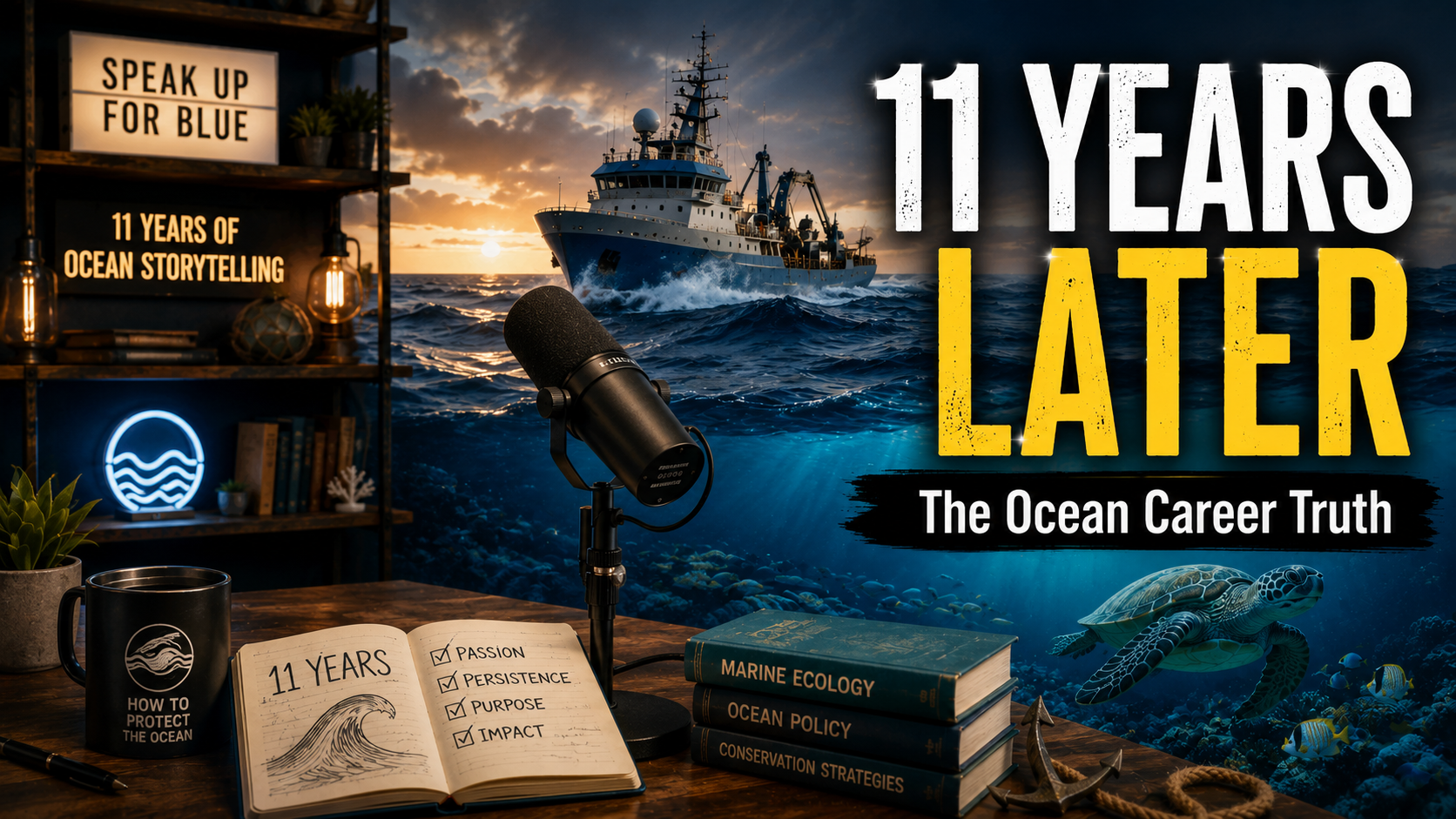
Eleven years ago, I published the first episode of what eventually became How to Protect the Ocean. At the time, it was not a big media project, a business plan, or a polished career move. It started as a way to talk about the ocean, share stories, and figure out where my voice could fit in marine science and conservation.
Looking back, the podcast became much more than a show. It became a way to build skills, meet people, create opportunities, and understand the realities of working in ocean conservation. This episode is not just a celebration of 11 years. It is a reflection on what it actually takes to build a career in this field.
Passion Is Not Enough
A lot of people enter marine science and conservation because they love the ocean. That passion matters, but it is not enough on its own. The field is competitive, opportunities can be limited, and the path is rarely simple.
You often need to volunteer, take on side projects, build experience, and stay patient while things slowly develop. That can be frustrating, especially when you feel ready to contribute. But experience is what turns passion into trust.
The Value of Putting Yourself Out There
One of the biggest lessons from 11 years of podcasting is that opportunities often come from being visible. When you consistently share your work, your ideas, and your voice, people begin to understand what you care about. Over time, that can lead to connections you never expected.
That does not mean success happens quickly. It means that showing up matters. Whether you are writing, podcasting, speaking, volunteering, or helping with a project, every piece of work can become part of your larger story.
Careers Are Built Slowly
Marine science and conservation careers are rarely straight lines. You may start in one place and end up somewhere completely different. You may work in science, policy, communications, education, consulting, or media.
The important thing is to stay open to how your skills can grow. A podcast can become a career tool. A volunteer role can become a network. A side project can become proof that you can lead, communicate, and follow through.
Why This Matters
Ocean conservation needs scientists, communicators, policy experts, educators, community leaders, and storytellers. But it also needs people who understand that the work takes time. Real impact is built through consistency, relationships, and trust.
If you are trying to build a career in this field, do not judge your progress only by job titles. Look at the skills you are building, the people you are helping, and the work you are putting into the world. That is often where the next opportunity begins.
Final Thought
After 11 years, the biggest lesson is simple: keep going. The work may not always move as fast as you want, but consistency matters. If you care about the ocean and you are willing to keep learning, building, and showing up, you can create a path that did not exist before.

CEO
California MPA Review: 15 Proposals and Who Got a Say?