The Tiny Fish Holding the Ocean Together
The Ocean Species Most People Ignore
When most people think about ocean conservation, they usually picture whales breaching through the surface, sharks moving through deep blue water, or sea turtles swimming over coral reefs. Those animals have become symbols of the ocean because they are emotional, recognizable, and easy for people to connect with. They appear in documentaries, social media campaigns, tourism ads, and fundraising appeals because they instantly capture attention.
But while those species absolutely matter, the ocean itself is not built around the largest or most charismatic animals. Marine ecosystems function because of relationships between species, and some of the most important relationships in the ocean depend on tiny fish that most people barely notice.
What Are Forage Fish?
Forage fish are species such as sardines, anchovies, herring, capelin, and sand lance. These fish are often small, fast-moving, and incredibly abundant when ocean conditions are healthy. They feed on plankton and small organisms lower in the food web, then transfer that energy upward when they are eaten by larger predators.
In many ways, forage fish act as the bridge connecting the bottom of the food web to the animals people care about most. Whales rely on them during migrations and feeding seasons. Salmon depend on them for energy-rich nutrition. Tuna, cod, seabirds, dolphins, seals, and many other predators rely on them as a critical food source.
Without healthy populations of forage fish, entire marine ecosystems can begin to weaken from the middle outward.
Why Tiny Fish Matter So Much
That is what makes forage fish so important, even though they rarely receive the attention given to larger marine species. They are not just another category of fish swimming in the ocean. They are part of the foundation that supports ocean productivity itself.
Yet most people never hear about them because conservation conversations often focus on animals that create emotional reactions. It is much easier to build public campaigns around whales or turtles than around anchovies or sardines. As a result, forage fish tend to remain invisible in public discussions, even though they help sustain many of the iconic animals that people are trying to protect.
The Industrial Fishing Problem
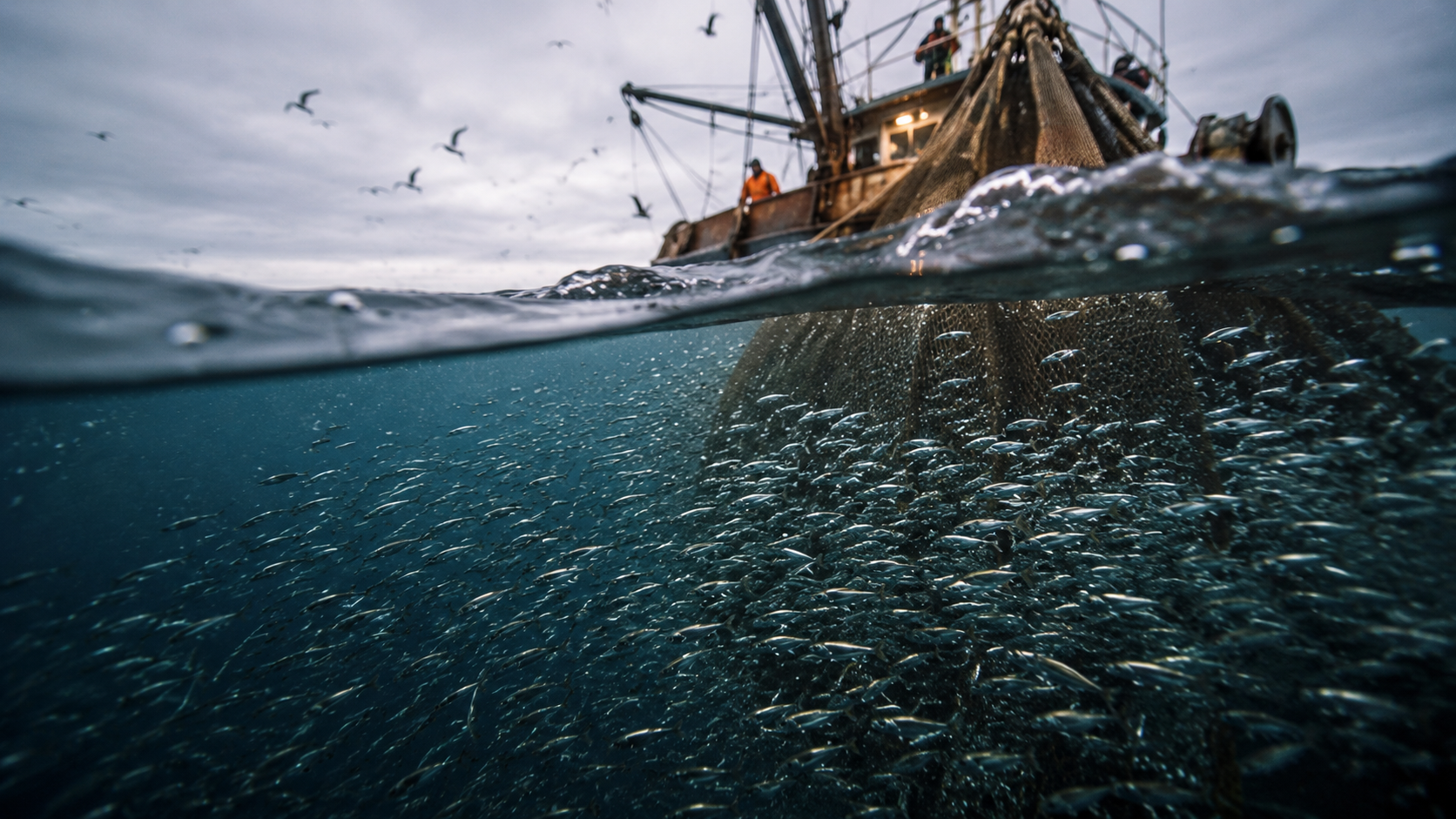
This lack of attention becomes even more important when you consider how heavily forage fish are used by industrial fisheries. Large volumes of these fish are harvested to produce fish meal and fish oil, products that are commonly used in aquaculture feeds, livestock feeds, supplements, and industrial applications.
In other words, species that already serve as food for countless marine predators are also being removed at industrial scales to support human industries. Scientists and conservation groups have increasingly warned that this creates serious ecological pressure because it reduces the amount of prey available to the broader marine food web.
Even if a forage fish population does not collapse entirely, declines in abundance can still ripple through ecosystems and affect predator survival, migration patterns, and reproductive success.
Why Scientists Are Rethinking Fisheries Management
This is why many marine scientists argue that forage fish cannot be managed like traditional commercial fisheries. Historically, fisheries management often focused on one basic question: can enough fish remain for the fishery itself to continue operating sustainably?
But ecosystem-based management asks a much larger and more complicated question: can enough fish remain in the ocean to support the entire ecosystem?
That shift in thinking changes how scientists and policymakers approach ocean conservation. It means managers cannot only think about fishing quotas and economic demand. They also need to consider whale feeding behavior, seabird nesting success, salmon survival rates, predator-prey dynamics, and the stability of marine ecosystems as a whole.
What Happens When Forage Fish Decline?
The challenge is that forage fish are easy to overlook precisely because they are small and common. People rarely see them directly unless they are in massive schools near the surface or appearing as bait balls in nature documentaries.
But their ecological importance becomes obvious when they begin to disappear.
Seabird colonies can struggle to feed chicks. Salmon populations can decline. Whales may need to travel farther to find food. Predator species can experience reduced reproductive success because there is simply less energy moving through the food web.
Healthy ecosystems depend not only on the survival of species, but also on abundance. Predators need enough prey available consistently for ecosystems to remain stable over time.
Ocean Conservation Starts Lower in the Food Web
That is why forage fish may represent one of the least talked-about conservation stories in the ocean today. Protecting whales, seabirds, salmon, and other iconic species often starts much lower in the food web than most people realize.
Conservation cannot only focus on protecting the animals people love seeing in photos or documentaries. It also has to focus on protecting the ecological relationships that make those animals possible in the first place.
And many of those relationships are carried by massive schools of tiny silver fish moving together beneath the surface of the ocean every single day.

CEO
The Pollution That Breeds: How the Great Lakes Stopped Invaders