What Happens When We Fish the Ocean’s Food Supply?
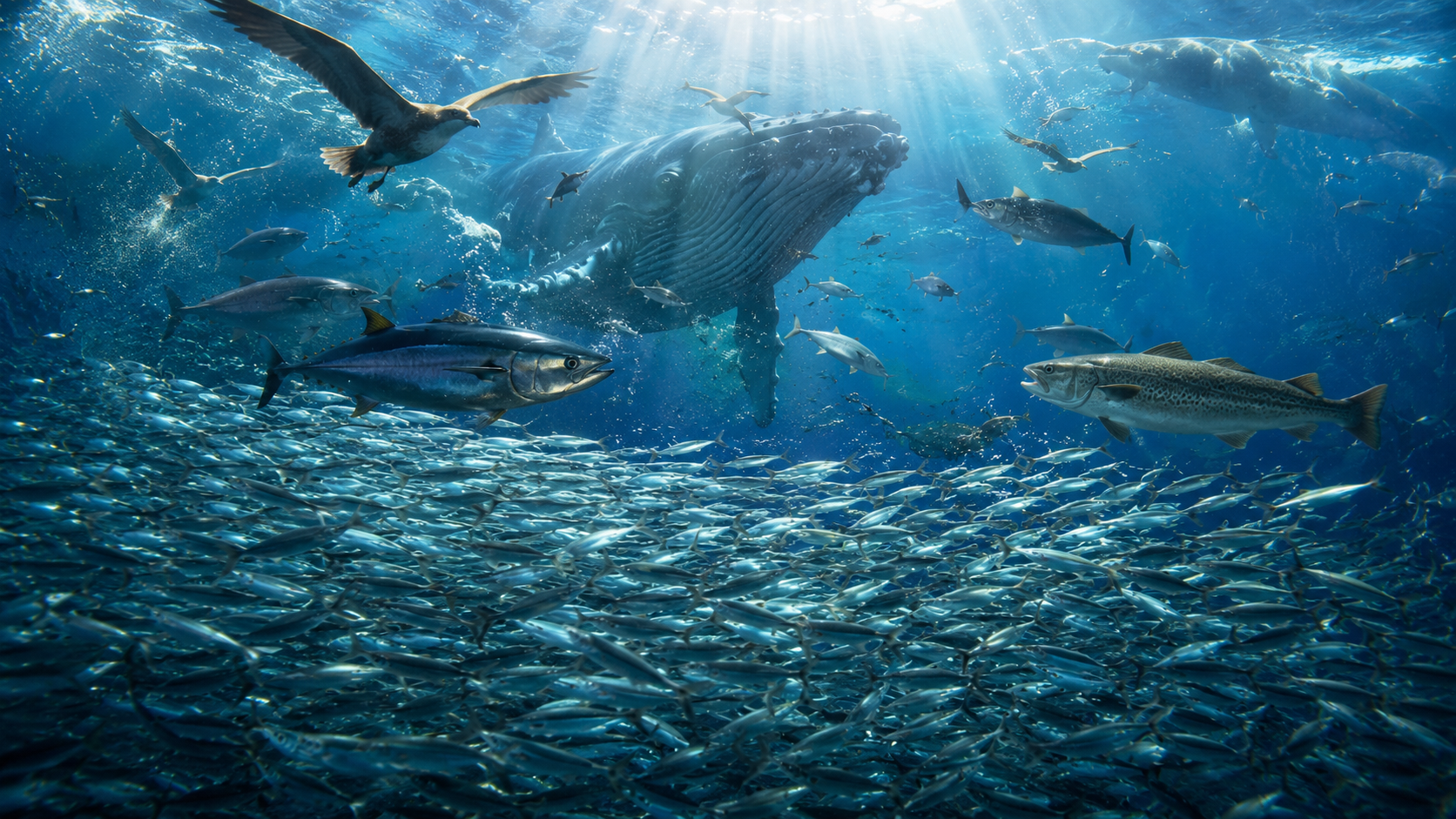
One of the biggest problems in ocean fishing is not just whether we are catching too many predator fish. It is whether we are removing too much of the food that those predators need to survive.
That food often comes in the form of forage fish.
Forage fish include species like sardines, anchovies, herring, capelin, and sand lance. They are small, but they play a massive role in marine ecosystems. They feed on plankton and then become food for whales, seabirds, salmon, cod, tuna, and many other predators.
The problem is that many forage fish are also heavily targeted by industrial fisheries.
A surprising amount of the global forage fish catch does not go directly to people as seafood. Instead, these fish are often processed into fishmeal and fish oil. Those products are then used in aquaculture feed, livestock feed, pet food, and dietary supplements.
That means the same fish that naturally support ocean predators are being redirected into industrial supply chains.
This type of fishing is often called reduction fishing because the fish are reduced into ingredients.
The concern is not only whether the forage fish population can survive fishing pressure. The deeper question is whether the ecosystem can survive losing that much food.
That distinction matters.
Marine ecosystems are deeply connected. When forage fish become scarce, predators can struggle. Seabirds may fail to feed their chicks. Cod recovery can become harder. Salmon, tuna, whales, and other species can face added pressure, especially when climate change is already affecting food availability.
Climate change makes this issue even more urgent. Marine heatwaves can reduce plankton production. If plankton declines, forage fish can decline. If forage fish decline, predators higher in the food web are affected too.
The pressure builds quickly.
This is why ecosystem-based fisheries management matters. Instead of managing one species at a time, this approach looks at the whole system. It asks whether enough forage fish are being left in the water to feed the animals that depend on them.
That can mean more cautious catch limits, seasonal closures during important feeding periods, and better ecosystem models that account for ripple effects.
But this is not simple. Forage fish fisheries support jobs and industries. Policymakers have to balance economic interests with ecosystem health.
Still, the core point is clear: protecting predators means very little if we do not protect the food that keeps them alive.
Forage fish may be small, but they are not minor.
They are one of the foundations of ocean life.

CEO
How Beach Cleanup Data Helped Canada Ban Plastic