When Ocean Laws Work, the Ocean Wins
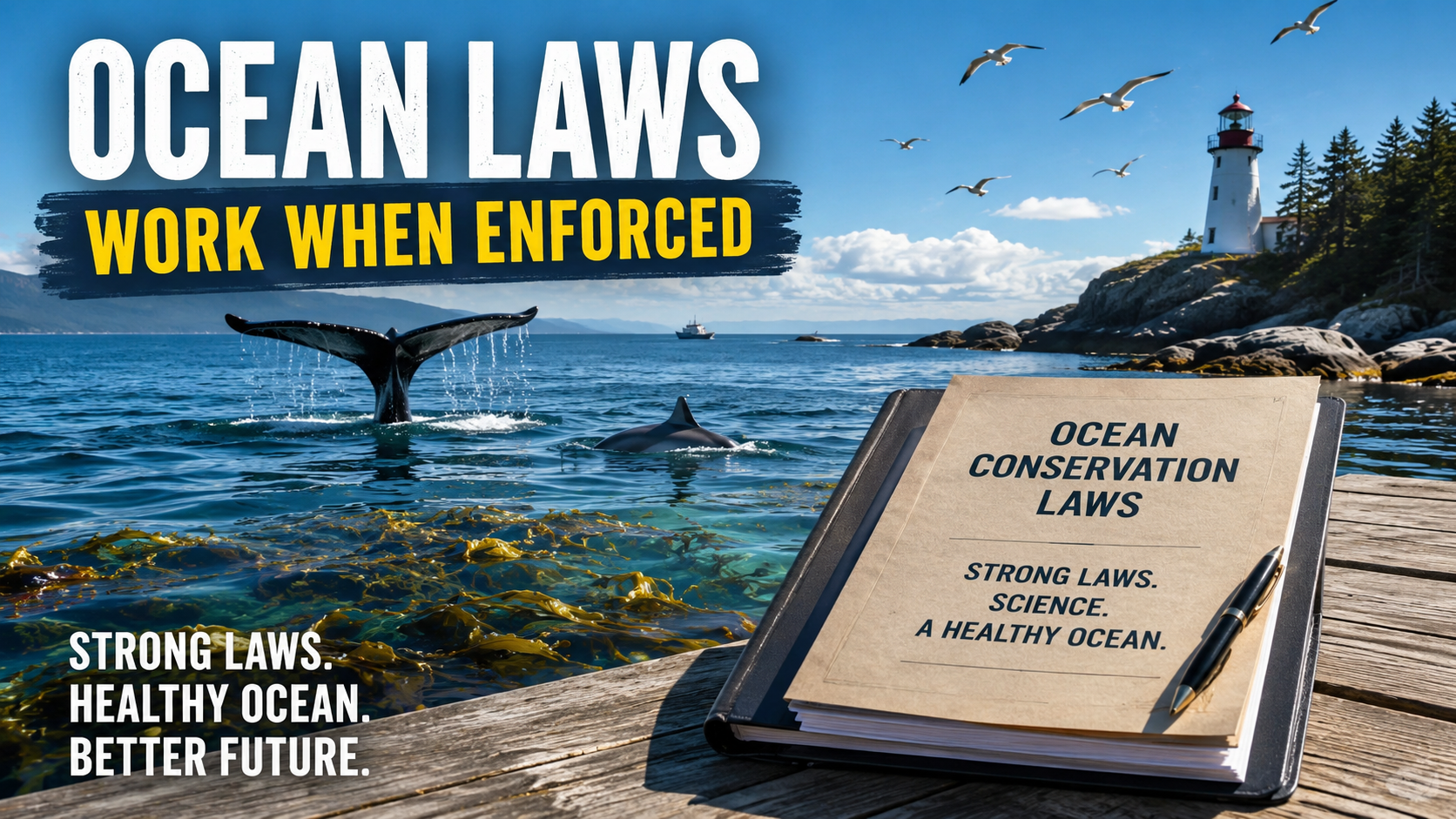
Ocean conservation often feels overwhelming. News headlines are filled with stories about overfishing, habitat destruction, pollution, climate change, and declining wildlife populations. It can leave people wondering whether protecting the ocean is even possible. The good news is that we already know many of the solutions that work.
One of the most effective tools for ocean conservation is something most people rarely think about: legislation. Strong laws, backed by science and proper enforcement, have helped protect species, rebuild fisheries, and conserve important marine habitats around the world.
The Ocean Doesn’t Recover by Accident
Successful conservation stories rarely happen because people suddenly decide to do the right thing. Most of the time, recovery happens because governments create rules that limit harmful activities and require long-term management. Those rules establish accountability and make conservation more than just a good intention.
Legislation provides the framework needed to protect ecosystems. It can establish marine protected areas, set fishing quotas, require scientific monitoring, and create recovery plans for threatened species. Without those legal tools, conservation efforts often struggle to achieve lasting results.
How Canada’s Oceans Act Changed Ocean Protection
Canada’s Oceans Act is a great example of how legislation can create meaningful conservation outcomes. The Act provided the legal pathway for establishing marine protected areas across the country. It also helped coordinate ocean management efforts and encouraged ecosystem-based approaches to conservation.
As a result, Canada has dramatically increased the amount of ocean under protection. The country went from protecting less than one percent of its marine territory to more than fifteen percent in a relatively short period of time. The national goal is to reach thirty percent protection by 2030, demonstrating how legislation can drive measurable progress.
Laws Have Helped Wildlife Recover
The United States has also shown how strong environmental laws can make a difference. Legislation such as the Endangered Species Act, the Marine Mammal Protection Act, and the Magnuson-Stevens Act has helped recover species and rebuild fish populations. These laws require governments to monitor populations and take action when species are at risk.
Many marine animals have benefited from these protections over the years. Recovery efforts have supported species ranging from marine mammals to commercially important fish stocks. While recovery can take decades, these examples show that conservation works when governments commit to long-term science-based management.
The Danger of Ignoring Science
Creating good laws is only the first step. Those laws are most effective when political leaders follow scientific advice and make decisions based on evidence. Problems arise when short-term political pressures outweigh long-term conservation goals.
This challenge can be seen in ongoing debates about fisheries management, including concerns around reopening commercial cod fishing in Canada. Cod played an important role in the history and economy of Atlantic Canada, but past overfishing contributed to one of the largest fishery collapses in history. Ignoring scientific warnings risks repeating mistakes that took decades to address.
Why Ocean Laws Matter to Everyone
Many people think ocean legislation only affects governments, scientists, or fishers. In reality, these laws influence everything from seafood availability to biodiversity and coastal economies. The health of marine ecosystems affects millions of people who rely on the ocean for food, jobs, and recreation.
Strong ocean laws also help create certainty for industries and communities. They establish clear expectations and encourage sustainable practices that can support both conservation and economic development. When managed properly, healthy oceans benefit everyone.
Ocean Protection Is Possible
One of the biggest lessons from conservation history is that protecting the ocean is not impossible. We have examples from around the world showing that species can recover, habitats can improve, and fisheries can rebuild. Those successes are often linked to strong legislation, effective enforcement, and science-based decision making.
The real question is not whether conservation works. The evidence shows that it does. The challenge is whether we are willing to continue using the tools that have already proven successful.
Final Thoughts
Ocean conservation does not depend on discovering a single breakthrough solution. In many cases, the solutions already exist in the form of laws, regulations, and management systems that have demonstrated success. The key is ensuring those tools are respected, enforced, and guided by the best available science.
When ocean laws work, marine life benefits, coastal communities benefit, and future generations benefit. Protecting the ocean may be challenging, but it is far from impossible.

CEO


