Who Really Decides Canada’s Climate Future?
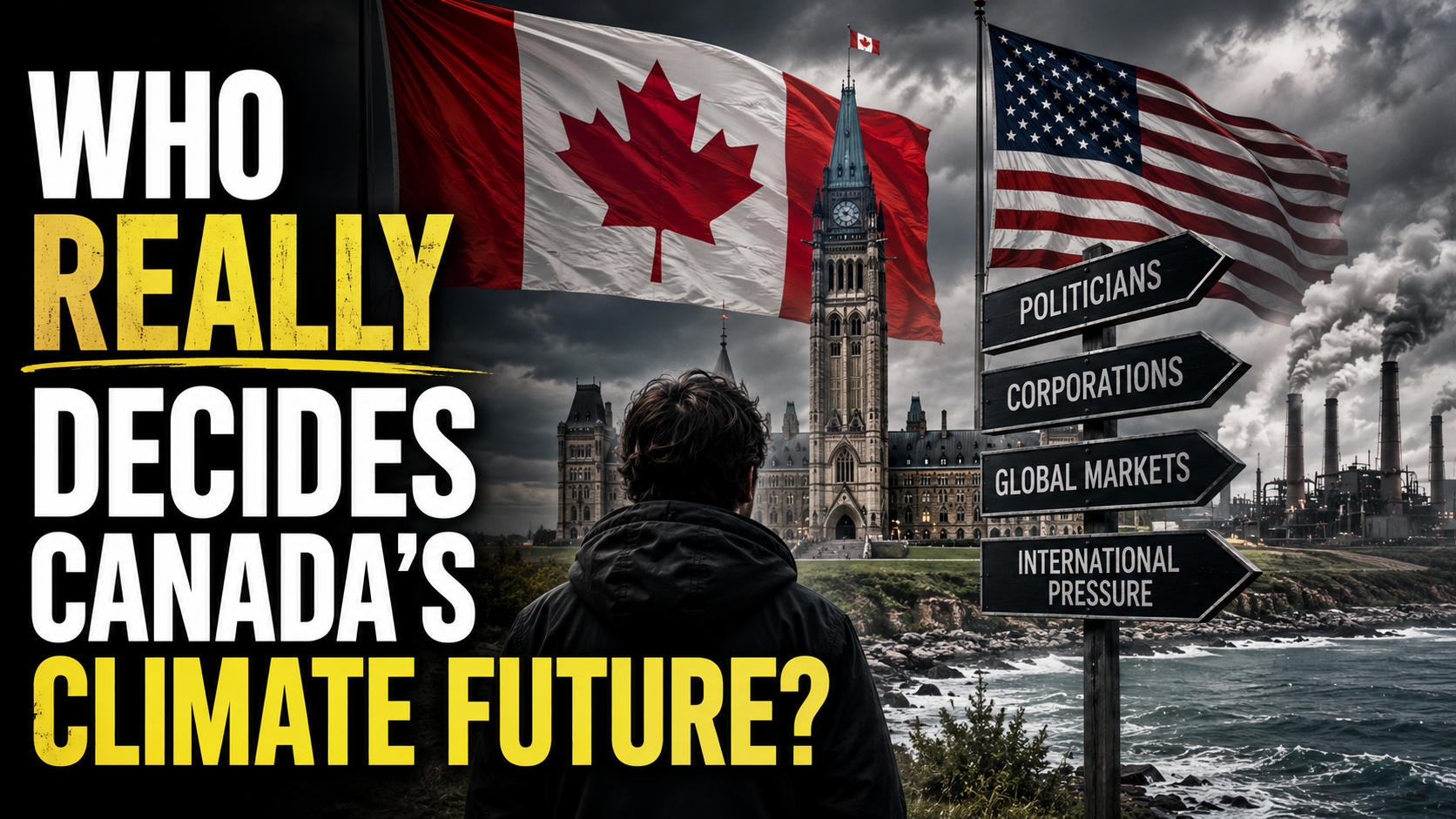
Climate targets often sound like simple promises made by governments, but the reality is much more complicated. Behind every emissions target is a web of economic pressures, international trade, political priorities, and public expectations. Canada’s recent shift away from meeting its 2030 climate goals highlights just how many factors influence climate policy. In this episode, we explore who is really shaping Canada’s climate future and why those decisions matter to everyone.
Climate Policy Doesn’t Exist in a Vacuum
It’s easy to assume that climate policies are driven entirely by environmental science. While science provides the foundation, governments must also balance economic growth, employment, affordability, energy security, and international competitiveness. Those competing priorities often pull decision makers in different directions.
Recent economic uncertainty has forced Canada to reconsider how quickly it can move toward its climate commitments. Global markets have become less predictable, investment decisions have changed, and industries are asking governments for greater flexibility. The result is a climate strategy that continues to evolve as economic conditions change.
International Pressure Shapes Domestic Decisions
One of the biggest influences on Canada’s climate future doesn’t actually originate in Canada. Decisions made by major trading partners, especially the United States, have significant impacts on Canadian industries and government priorities. Trade policies, tariffs, and shifting investment incentives can all reshape where governments choose to focus their resources.
When countries compete for manufacturing, clean energy investment, and economic growth, climate policy becomes part of a much larger conversation. Governments must find ways to reduce emissions while protecting jobs and maintaining economic competitiveness. That balancing act is becoming increasingly difficult.
Why This Matters for the Ocean
Climate policy is about much more than carbon emissions. Every delay in reducing greenhouse gases contributes to warmer oceans, changing ocean currents, more frequent marine heatwaves, and increasing stress on marine ecosystems. Species that depend on stable ocean conditions are already experiencing these changes.
Healthy oceans provide food, support fisheries, regulate the climate, and protect coastal communities. When climate action slows, the impacts ripple throughout marine ecosystems. What may seem like an economic decision today can influence ocean health for decades.
Who Really Makes the Decisions?
Governments write climate policies, but they are only one piece of the puzzle. Businesses influence investment, consumers influence markets, researchers provide evidence, and international agreements shape expectations. Financial institutions, provincial governments, Indigenous communities, and global events all play important roles.
Understanding climate policy means recognizing that no single person or organization controls the outcome. Instead, Canada’s climate future is being shaped by countless decisions made across governments, industries, and communities every day.
Why We Should Pay Attention
Climate targets are important because they provide a roadmap for the future. Missing those targets doesn’t necessarily mean progress has stopped, but it does force difficult conversations about priorities, investments, and accountability. Those conversations affect every Canadian, whether directly or indirectly.
For people who care about ocean conservation, paying attention to climate policy is essential. The choices made today will influence the health of marine ecosystems, fisheries, coastal economies, and biodiversity long into the future.
Final Thoughts
The question isn’t simply whether Canada will meet its climate targets. The bigger question is who is influencing those decisions and what values are driving them. Understanding those forces helps us become more informed citizens and better advocates for the oceans we depend on.
If we want healthier oceans and a more resilient future, we need to understand how climate policy is shaped, who benefits from the decisions being made, and where public voices can make the greatest difference.

CEO
The Pollution That Breeds: How the Great Lakes Stopped Invaders