Who Really Wins When Marine Sanctuaries Are Opened?
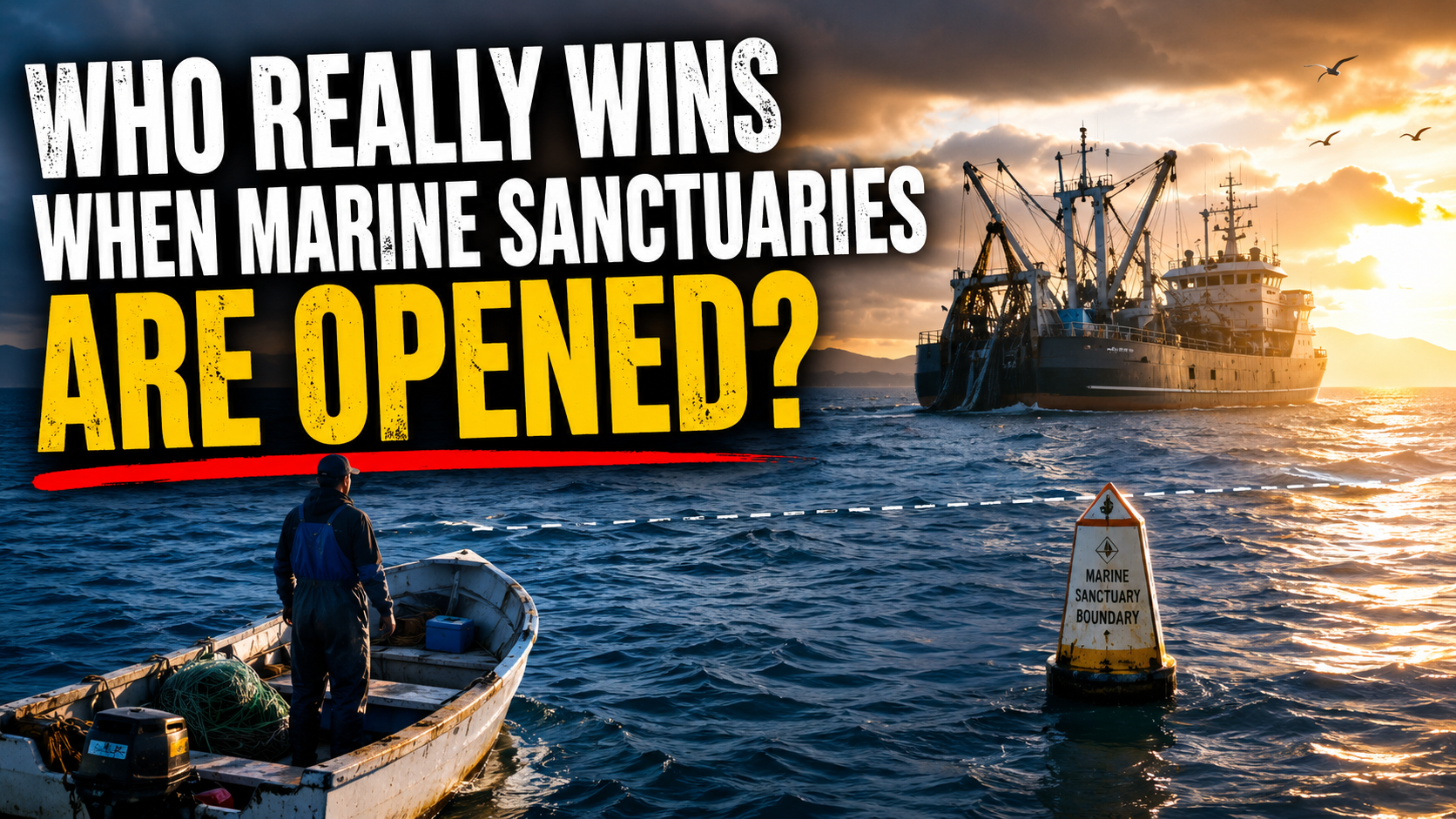
When politicians say they are helping fishers by opening protected ocean areas, the first question we should ask is simple: which fishers are they helping? That question sits at the center of this episode of How to Protect the Ocean. The Trump administration has announced actions that would reopen previously protected marine sanctuary waters to commercial fishing.
At first, this can sound like a straightforward debate between fishing and conservation. But the real issue is more complicated. It is about who gets access to public ocean resources, who makes money from them, and who pays the price when fish populations decline.
Why Marine Sanctuaries Matter
Marine sanctuaries and marine protected areas are not created by accident. They are designed to give ecosystems space to recover, rebuild fish populations, and protect important habitats. When these protections are enforced properly, fish can grow in number and size, eventually spilling over into nearby areas where fishing can continue.
Think of a protected area like a savings account. You leave something untouched today so it can grow and support you tomorrow. If you keep withdrawing too early, the system never gets the chance to rebuild.
The Problem With Opening Protected Waters
The concern is not simply that fishing exists. Many coastal and Indigenous communities have fished sustainably for generations. The concern is that opening protected waters to commercial fishing can benefit large industrial fleets more than local communities.
That matters because industrial fishing has a much larger capacity to remove fish from the ocean. Large vessels can take huge amounts of seafood, often far beyond what a small local fishing operation could catch. When those fleets move through an area, the benefits may leave with them while local communities are left with the ecological consequences.
Who Gets Left Out?
Public messaging around fishing often focuses on the image of the small local fisher. That image is powerful because people want coastal communities to survive and thrive. But policy changes that open protected waters do not always benefit those small operators.
In many cases, the largest gains can go to commercial interests with the money, access, and political influence to take advantage of new fishing opportunities. Local and Indigenous communities may be used in the messaging, while larger fleets receive the real economic benefit.
Conservation And Fishing Can Work Together
This episode does not argue that conservation and fishing must always be enemies. Healthy fisheries need healthy ecosystems. Local fishers often understand this better than anyone because their future depends on the ocean staying productive.
The real question is whether short-term access is worth long-term risk. Once a fish population declines, rebuilding it can take years, decades, or longer. That is why decisions about marine sanctuaries matter far beyond one political announcement.
The Bigger Ocean Question
At the heart of this story is a question about fairness. Who should benefit from public ocean resources? Should those benefits go to local and Indigenous communities that depend on the ocean, or to large commercial fleets looking for new access?
Marine sanctuaries are not just lines on a map. They are part of how we decide what kind of ocean future we want. If we open protected areas without asking who benefits and who loses, we risk weakening one of the most important tools we have for ocean conservation.

CEO
Blue Nitrogen: The Nutrient Story Coastal Wetlands Have Been Hiding


