Why the High Seas Treaty Took 20 Years
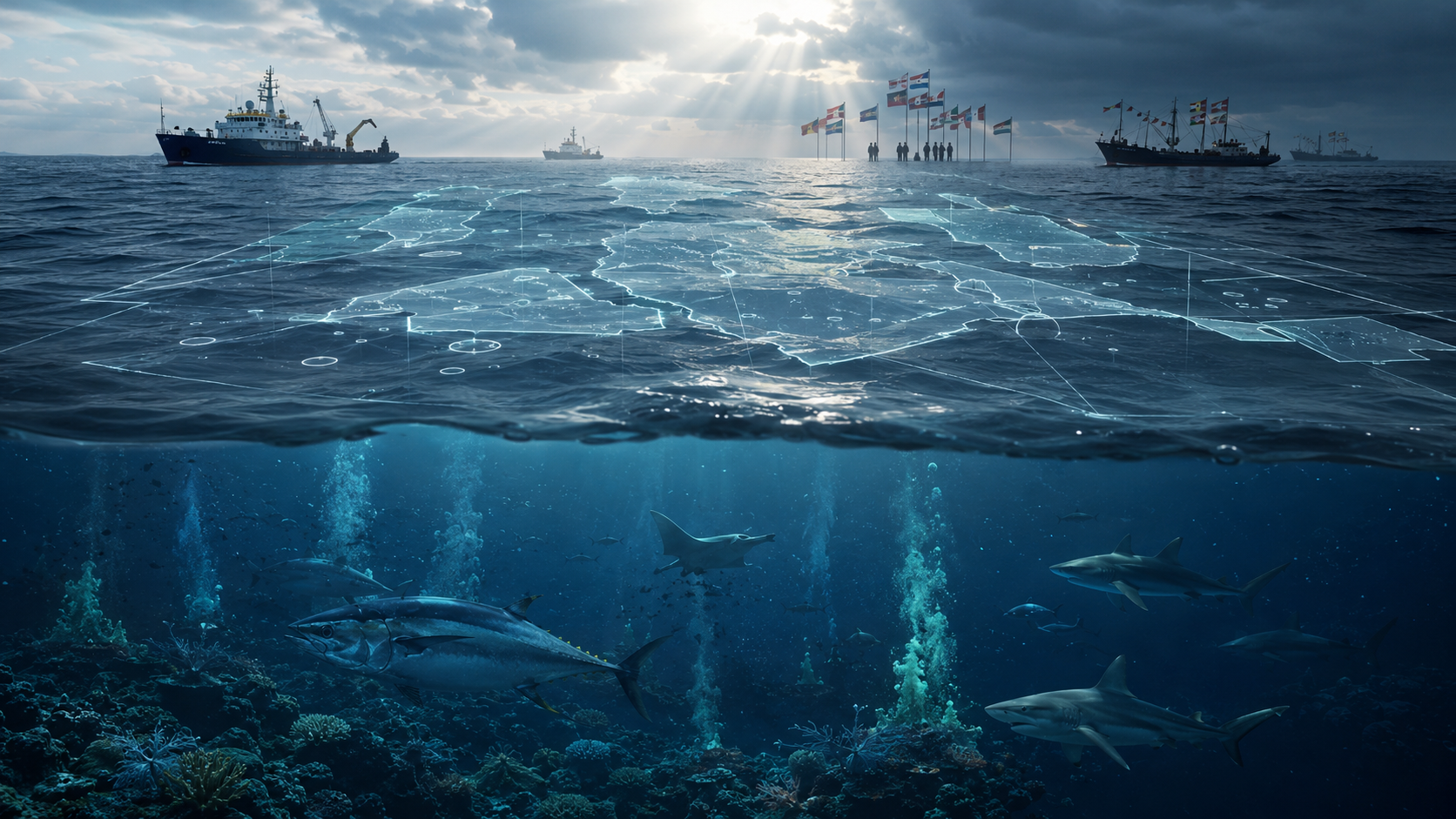
Everybody says they want to protect the ocean until the conversation turns to money, power, and control.
That is the heart of this episode of How to Protect the Ocean. The High Seas Treaty sounds like something the world should have agreed on quickly. The ocean is under pressure. Biodiversity is declining. Countries know that marine ecosystems matter. So why did it take nearly two decades to negotiate?
The answer is simple, but not easy: protecting the high seas means asking countries to cooperate in places no single country owns.
The High Seas Are Not Simple
The high seas are the parts of the ocean beyond national jurisdiction. They are outside the control of any one country, but they are deeply connected to climate, fisheries, biodiversity, food security, and the health of the planet.
That makes them important. It also makes them complicated.
When countries negotiate over the high seas, they are not just talking about ocean wildlife. They are talking about access, economic opportunity, scientific discovery, enforcement, and global fairness.
The Treaty Was About More Than Conservation
One of the biggest sticking points was marine genetic resources.
These are genetic materials from ocean organisms that could someday be used in medicine, biotechnology, cosmetics, or industrial products. Developed countries often have the money, research vessels, labs, and technology to benefit from those discoveries.
Developing countries argued that the benefits should be shared more fairly.
That debate turned the treaty into something much bigger than conservation. It became a conversation about who gets access to the ocean’s future value.
Enforcement Is Still the Big Question
The treaty creates a framework for protecting biodiversity in international waters, including the possibility of marine protected areas on the high seas.
But a framework is not the same as real protection.
The United Nations does not have an ocean police force. Countries still have to monitor activity, enforce rules, fund the work, and hold each other accountable. That is where many ocean agreements struggle.
A treaty can create momentum, but implementation decides whether it actually works.
Why This Matters Now
The High Seas Treaty did not take 20 years because countries disagreed that the ocean matters.
It took 20 years because protecting shared resources forces countries to confront power, economics, fairness, and accountability all at once.
Now the question changes.
Can countries turn a historic agreement into real ocean protection?
That is the story to watch next.

CEO
The Biggest Mouthful: How Blue Whales Eat and Why Krill Matters