What Happens If We Stop Watching the Ocean?
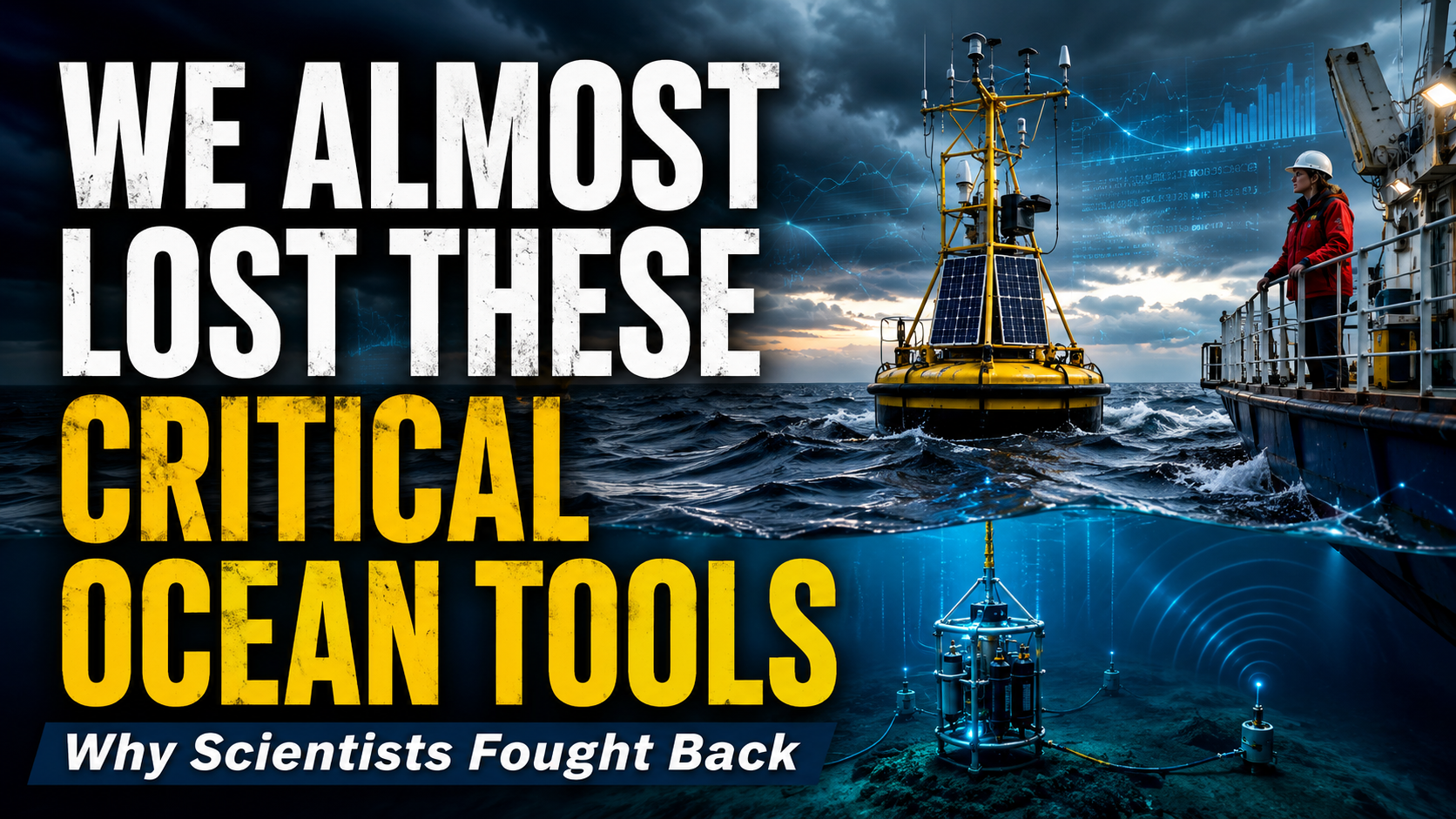
One of the most important ocean monitoring systems in the world was nearly dismantled.
The Ocean Observatories Initiative, or OOI, is a network of scientific instruments that continuously collects data from the ocean. These instruments measure ocean temperature, oxygen, currents, chemistry, biological activity, and other changes that help scientists understand what is happening beneath the surface.
Most people never see these tools, but the information they collect helps us understand climate change, marine heatwaves, fisheries, and ecosystem shifts.
What Is the Ocean Observatories Initiative?
The Ocean Observatories Initiative is like a network of weather stations for the ocean.
Instead of measuring air temperature and rainfall on land, OOI instruments measure ocean conditions in real time. These systems include buoys, underwater sensors, seafloor instruments, and cables that transmit data back to researchers.
The value of the OOI comes from long-term monitoring. When scientists can observe the same parts of the ocean over many years, they can detect patterns that would otherwise be missed.
Why Was the OOI at Risk?
The National Science Foundation announced plans to significantly reduce parts of the OOI network.
That raised major concerns across the ocean science community. Scientists worried that removing infrastructure would create gaps in long-term data records that cannot be replaced.
Once a dataset is interrupted, researchers cannot go back and collect the missing information. The ocean keeps changing, even when we stop watching.
Why Scientists Pushed Back
Scientists pushed back because the OOI provides critical information for understanding ocean change.
The system helps researchers track marine heatwaves, oxygen shifts, ecosystem changes, and climate-related patterns. This kind of data supports better decisions for fisheries, coastal planning, climate adaptation, and marine conservation.
The National Academies also stepped in after its report was cited as part of the justification for the proposed reductions. The organization clarified that its report had been inaccurately represented, which changed the public conversation around the decision.
Why This Matters for Ocean Conservation
Ocean conservation depends on good information.
We cannot protect what we do not understand. Long-term observing systems help scientists detect changes early, identify risks, and provide evidence for better policy decisions.
Protecting whales, coral reefs, fish, and coastal communities also means protecting the science that helps us understand their future.
What Happens Next?
The good news is that the National Science Foundation reversed course.
The OOI will continue operating, and further equipment removal was paused. Equipment that had already been removed is expected to be redeployed, and more stakeholder input will be gathered before future decisions are made.
But this story is still a warning.
Ocean science infrastructure can be vulnerable, especially when budgets are tight. If we want strong ocean conservation, we need to value the systems that help us understand what is happening in the ocean every day.
Final Takeaway
The Ocean Observatories Initiative was saved, but the lesson is bigger than one program.
If we stop observing the ocean, we stop understanding it.
And if we stop understanding it, protecting it becomes much harder.

CEO
Boat Wake Erosion Explained: The Coastal Threat With Nothing to Do With Climate Change